No clogged gutters. Cleaned in 24 hours or less.
Tree Pruning: When It's Needed and When It Can Wait
Trusted gutter experts serving since 2019. Dead branches, limbs rubbing your roofline, and lopsided growth are the biggest red flags that a tree needs pruning soon.
Signs Your Tree Needs Pruning Now
Quick Summary:
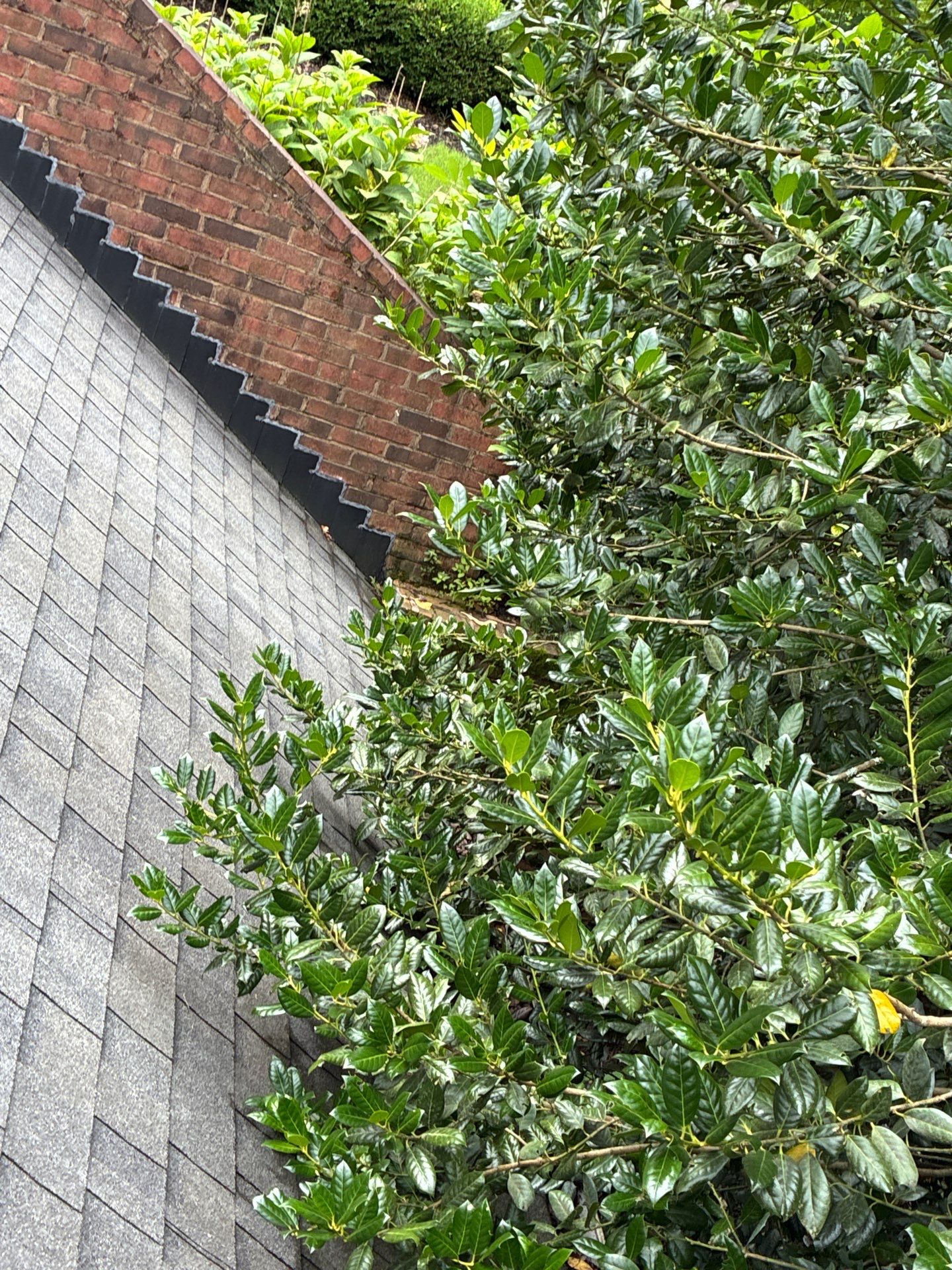
Dead branches, limbs rubbing your roofline, and lopsided growth are the biggest red flags that a tree needs pruning soon. If a branch is hanging over your gutters or roof, that's not a someday job, that's a now job.
Look up before you call. Most trees give you warning signs weeks or months before a branch comes down. A dead limb looks gray or brittle, with no leaves in spring when everything else on the tree is green. That's the easiest one to spot, and it's the one we get called about the most.
But there's more to check than just dead wood. Cracks where a branch meets the trunk mean that limb is under stress and could split. Branches that scrape your roof or hang low over the driveway will keep growing into that space; they don't stop on their own. During wind storms, those limbs can move more than you'd think, and a weak branch over a power line or roof is a real problem waiting to happen.
- Dead or bare branches with no leaves while the rest of the tree is full
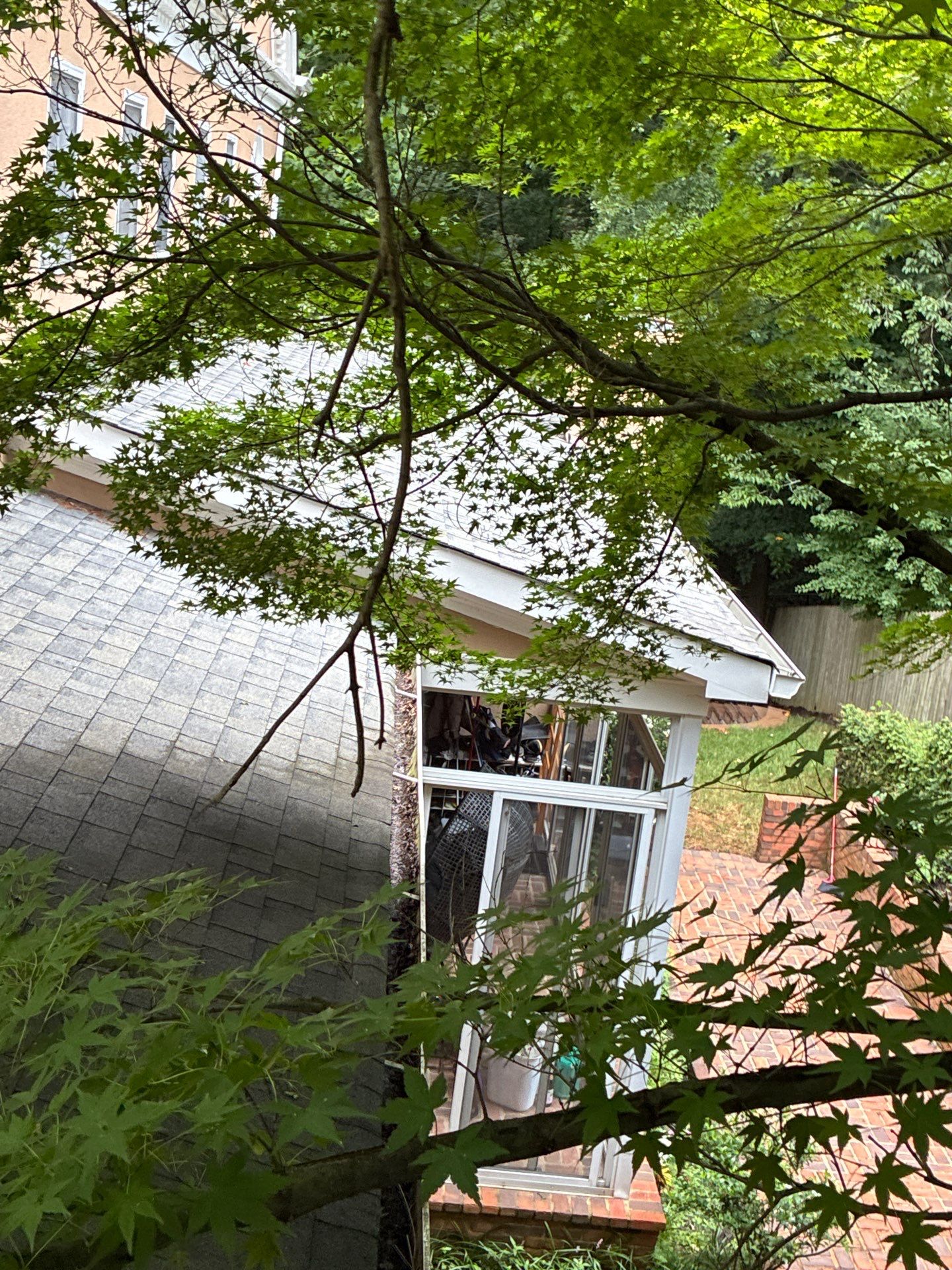
- Limbs touching or hanging over your roof, gutters, or siding
- Cracked or splitting bark where a branch meets the trunk
- Lopsided or heavy growth on one side that pulls the tree off balance
- Branches rubbing against each other, wearing down the bark over time
Not sure if what you're seeing is a real issue? That's pretty common. A lot of homeowners just aren't sure what's normal growth and what's a warning sign. If a branch is low enough to touch your roofline, it's time to deal with it before a storm makes that decision for you.
BOOK NOW (opens in a new tab)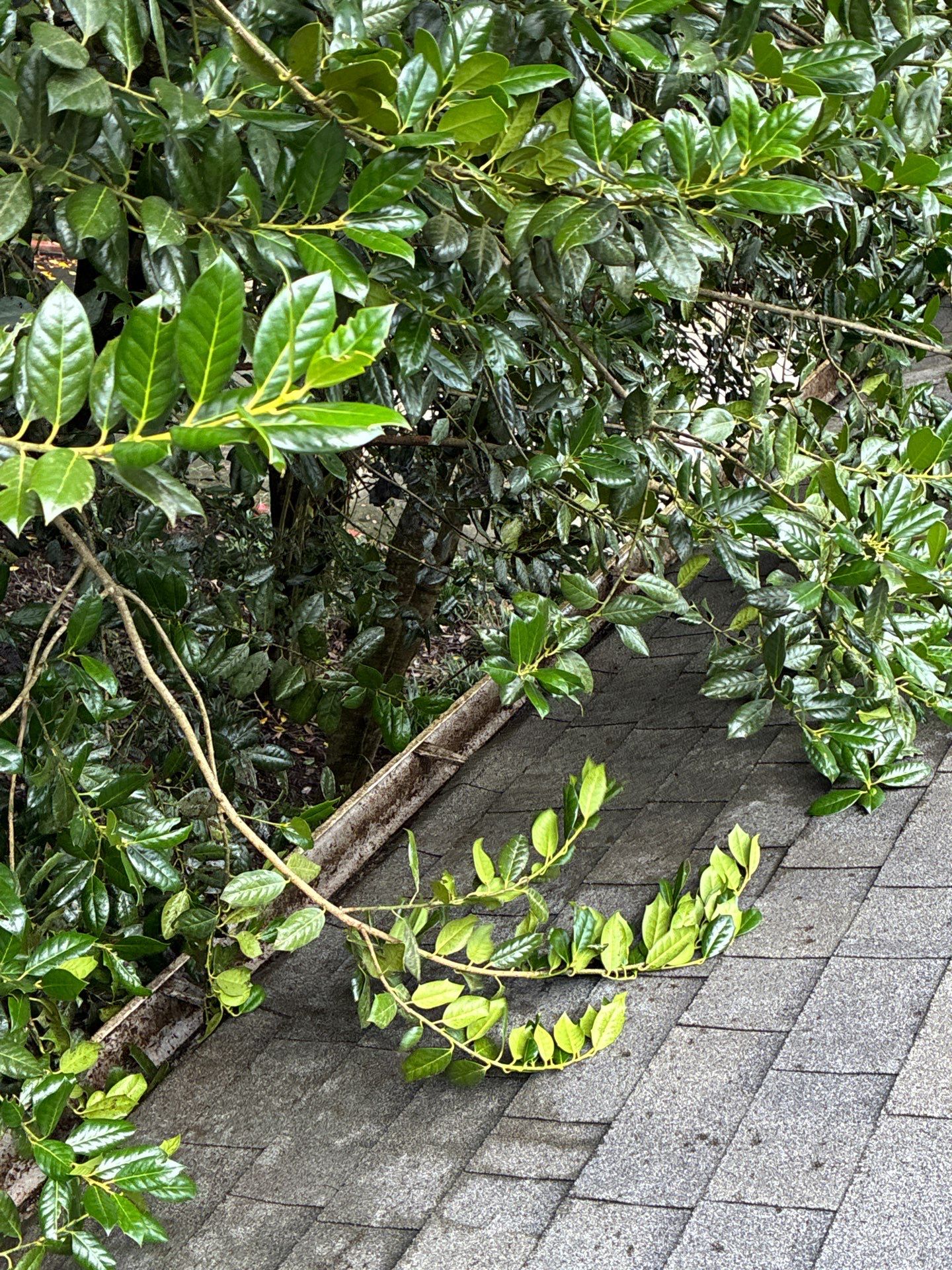
Crown Thinning, Raising, and Reduction Explained
Not all pruning is the same cut. There are three jobs we're usually solving for, and they're not interchangeable.
Thinning matters most on older hardwoods with dense canopies. A tree that's too thick catches wind like a sail.
During a storm, that same density puts weight and stress right where you don't want it, over your gutters and roof.
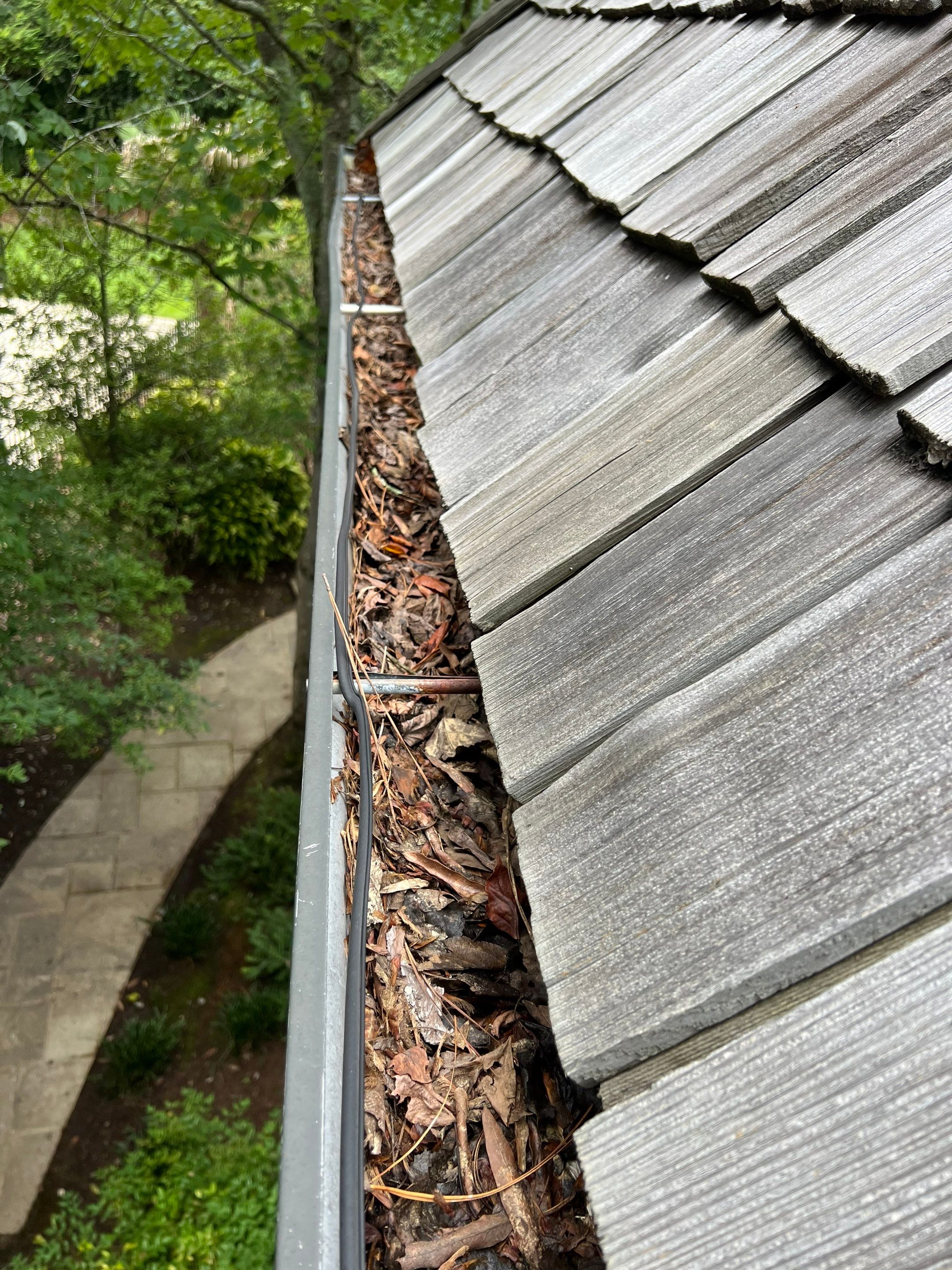
Raising comes up constantly on properties with low branches hanging over gutters and downspouts. We see this every single week. A homeowner calls about clogged gutters, and it turns out the real problem is a limb dumping leaves and pollen straight into the trough all season long.
Reduction is the one people put off. A tree pressing against fascia or scraping shingles during wind isn't cosmetic; it's damage waiting to happen. Once we point it out, homeowners often tell us they'd noticed the scrape marks but figured it wasn't a big deal.
- Crown thinning removes select branches inside the canopy so wind passes through instead of pushing against a solid wall of leaves.
- Crown raising takes lower limbs off so they clear your roofline, driveway, or power lines.
- Crown reduction shortens the whole tree's height or spread, usually done when a tree has outgrown its space near the house.
So which one do you need? That depends on the tree's age, its position, and what it's threatening. We look at all three before recommending a cut.
CALL (404) 994-3494Tree Pruning
Book Online, No Call Needed
Overgrown branches, hazardous deadwood, and crowded canopies threaten nearby structures, block sunlight, and compromise overall tree health. Safeguard your property and promote strong, vibrant growth with expert, precision tree pruning.
What's Included
Strategic Branch Removal & Cleanup
Safe trimming of diseased, dead, or encroaching limbs to improve canopy structure, air flow, and curb appeal.
Photo Proof & Documentation
High-resolution before-and-after photos detailing clear clearances, balanced weight distribution, and a clean property site finish.
In-Person Expert Assessment
On-site evaluation by a specialist to inspect tree stability, target structural weaknesses, and protect nearby power lines and rooflines.
Clear Pricing
View our tree pruning service rates directly on our website.
Eliminate fall hazards. Boost tree vitality and sunlight penetration. Keep your property safe and immaculate year- round.
When a Small Tree or Shrub Does Not Need a Professional
Not every branch needs us. If you've got a young tree under 10 feet, or a shrub line along your driveway, that's a job you can knock out with hand pruners on a Saturday morning. We'll tell you straight: some of this is homeowner work and always has been.
Here's the real test. Can you reach the branch standing flat on the ground, with no ladder involved? Is the branch thinner than your thumb? If both are true, grab loppers and go. It's the same thing we'd tell our own neighbor.
Where it stops being a weekend project is height, weight, and what's underneath. A limb over a driveway, a branch leaning on your roof, or anything near a power line, that's not a ladder job anymore.
- Young ornamental trees under 10 feet
- Shrubs and hedges you can reach without a ladder
- Removing small dead twigs or suckers at the base of a tree
- Light shaping after spring growth on shorter shade trees
- Cutting back branches that haven't touched a power line or your roofline
And if you're dealing with a mature oak or pine near the house with an aging root system close to the foundation, that's a different animal entirely. Not sure which side of that line you're on? That's pretty common to wonder about. If the branch is thicker than your wrist or higher than your gutter line, stop and call someone.
CALL (404) 994-3494
Clean Gutters, Set and Forget
Most Metro Atlanta homes need a check twice a year, once in fall before leaves pile up, once in spring after pine straw and pollen settle in. Sign up for a plan and we'll handle it for you. No more remembering. No more climbing ladders.
START A SEASONAL PLAN
What Drives Tree Pruning Cost Up or Down
So what makes one pruning job cost more than another? A few things, and none of it is random. Tree size is the big one. A young maple in your front yard is a different job than a mature oak hanging over your roofline. Bigger trees need more time, more careful cuts, and sometimes bucket trucks or climbing gear.
Access matters too. Can a truck pull right up, or is the tree tucked behind a fence with power lines running close by?
Tight backyards and overhead wires slow everything down, and that adds time to the job.
- Tree height and canopy spread, taller trees need more equipment and more hands
- How many limbs need removal versus a light shaping pass
- Proximity to power lines, roofs, or fences
- Whether the debris needs full hauling or just piling
- Number of trees being pruned in the same visit
We see this every single week: folks think pruning is a flat-rate service. It's not. It depends on what the tree needs. Before you hire anyone, ask what's included in the visit. Does the price cover debris removal? Will they show you what they're cutting and why? For our estimates, we ask that you're present so we can walk the property together and talk through what fits your situation. Gutter cleaning visits don't need you home, but pruning and estimates work better when we can point at the branch and explain the call.
BOOK NOW (opens in a new tab)Trusted by Homeowners
Licensed and insured. Real prices before we start. Before and after photos with every invoice.
CALL (404) 994-3494
Questions to Ask Before You Hire a Tree Pruning Crew
Not every crew that shows up with a chainsaw understands what a limb is doing to your gutter system. Before you hire anyone, ask a few direct questions. It tells you fast if they're thinking about your whole roofline or just the branch in front of them.
That last one matters more than people think. For a straight pruning or gutter cleaning visit, we don't need you standing there watching us work. We've got it covered, and pictures are always part of the visit anyway.
But if we're scoping out a bigger job or putting together an estimate, we do want you there. Solutions get built around your property, your trees, your gutter setup, and that conversation goes a lot smoother face to face.
A crew that dodges the photo question or shrugs off the debris question, that's a red flag.
- Will you tell me which limbs are touching or overhanging the gutters and roof, not just the ones that look messy? Do you take before and after photos so I can see what was cut and why?
- How will you handle debris? Will it end up in my gutters or yard, or be hauled off?
- Can you point out any soffit or fascia damage you notice while you're up there?
- Do I need to be home for this, or just for the walkthrough?
One more thing worth asking, especially with mature oak growth: does the crew know how to cut without leaving stubs that die back and drop again next season? Sloppy cuts today mean the same limb problem next spring.
BOOK NOW (opens in a new tab)Frequently Asked Questions
Common questions about Tree Pruning
How do I know if my tree needs pruning now or if it can wait?
Look for dead branches with no leaves while the rest of the tree is full. That's the biggest warning sign. Also check for limbs touching your roof or gutters, cracks where a branch meets the trunk, and lopsided growth. If a branch is low enough to touch your roofline, don't wait for a storm to make the decision for you. Most trees show these signs weeks or months before a limb comes down.
What's the difference between crown thinning, raising, and reduction?
Crown thinning removes select branches inside the canopy so wind passes through instead of pushing against solid leaves. Crown raising takes off lower limbs so they clear your roofline or driveway. Crown reduction shortens the tree's overall height or spread when it's outgrown its spot near the house. Each solves a different problem, so we look at the tree's age and position before recommending one.
Can I prune my own tree, or should I call a professional?
You can prune it yourself if you can reach the branch standing flat on the ground and it's thinner than your thumb. Young trees under 10 feet and shrub lines are usually fine for homeowner work. But if the branch is thicker than your wrist, higher than your gutter line, or anywhere near a power line, stop and call someone. Mature oaks and pines near a home with aging roots or branches close to the structure are not a ladder job.
Why do mature trees near older homes need more careful pruning?
Older properties often have mature oaks and pines with dense canopies close to the house, and those thick canopies catch wind like a sail. During a storm, that density puts weight and stress right over your gutters and roof. Homes with mature root systems close to the foundation also need extra care during cuts. That's why we look at tree size, canopy density, and proximity to the structure before making any cut.
What makes tree pruning cost more or less?
Tree size is the biggest factor, since taller trees with wider canopies need more time and sometimes bucket trucks or climbing gear. Access matters too. A tight backyard with power lines nearby slows the job down compared to a tree a truck can pull right up to. The number of limbs needing removal, debris hauling, and how many trees you're pruning in one visit all affect the job as well.
Should I ask what's included before hiring someone to prune my tree?
Yes, always ask what's covered in the visit before you hire anyone. Find out if debris removal is included or if it's just piled up for you to deal with. Ask if they'll show you what they're cutting and why before they make the cut. Being present for your estimate also helps, since it lets you point out specific branches you're worried about, like ones scraping the roof, hanging over the gutters, or growing too close to your siding or power lines.
Get the Limbs Off Your Roofline
Branches touching shingles drop debris straight into the gutter. Clearing them cuts the cleaning cycle.
BOOK NOW (opens in a new tab)Or call (404) 994-3494

Metro Atlanta's dedicated gutter specialists. Cleaning, repair, replacement, downspouts, drainage and soffit work, done right the first time with photo proof on every job.
Gutter Services
Drainage & Roofline
© 2026 Shelter Guard Gutter Cleaning and Repair. All Rights Reserved.