No clogged gutters. Cleaned in 24 hours or less.
The Real Question Isn't How Big the Tree Is
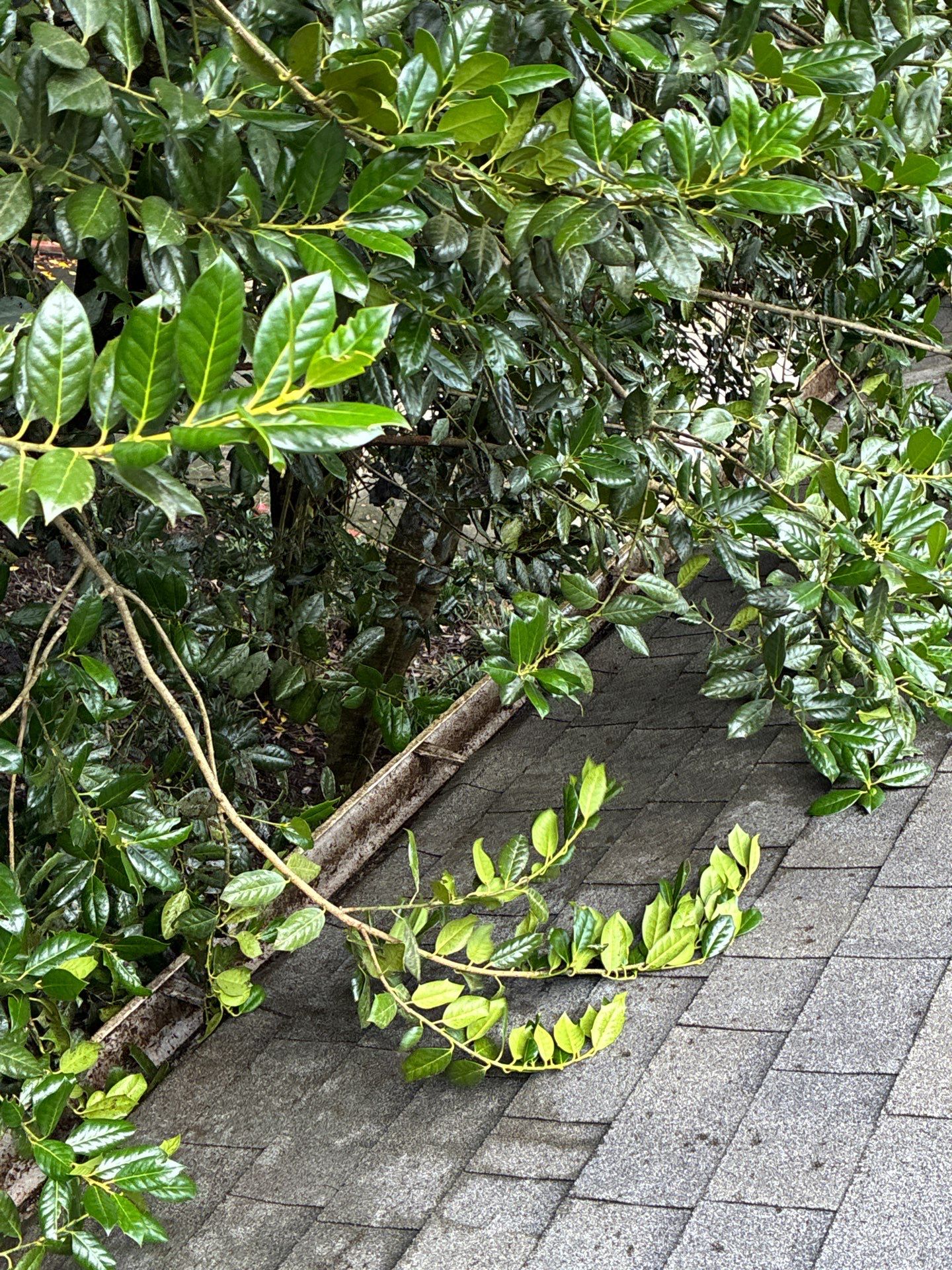
Tree height isn't what decides whether you should prune it yourself. What matters is where the branch sits, what tool the cut needs, and what the branch can damage on its way down. A ten-foot limb over your roofline is riskier than a twenty-foot limb over open grass.
Most people ask the wrong thing first. Can I prune my own tree, or should I call a professional? They answer it by looking up and guessing at height. But height alone tells you almost nothing about risk.
We see this every season around here. A homeowner handles a big oak branch just fine, then gets hurt on a small limb near the gutter line.
So what matters? Three things. Position, tools, and consequence. Get those right and the decision makes itself.
Position means what sits under the branch. Open lawn is forgiving, a branch drops and nothing happens. A roof, a gutter run, a fence, a power drop, a driveway with your car on it, those are not forgiving. Branches don't fall straight down. They pivot on the cut and swing.
Tools tell you almost as much. Here's the line we use in the field.
- Hand pruners or loppers from the ground, both feet planted: usually fine for a homeowner.
- Pole saw with your feet on solid ground and nothing overhead: doable, but you lose control of where the piece lands.
- Any ladder, at any height, holding any saw: that's the line. Don't cross it.
- Chainsaw above shoulder height: pro work, no exceptions.
- Anything within ten feet of a service line: call the utility or a pro, never touch it.
That ladder rule catches people off guard. They figure a short ladder and a small saw is a small job. It isn't. You're holding a cutting tool while standing on something that moves, and your hands are busy.
Consequence is the last piece, and it's the one homeowners skip. Ask yourself what happens if the cut goes badly. Not if you get hurt, that's obvious. What does the falling piece hit?
A crew we sent out to a ranch home last fall found a branch resting right on the gutter. Homeowner had tried to take it off himself, the piece dropped, and it pulled a ten-foot section of gutter loose from the fascia. The pruning would've been the easy part. The fascia repair and gutter reattachment were not.
That's the real math. A bad prune rarely stops at the tree.
Homes here have a lot of mature hardwood sitting close to rooflines, and our storm season loads those limbs with wind and water weight. Branches that looked stable in July come down in a February gust. So the branches most worth removing are usually the ones hanging over the roof, the exact ones you shouldn't be reaching for from a ladder.
One more thing. If the branch is dead, brittle, or has a split at the joint, treat it as a pro job no matter how small it looks. Dead wood breaks where it wants to, not where you cut.
When DIY Pruning Is Reasonably Safe
Here's the honest line we draw. If you can stand flat on the ground, reach the branch with both feet planted, and cut it with a hand tool, that's usually fair game. No ladder. No chainsaw over your head. No leaning.
That rule sounds almost too simple, but it eliminates nearly every serious pruning injury we hear about. The danger isn't the cut, it's the position you're in when you make it.
Most of the small stuff around a yard fits inside that boundary.
Think young dogwoods and crape myrtles, foundation shrubs that have gotten leggy, or the low sucker growth sprouting at the base of a maple. Those are all ground-level jobs. A sharp bypass pruner and twenty minutes will do it.
Before you start, run this quick check. It takes about a minute and it's saved a lot of homeowners a trip to urgent care.
- Stand under the branch with both feet on level ground. If you need a ladder, stop here.
- Look up for power or service lines within ten feet of the branch. Any line means you call, not climb.
- Check the branch diameter. Thicker than two inches and you're into wound-healing territory most homeowners misjudge.
- Estimate where the branch will fall. Cars, fences, and roof edges have a way of being exactly in the path.
- Confirm the cut is on a healthy limb, not a dead or split one. Dead wood breaks unpredictably and often early.
Pass all five? Go ahead. Fail any one of them and you've just learned something worth knowing.
So what counts as a safe DIY cut? Fewer things than people assume, but the list is still useful.
- Dead or broken twigs you can snap off by hand or clip with pruners
- Water sprouts and suckers at the trunk base or along low limbs
- Small crossing branches on young ornamental trees, rubbing each other raw
- Light shaping on shrubs and hedges, done in late winter before new growth
- Low branches blocking a walkway or the mower, as long as they're thin and reachable
Notice what's missing from that list. Anything over your head. Anything near the roofline. Anything you'd need to stand on something to reach.
Timing matters more than most people think. Late winter is the sweet spot here, roughly February into early March. The tree's dormant, the structure is visible without leaves, and wounds start closing as spring growth kicks in. Summer pruning invites pests and disease in a humid Georgia climate, we see that mistake constantly.
One more thing on tools. Sharp blades make clean cuts that heal. Dull ones crush and tear the bark, and torn bark is an open door for rot. Wipe your blades with rubbing alcohol between trees if you suspect disease.
A homeowner once told us he'd trimmed his own crape myrtles for years with no problem. Then he tried the same approach on a water oak limb hanging over his gutter run. Different tree, different height, different outcome entirely.
Three Common Scenarios and What They Mean for You
Most homeowners don't need a lecture on tree biology. They need to know if the branch above their kitchen is their problem or ours. So here are three situations we run into constantly, and what each one means for you.
Scenario one. You've got a young dogwood or crape myrtle in the front yard, maybe eight feet tall. A few crossing branches, some suckers at the base. Nothing hangs over the house. This is your job. Hand pruners, a clean cut just outside the branch collar, done in twenty minutes. Feet on the ground the whole time.
That's the easy one.
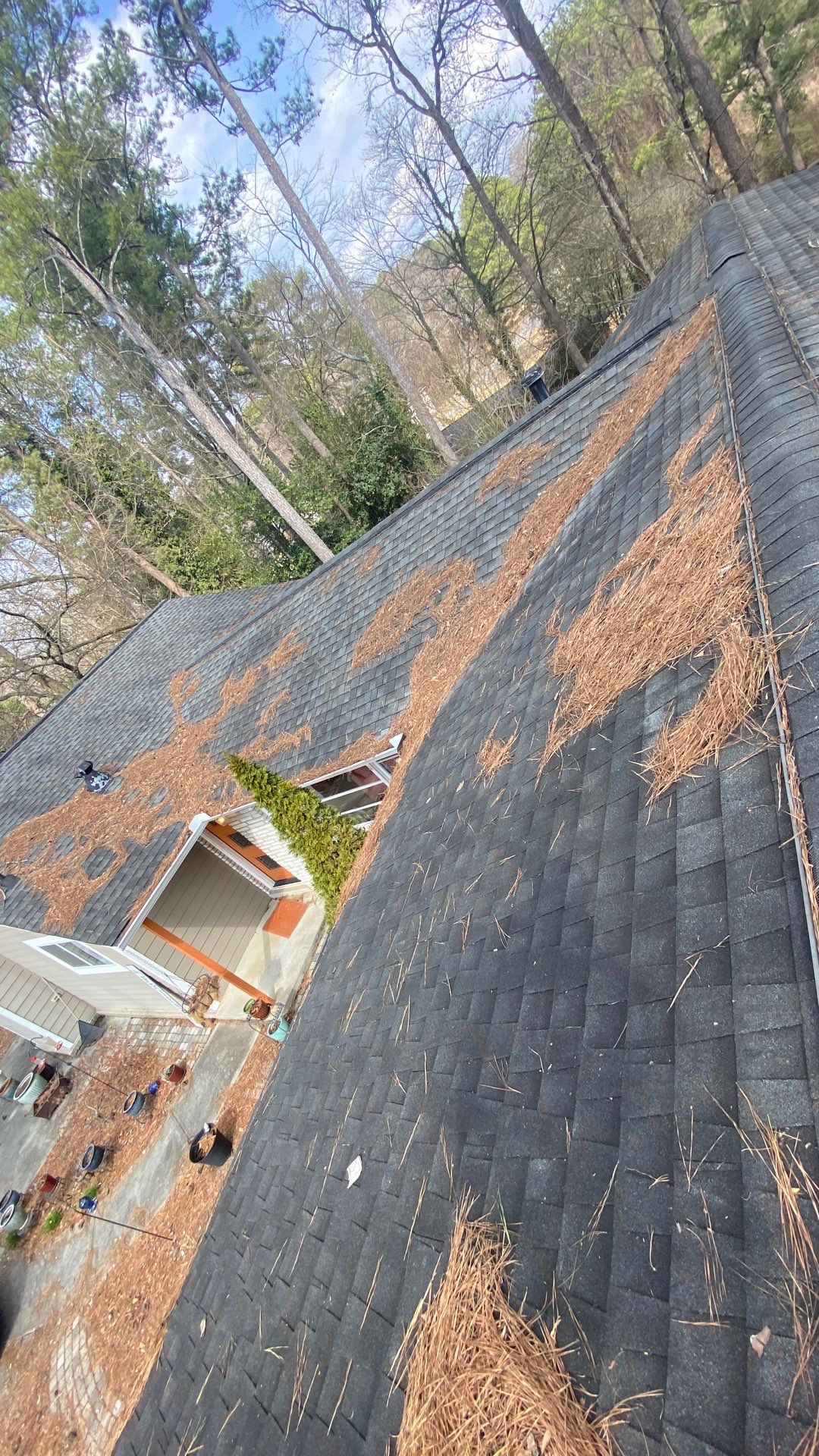
Scenario two is where it gets real. A mature water oak sits behind the garage, and three limbs now rest on the roofline. Every storm those limbs scrape shingles loose. Every fall they dump leaves straight into the gutter run above your back door. You can reach the lowest limb from a ladder, which is exactly the trap. Cutting overhead from a ladder means your weight shifts the second the limb releases. We see this mistake all the time, and the ladder usually wins.
That limb also needs to come off in sections, not one cut. A ten-foot oak branch can weigh well over a hundred pounds. It tears bark down the trunk when it falls wrong, and that wound invites decay for years. Call a pro on this one.
Scenario three. Loblolly pines along the property line, and the service drop to your house runs right through the canopy. Stop. Don't touch it. Utility clearance work requires trained crews and coordination with the power company. No exceptions, no shortcuts, no "I'll just be careful."
How do you sort your own tree into the right bucket? Run through this in order.
- Stand back and look up. Can you reach every cut with both feet on the ground?
- Check the diameter. Anything thicker than your wrist changes the physics.
- Trace the fall path. Is there a roof, a fence, a car, or a wire underneath?
- Look for power lines inside the canopy. If yes, you're done deciding.
- Ask what happens if the cut goes wrong. If the answer involves your roof, hire it out.
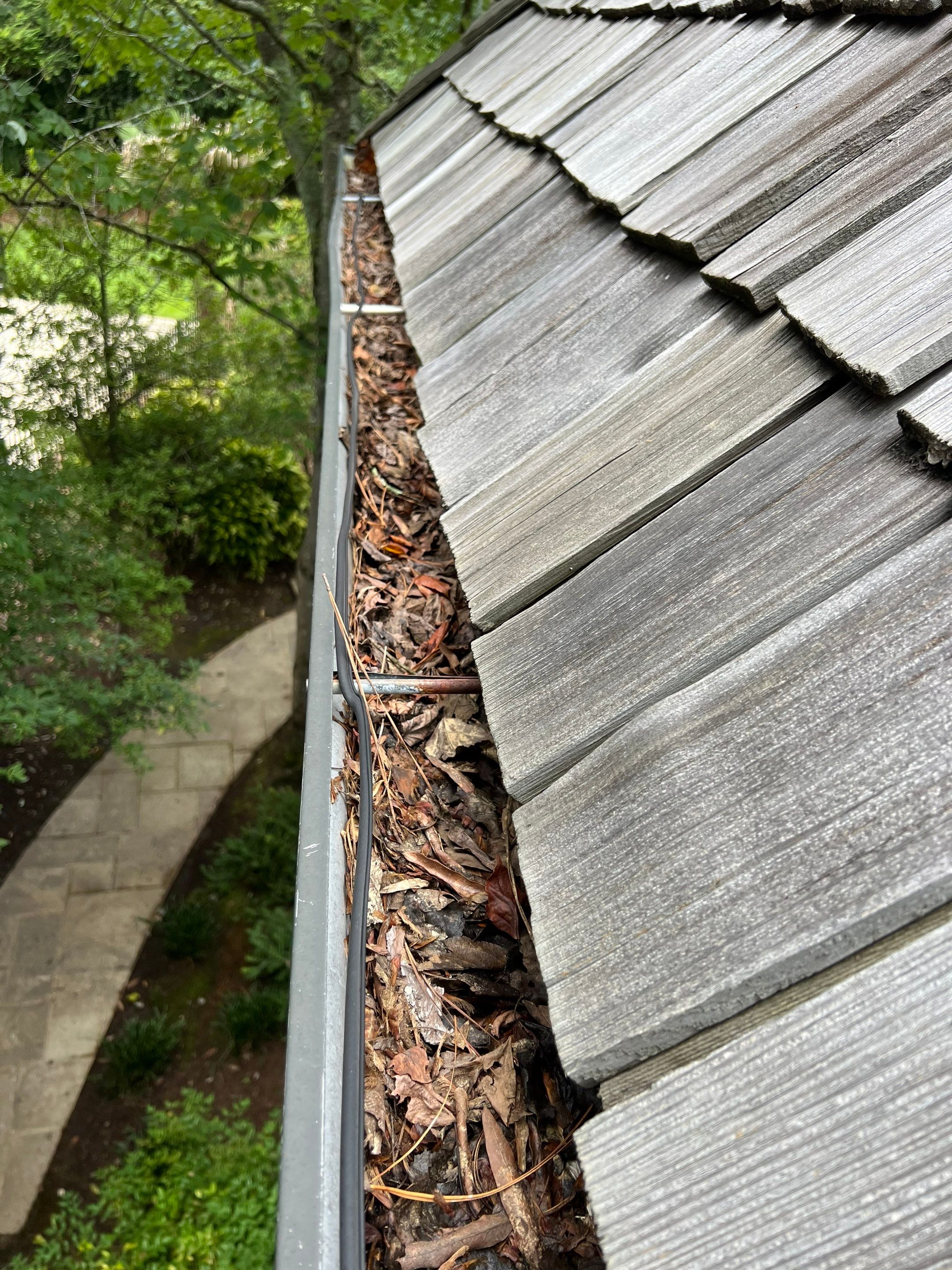
Here's the part people miss. Overhanging limbs aren't just a tree issue, they're a drainage issue. Branches that touch or hover over the roof feed your gutters a steady diet of leaves, twigs, and pine straw. Around here, with the oak and pine mix we've got, that means clogs by November almost every year.
Signs the branches over your house are already costing you:
- Gutters fill back up within weeks of a cleaning
- Shingle granules collecting in the gutter trough
- Scraping sounds on the roof during wind
- Water spilling over the front edge of the gutter during rain
- Moss or dark streaking on the shaded side of the roof
Pruning those limbs back protects two systems at once. The tree heals properly, and your gutters stop drowning.
Looking for the service itself?
This guide covers the decision. The Tree Pruning page covers what the visit includes and how to book it.
SEE TREE PRUNINGTrusted by Homeowners
Licensed and insured. Real prices before we start. Before and after photos with every invoice.
Frequently Asked Questions
How do I know if a branch is safe to prune myself or if I need a professional?
You can prune it yourself if you can stand flat on the ground, reach it with both feet planted, and cut it with a hand tool. No ladder, no chainsaw overhead, no leaning. If the branch hangs over a roof, driveway, or power line, or you need a ladder to reach it, call a professional instead. Position and tools matter more than tree height when you're deciding.
What's a common mistake homeowners make when pruning their own trees?
Homeowners often judge a job by tree height instead of branch position and what sits below it. A crew we sent to a ranch home found a homeowner had tried removing a branch himself, and it dropped and pulled ten feet of gutter loose from the fascia. The pruning was the easy part. Fixing the fascia and gutter wasn't. Small mistakes near your roofline often cost more than the tree work itself.
Why does storm season make pruning decisions riskier?
Mature hardwoods around here sit close to rooflines, and storm season loads those limbs with wind and water weight. Branches that look stable in July can come down in a February gust. That means the limbs most worth removing are usually the ones hanging over your roof, which are also the hardest and riskiest to reach from a ladder. If you're unsure how your yard's trees hold up under seasonal weight, it's worth a professional look before storm season, not during it.
When should I never attempt pruning on my own, even if the branch looks small?
You should never prune a branch that's dead, brittle, or split at the joint, no matter how small it looks. Dead wood breaks where it wants, not where you cut. Also skip any branch within ten feet of a power line, or any cut that requires a ladder combined with a saw. These situations carry real injury risk and are better handled by a professional.
Is there a best time of year to prune trees?
Late winter, roughly February into early March, is the best window for pruning. The tree is dormant, its structure is easy to see without leaves, and wounds start closing as spring growth begins. Summer pruning invites pests and disease in Georgia's humid climate. If you're planning seasonal tree care, our tree pruning services page covers what to expect during each part of the year.
Does pruning a small ornamental tree carry the same risk as pruning a large hardwood?
No, the risk depends on position and consequence, not just the tree's size or type. A young dogwood or crape myrtle pruned from the ground carries little risk. A branch on a large water oak hanging over your gutter carries much more, even if it looks similar in size. One homeowner learned this after years of trimming crape myrtles safely, then getting a different result on an oak limb over his gutter line.
Still Not Sure What You're Looking At?
Send us a photo or book a visit. We'll tell you what it is before anyone quotes a price.
BOOK NOW (opens in a new tab)Or call (404) 994-3494

Metro Atlanta's dedicated gutter specialists. Cleaning, repair, replacement, downspouts, drainage and soffit work, done right the first time with photo proof on every job.
Gutter Services
Drainage & Roofline
© 2026 Shelter Guard Gutter Cleaning and Repair. All Rights Reserved.