No clogged gutters. Cleaned in 24 hours or less.
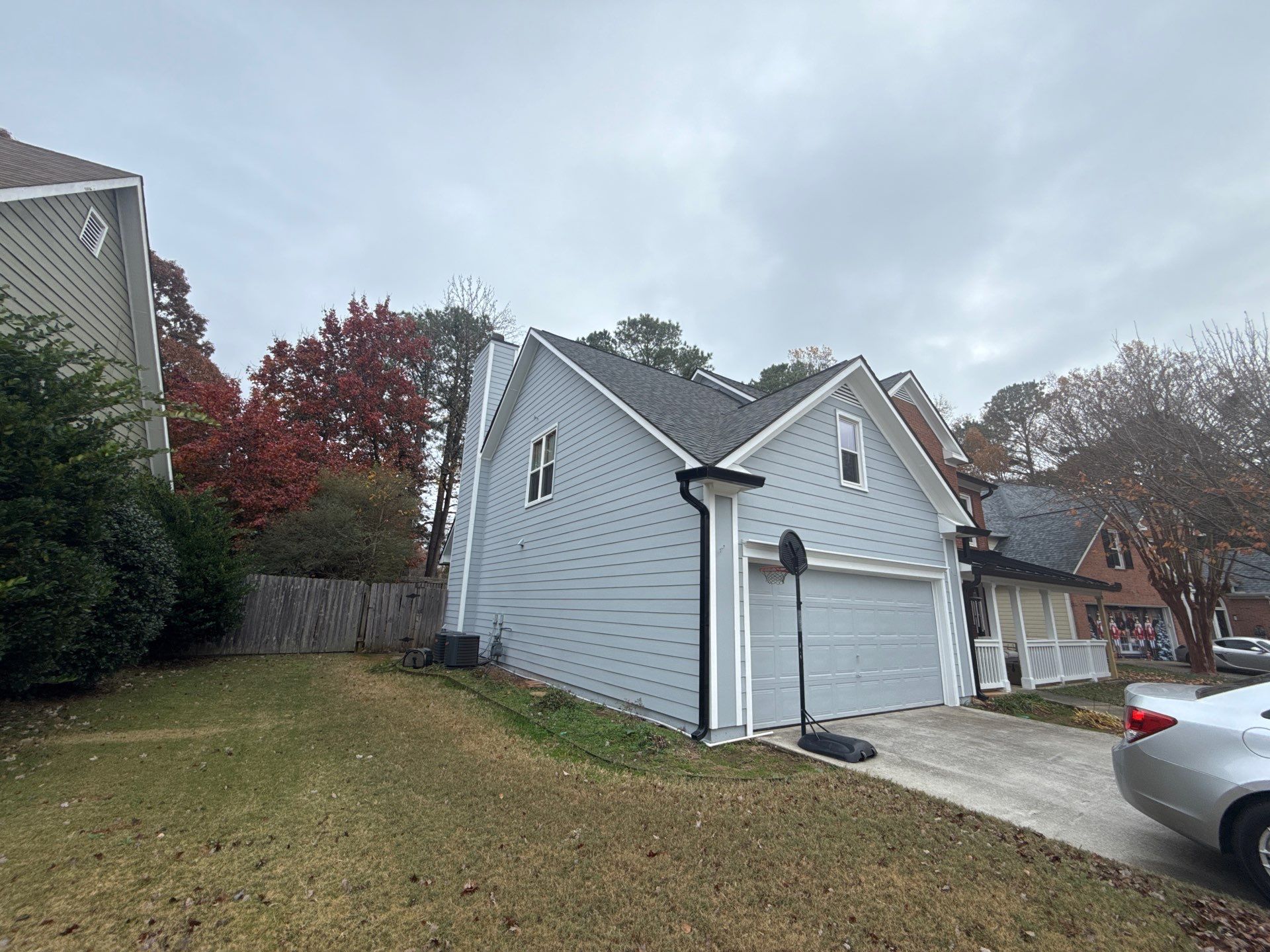
Home Drainage Service Downspout Install
Downspout Installation and Placement: How Many You Need and Where
There is no single right number of downspouts for every house. It depends on how much roof drains into each gutter run, how long and how big those gutters are, and where the water can safely go.
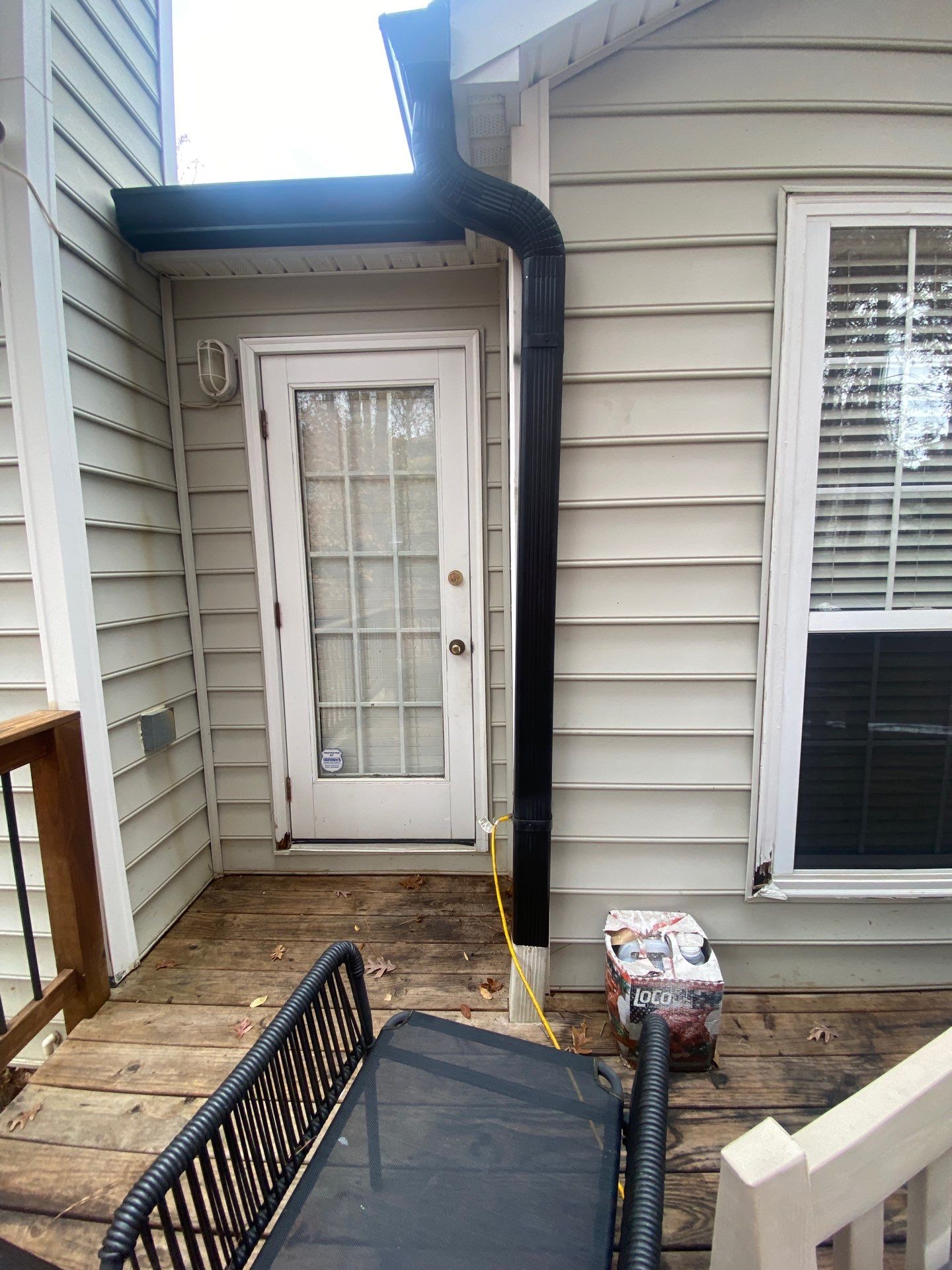
Deciding How Many Downspouts Your Roof Needs
There is no single right number of downspouts for every house. It depends on how much roof drains into each gutter run, how long and how big those gutters are, and where the water can safely go. If one downspout is doing the work of two, water ends up next to your foundation.
Most people count downspouts by looking at the corners of the house. That's a start, but it's not how the number gets decided. A downspout's job is to set free a specific amount of water before the gutter fills up. Give it too much roof to handle, and the gutter overflows in the middle of a heavy storm, right where you can't see it.
The factors that decide how many downspouts you need include:
- How much roof drains to each gutter: A big, open roof face sends a lot more water down than a small porch roof does.
- How steep the roof is: Steeper roofs shed water faster, so it hits the gutter in a rush instead of a trickle.
- Roof valleys: Where two roof slopes meet, water gathers and pours into one spot. That spot often needs its own downspout close by.
- Gutter length: A long, straight run sends water a long way to reach one outlet. Adding an outlet in the middle or at the far end shortens that trip.
- Gutter and downspout size: Bigger gutters and wider downspouts move more water, which can mean fewer outlets. Smaller ones may need more.
- Where the water can go: A downspout is only useful if it can drop water somewhere safe, away from the foundation, walkways, and your neighbor's property.
That last point matters more than people think. Sometimes the best spot for a downspout, based on roof size, is right next to a patio, a driveway, or a basement window. Then the choice is to move it, add a second one somewhere better, or carry the water away with an extension or underground drainage. Placement and count get decided together.
Your house will usually tell you when it's short on downspouts. Watch during a hard rain:
- Do you see water sheeting over the front edge of the gutter, even right after a cleaning?
- Is there a worn-out patch of mulch, a little trench in the dirt, or dark staining on the siding under one section?
- Does one downspout gush like a fire hose while another barely drips?
Each of these means water isn't being split up evenly. The next stop for that water is the soil around your foundation. Adding a downspout is a small job; fixing a wet crawl space or a cracked foundation wall is not.
To work out the right number for your home, professionals look at your roof, your gutter runs, and how your yard slopes. Every house drains differently, and walking through the options helps ensure the plan fits your property. Photos are an essential part of these visits so you can see exactly what's going on and why a specific downspout configuration is recommended.
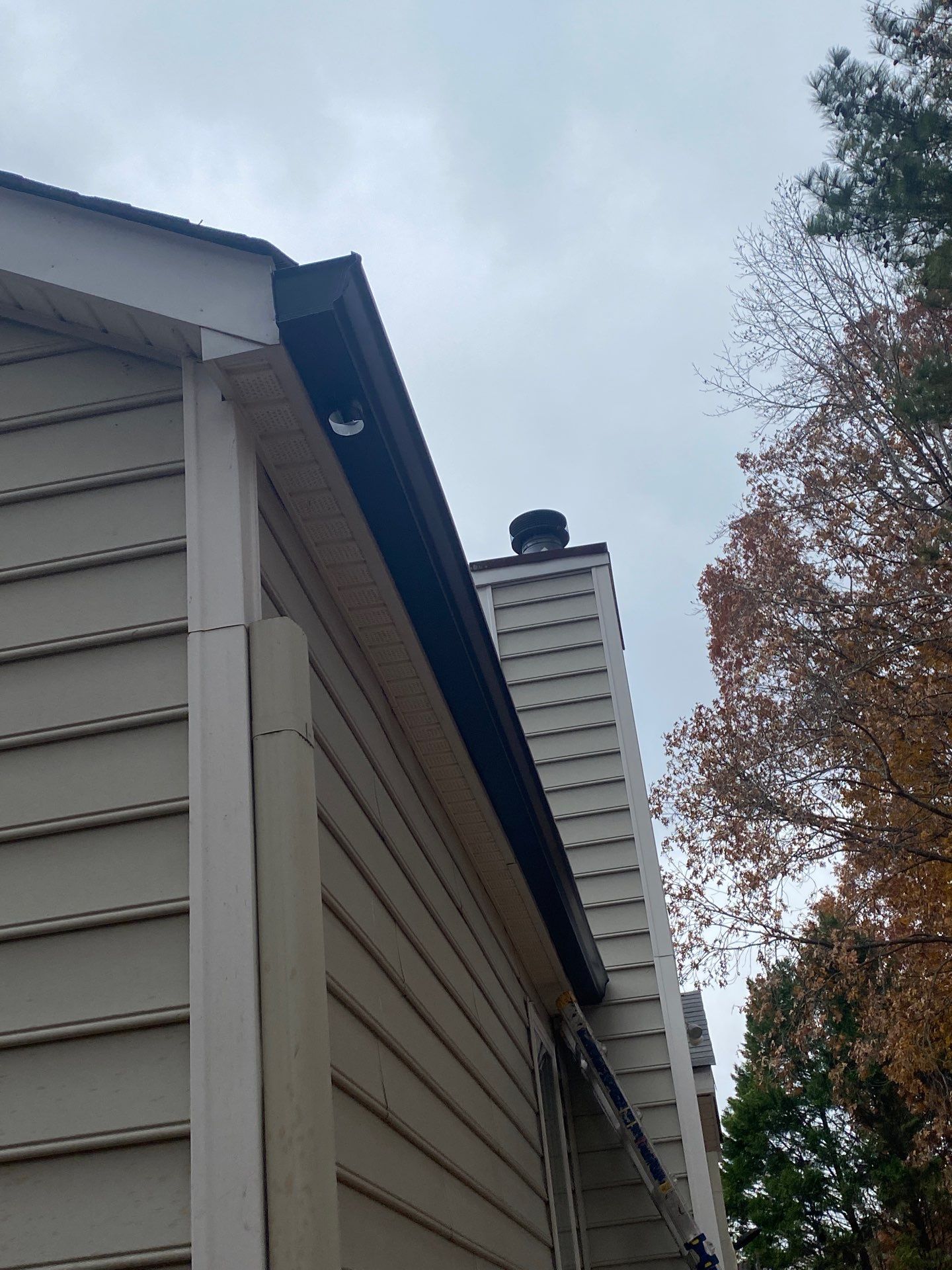
When a Repair Fixes the Problem Instead of a Full Install
Not every downspout problem means you need a new one. A lot of the time, the downspout you have is in the right spot and sized right. It's just loose, blocked, or dented. In those cases, a repair or a cleaning does the job, and a new install would be money spent for nothing.
When a Repair Is Usually Enough
- The downspout has pulled away from the wall: Straps and brackets work loose over time. Fastening it back to the house fixes it.
- An elbow has slipped off: The bend at the bottom, or the one up at the gutter, can come apart. Once it's put back and secured, water flows properly again.
- There's a small leak at a joint: A drip at one seam doesn't mean the whole piece has failed. Resealing the joint often stops it.
- The bottom section got crushed: A mower, a car, or yard equipment can flatten the lowest piece. Swapping out that single section is a minor fix.
- Water dumps right at the wall: If the downspout works but there's no extension or splash block, the fix is at the ground level, not up on the roof.
A clogged downspout is the most common issue that masquerades as a broken one. Water backs up, the gutter overflows, and it seems like the downspout isn't doing its job. Often, it's simply packed with leaves and grit from the gutter above. That calls for gutter cleaning, not a replacement.
When You Need a Downspout Replacement
A repair stops making sense when the trouble goes beyond one weak spot:
- Rust has eaten through the metal, or there are splits running along the length.
- You've fixed the same downspout more than once and it keeps failing.
- The downspout is too small for the gutter it serves, so it can't keep up in heavy rain even when it's clean.
- The outlet sits where it drops water against the foundation, a walkway, or a basement window, and moving it is the only real fix.
- A section of gutter has no downspout at all and overflows every storm.
Sometimes the problem isn't the downspout at all. If the gutter has pulled away from the fascia and tilts the wrong way, water won't reach the outlet no matter how good the downspout is. That calls for gutter reattachment, leaving the downspout right where it is.
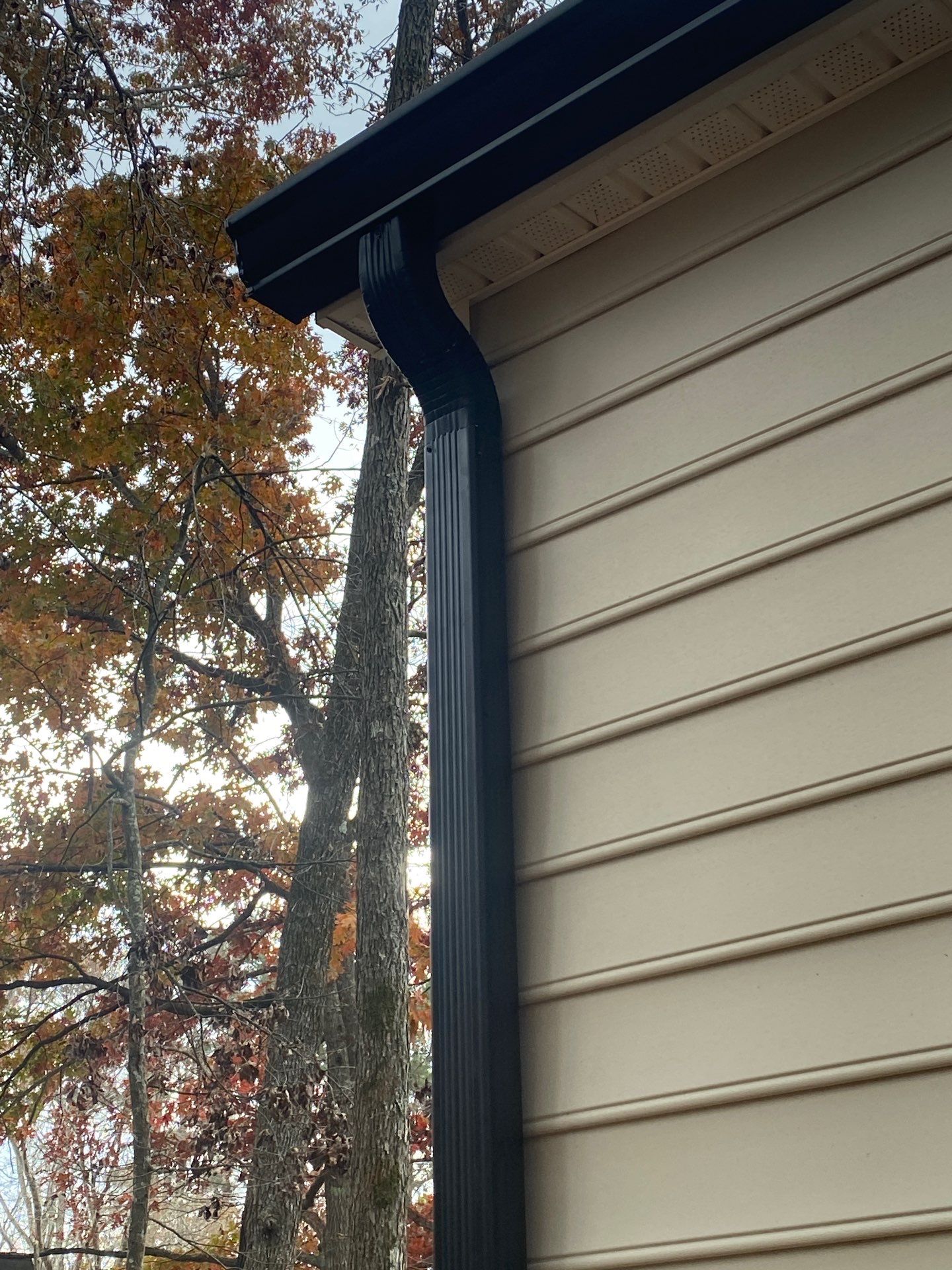
Downspout Installation
New Construction vs. Older Homes: Different Drainage Plans
A brand-new house and a 40-year-old house can have the exact same roof and still need very different downspout plans.
New Construction Challenges
On new construction, gutters and downspouts are often among the last things added, placed primarily to look tidy and keep costs down. That can leave you with too few outlets or outlets that empty right at the base of the wall.
Furthermore, soil that was dug out and filled back in around the foundation tends to settle over the first few years. Ground that sloped away from the house on move-in day can slowly flatten or even tip back toward it.
- What to check on new builds: Look for low spots or sinking soil along the foundation (especially under a downspout), short elbows with no extensions, new landscaping mulch that washes out in heavy rain, and long gutter runs with only a single outlet at the far end.
Older Home Challenges
Over the years, a lot changes around an older home. Additions, covered porches, or decks alter roof lines. Trees mature and drop massive amounts of debris into gutters. Each change shifts where water lands, but the downspouts often stayed right where they were first installed.
Older houses are also more likely to have downspouts tied into buried pipes. Those lines can fill with roots and grit or get crushed over time.
- What to check on older homes: Look for additions with no dedicated outlet, downspouts that disappear into the ground and overflow at the top during heavy rain, staining or peeling paint low on the siding near an outlet, and gutter straps pulling loose from soft or rotted wood.

Clean Gutters, Set and Forget
A downspout only moves the water your gutters can catch. How often your gutters need cleaning depends on what's hanging over your roof. We'll match a plan to your lot and handle it for you. No more remembering. No more climbing ladders.
START A SEASONAL PLAN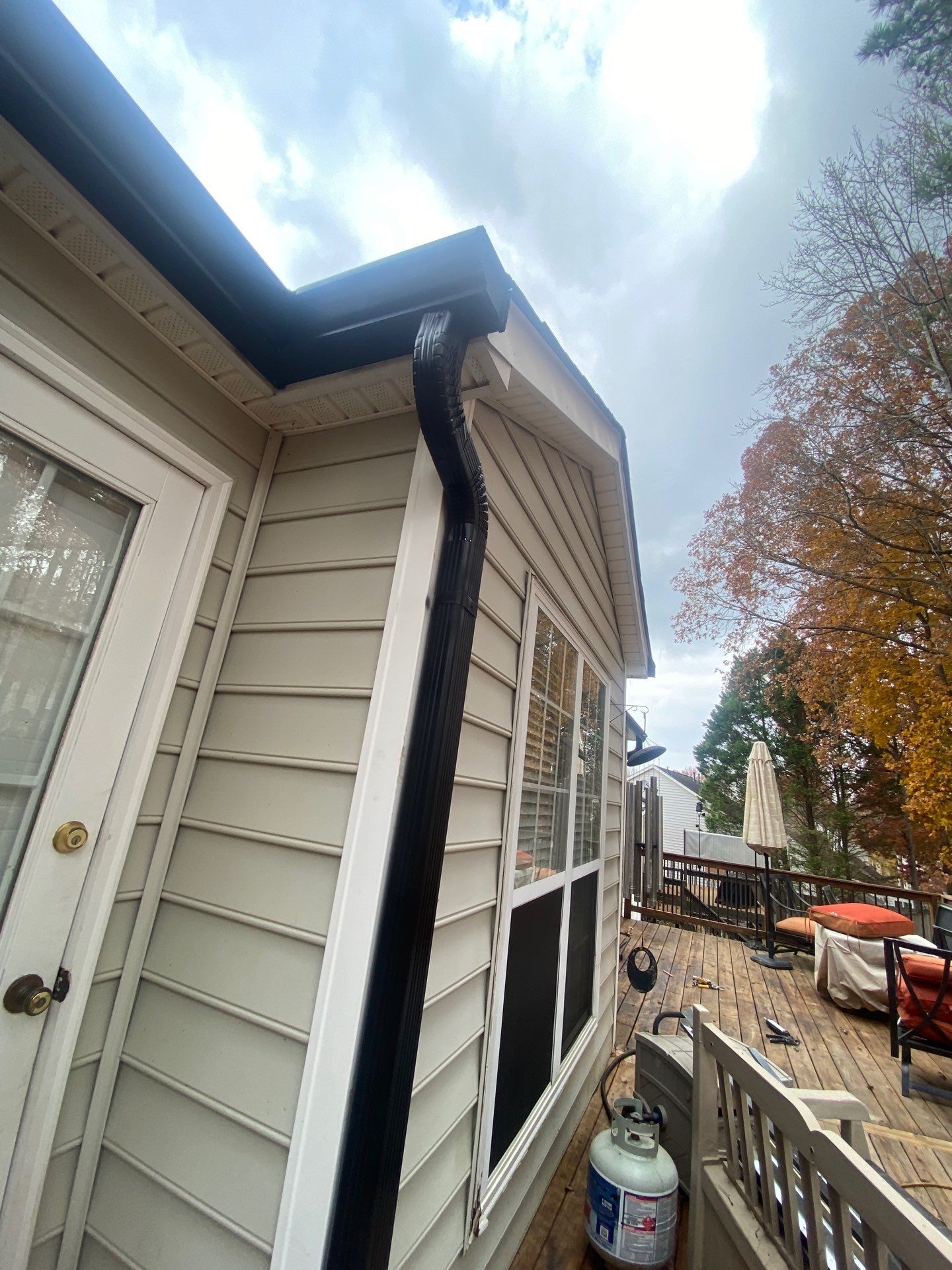
Where Downspout Water Should Go
A downspout only does half the job if it drops water at the base of your wall. The ultimate goal is simple: water should land on ground that slopes away from the house and keep moving until it can soak in or drain off safely.
Common Ways to Carry Water Away
- Splash block: A small concrete or plastic tray under the outlet that spreads the water out. It works when the ground already slopes away well, but it doesn't move water very far.
- Downspout extension: A straight or hinged piece that carries water several feet out into the yard. Some flip up to make mowing easier.
- Moving the outlet: Rerouting the downspout to a corner where the ground drops off naturally.
- Underground drainage: A buried pipe that carries water out to a lower spot in the yard, often ending at a pop-up outlet. This is the cleanest option when there's no good surface space to drop water nearby.
Where Water Should Never Go
- Into a low spot or flowerbed right against the foundation.
- Onto a walkway, steps, or driveway where it can freeze into a slip hazard or stain the concrete.
- Toward a basement window, window well, or crawl space vent.
- Under a deck or porch where the ground stays constantly wet and out of sight.
- Directly into your neighbor's yard.
Trusted by Homeowners
Licensed and insured. Real prices before we start. Before and after photos with every visit.
BOOK NOW (opens in a new tab)Frequently Asked Questions
Common questions about downspout installation
Are gutters and downspouts required by building codes?
Most residential codes don't legally mandate gutters, but once water has nowhere safe to go, foundation and structural problems follow fast. The real question isn't code compliance, it's whether your roof dumps water next to your foundation. If you see pooling or washing mulch during a storm, your setup needs attention.
Can new construction nearby change how my yard drains?
Yes. Grading changes or new builds on neighboring properties can push extra water onto your land and overwhelm your existing drainage. If a neighboring lot raised its soil level, water that used to soak away may now run toward your property.
What should I do about an old, uncovered drainage line?
An uncovered or aging French drain often means it's clogged, crushed, or no longer tied into a working outlet. Buried lines fill with roots and debris over time, causing water to back up. If you see standing water near an old drain, it likely needs to be cleared, inspected, or completely rerouted.
How do I know if I need a repair instead of a full downspout install?
Small dents, one loose section, or a single leaky joint usually mean a repair is enough. Rust holes, multiple cracked seams, or a downspout pulling away in more than one spot usually mean it's time to replace it. Read the full guide.
Why does my yard stay flooded for days after it rains?
Standing water usually comes from heavy clay soil, a flat or reversed grade, blocked downspouts, and roof water dumping in one spot, all working together. Fixing where your roof water lands is almost always the first real step. Read the full guide.
Send the Water Somewhere Safe
If it's pooling by the foundation or washing out the beds, the downspout is usually why. Let's look at where it's actually going.
BOOK NOW (opens in a new tab)Or call (404) 994-3494

Metro Atlanta's dedicated gutter specialists. Cleaning, repair, replacement, downspouts, drainage and soffit work, done right the first time with photo proof on every job.
Gutter Services
Drainage & Roofline
© 2026 Shelter Guard Gutter Cleaning and Repair. All Rights Reserved.