No clogged gutters. Cleaned in 24 hours or less.
Home Guides Why Your Yard Stays Flooded for Days After It Rains (And What Gutters Have to Do With It)
Why Your Yard Stays Flooded for Days After It Rains (And What Gutters Have to Do With It)
Standing water usually comes from four things working together: heavy clay soil, a flat or reversed grade, blocked downspouts, and roof water dumping in one spot.
The Real Causes of Standing Water in a Yard
Standing water usually comes from four things working together: heavy clay soil, a flat or reversed grade, blocked downspouts, and roof water dumping in one spot. Around here, the clay does most of the damage because it holds water instead of draining it. Fixing where your roof water lands is almost always the first real step.
Ask a dozen homeowners why their yard floods and eleven will blame the rain. But rain isn't the problem. Where that water goes after it hits your property is.
Most homes around here sit on Georgia red clay. Clay particles are tiny and pack tight. Water can't soak through fast, so it sits on top and waits. The Georgia Soil and Water Conservation Commission notes that clay soils across the Piedmont region drain slowly by nature. That's not a defect in your yard, that's just the dirt you were handed.
Here's what we find when we walk a flooded property.
- Compacted clay soil that stopped absorbing water years ago, often from construction traffic or heavy equipment during a past project
- Flat or negative grade, where the ground slopes back toward the house instead of away from it
- Clogged gutters that overflow and dump roof water straight down the foundation wall
- Downspouts that end right at the house with no extension, concentrating hundreds of gallons in one small spot
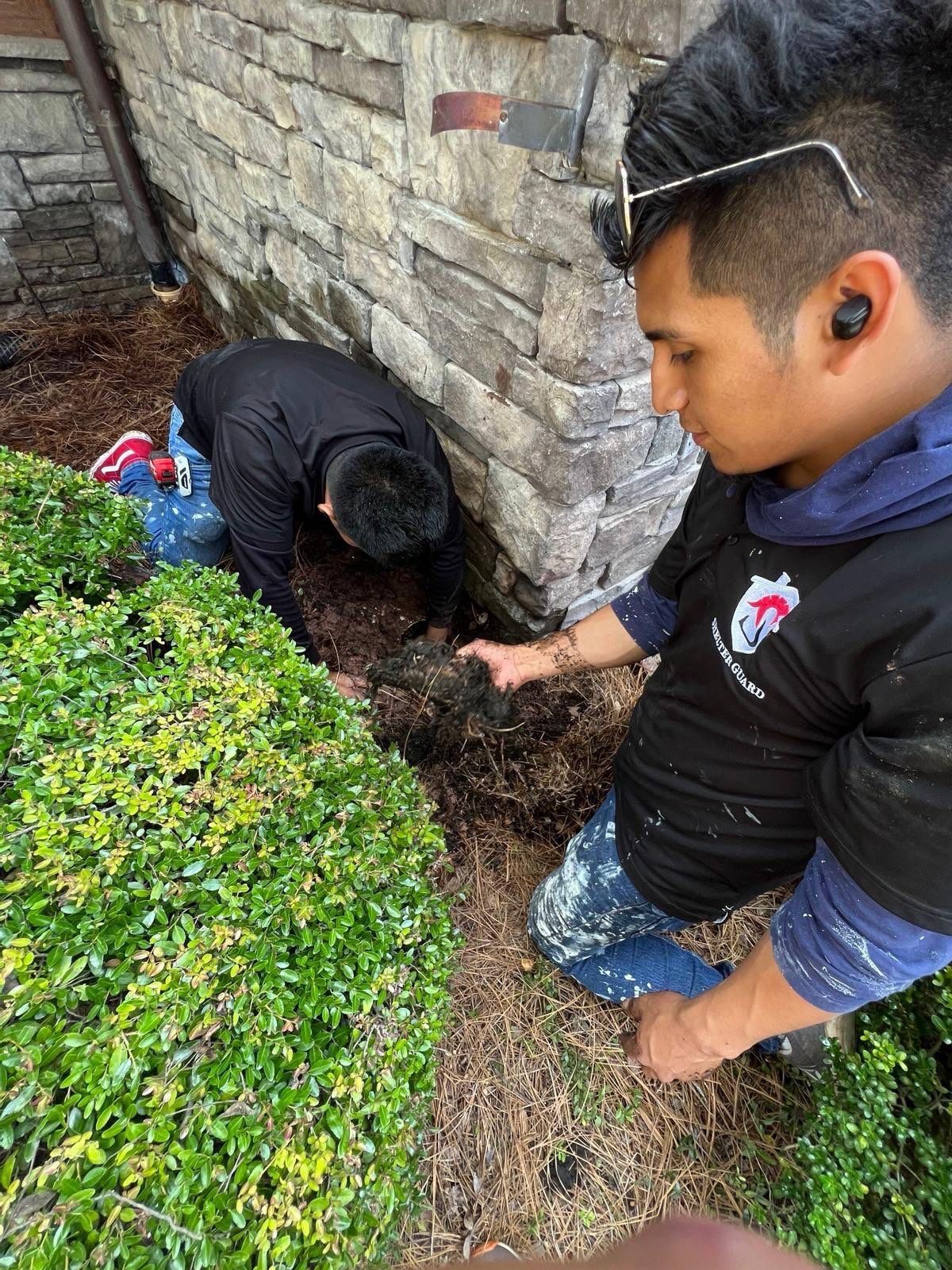
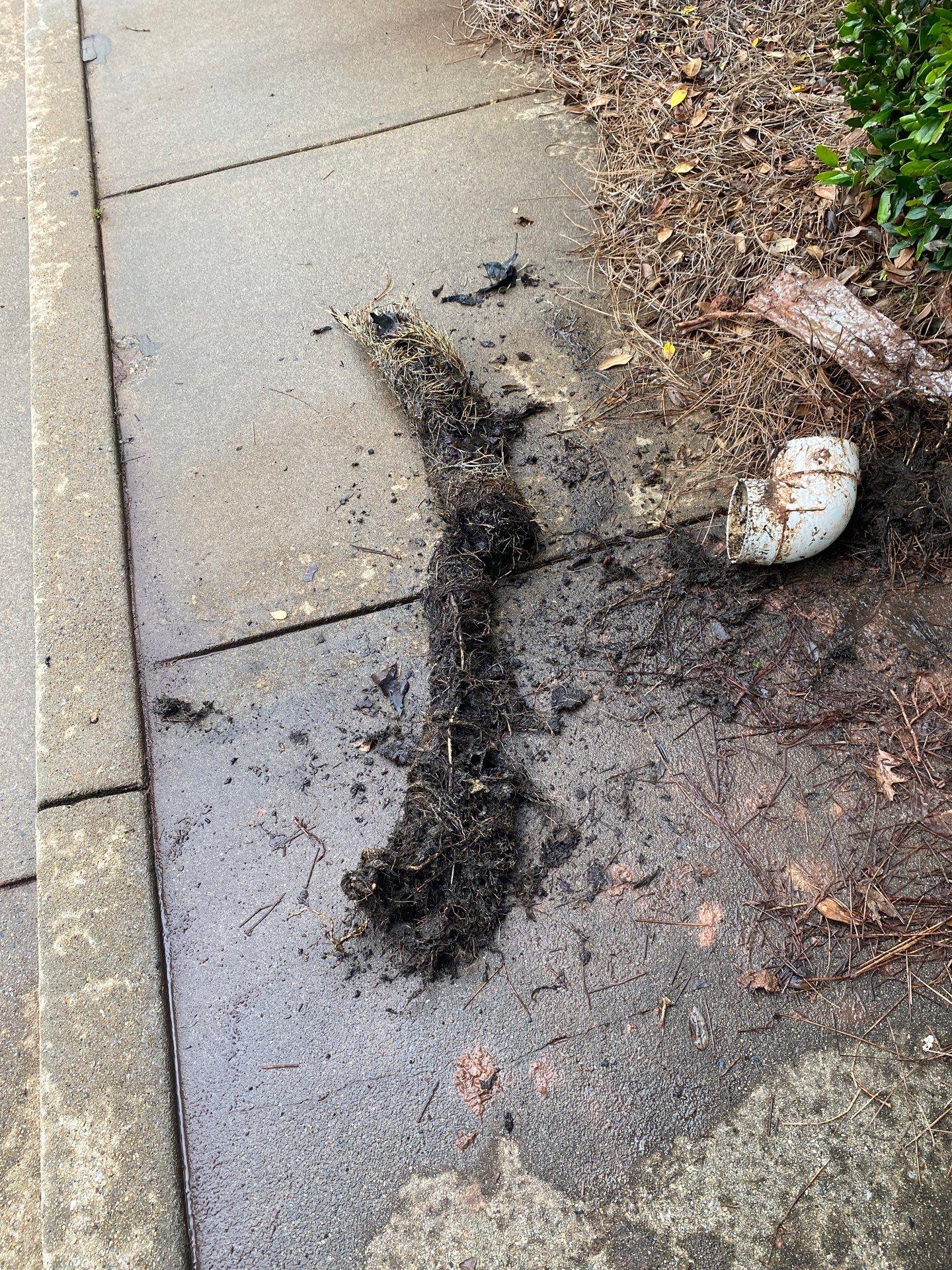
- Collapsed or blocked underground drainage lines that were installed years ago and never checked since
That last one surprises people. Underground drainage doesn't last forever. Roots find it. Silt fills it. And nobody digs it up to look until the yard turns into a pond.
Let's talk volume for a second, because the numbers matter more than most folks realize. A 2,000 square foot roof sheds over 1,200 gallons of water in a single inch of rain. All of it lands on your gutters. If those gutters are packed with pine needles and oak leaves, the water goes over the edge instead of through the system.
So now 1,200 gallons hits the ground in a narrow strip along your foundation. On clay. That yard never had a chance.
We had a client who'd spent two seasons adding topsoil and reseeding a mushy side yard. Nothing held. The real issue was a single downspout emptying eight feet from the house into a low spot. One downspout. That's it. Redirecting it underground solved what two years of grass seed couldn't.
Grade problems are the second big one. Builders are supposed to slope the ground away from the foundation, but settling happens. Mulch beds get built up. Patios get added. Over ten or fifteen years, that slope flattens out or reverses without anyone noticing.
Want to know which one is your problem? Go outside during the next real downpour and watch. Seriously. Five minutes in the rain tells you more than an hour of guessing from the window.
Most people don't realize their flooded yard is a roof problem until somebody shows them the water coming over the gutter edge. And it's almost always the cheapest part of the system to fix first.
Clay Soil and Why Water Sits Longer in This Area
Dig a foot down in most yards around here and you hit it. Red clay. Dense, sticky, and slow. That clay is the single biggest reason water sits on your lawn long after your neighbor's driveway has dried.
Sandy soil drains fast because water slips between loose grains. Clay doesn't work that way. Clay particles are tiny and pack together tight, so water has almost nowhere to go. According to the USDA Natural Resources Conservation Service, clay soils can absorb water at a fraction of the rate of sandy soils. That difference is what turns a two-inch rain into a four-day swamp.
And here's what most homeowners miss. Clay gets worse when it's already wet.
When clay soaks up water, it swells. The pores close. So the second storm in a week has even less room to soak in than the first one did. That's why a single heavy rain might drain fine in October, but a wet March week leaves standing water for days. Same yard, same soil, totally different result.
You can usually spot clay problems without a soil test. Look for these signs after a storm:
- Water sits in flat, shallow puddles instead of soaking down
- The ground feels spongy underfoot for 3 or more days
- Deep cracks open in the soil during dry summer stretches
- Grass thins out or turns yellow in the low spots
- Shovel blades come up coated in slick, sticky red mud
We see this mistake all the time. A homeowner adds topsoil to a low spot, seeds it, and calls it done. Six weeks later the puddle is back. The topsoil didn't fix anything because the clay underneath is still blocking the water.
Want a rough read on how slow your soil is? Try this.
- Dig a hole about 12 inches deep and 6 inches wide in the problem area.
- Fill it with water and let it drain completely. This pre-soaks the walls.
- Fill it a second time, right to the top.
- Mark the water level and check it after one hour.
- Measure how many inches dropped. Less than one inch per hour means drainage is poor.
- Repeat in a spot that drains well, then compare the two numbers.
Most yards we test come in under an inch an hour. Some are closer to a quarter inch.
Now add the roof to the picture. A 2,000 square foot roof sheds roughly 1,200 gallons of water during a one-inch rain. If your downspouts dump that volume onto clay that can barely take a quarter inch per hour, the soil loses that fight every single time. The clay isn't the only problem, it's the reason your roof runoff has nowhere to escape.
So the fix usually isn't amending the soil. It's moving the water past it. Underground drainage carries roof runoff out to a safe discharge point instead of asking slow clay to swallow 1,200 gallons in an afternoon.
One more thing worth knowing. Older lots often have compacted clay from construction equipment that rolled over the ground decades ago. That soil never loosened up. It just stayed packed, and it still drains like pavement today.
Signs Your Yard Has a Bigger Drainage Problem
Standing water after a hard rain isn't automatically a crisis. Clay soil holds water for a while, that's normal. But there's a line between slow drainage and a real problem, and most homeowners don't know where it is until damage shows up somewhere expensive.
So here's how we tell the difference in the field.
Time is the first clue. A yard that drains in 12 to 24 hours is doing its job. A yard still holding water 48 hours later is telling you the water has nowhere to go. And if it sits for three or four days, you're not looking at a soil issue anymore. You're looking at a system failure.
Watch for these red flags:
- Water pooling within three feet of your foundation wall after every rain
- Deep ruts or bare trenches in the soil directly under a downspout
- Mushy ground or a spongy lawn that never fully dries, even in a dry week
- Mildew smell, damp drywall, or a chalky white crust on basement or crawl space walls
- Mosquitoes breeding in the same low spot year after year
- Mulch or pine straw washed out of beds and scattered across the driveway
- Green algae or moss creeping across concrete near the house
Any one of those on its own might be minor. Two or three together means water is being delivered to the wrong place in volume. We see this combination all the time, and it almost always traces back to a downspout dumping at the base of the wall or an underground drain line that's packed solid.
Here's a scenario we ran into on a ranch home. The homeowner thought she had a yard problem. Side yard stayed wet for days, grass wouldn't grow, and she'd already replaced sod twice. When we walked it with her during the estimate, we found two downspouts feeding a buried drain line that ended nowhere. It had collapsed years earlier. Every storm pushed hundreds of gallons into that one strip of soil. The yard wasn't the problem, the drainage was.
That's why we ask you to be there for estimates. We need to walk the property together, show you where the water is going, and talk through solutions that fit your lot and your budget. Gutter cleaning is different, we don't need you home for that, and you'll get pictures from every visit either way.
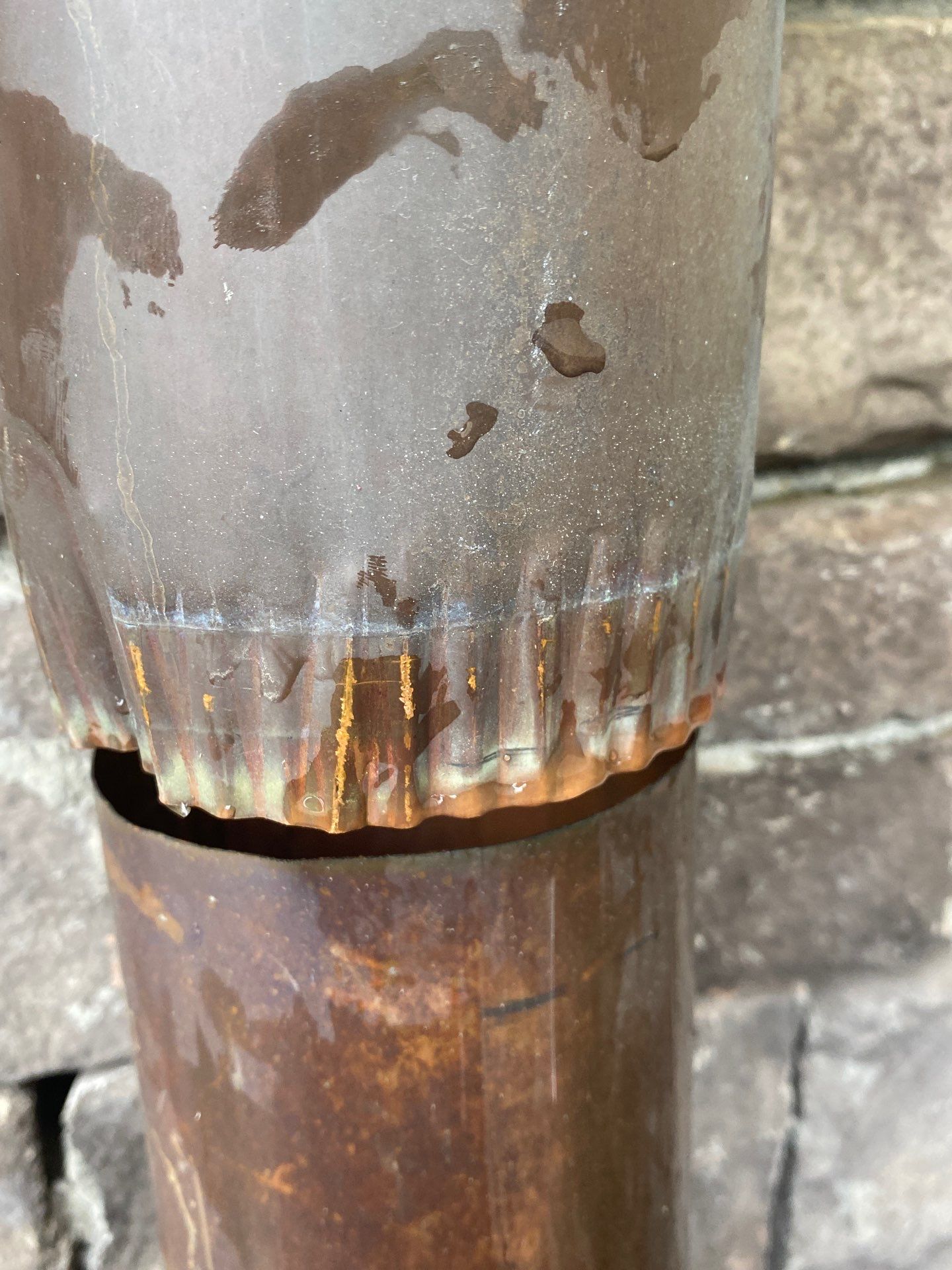
One more sign people miss entirely. Go outside during a steady rain and look up. If water is sheeting over the front edge of your gutters, spilling out at a seam, or shooting past the end cap, your gutters aren't moving water at all. They're just decorating the roofline. Everything they should be carrying away is landing at your foundation instead.
Check that once. It takes five minutes and it tells you more than a dry-day inspection ever will.
Looking for the service itself?
This guide covers the decision. The Underground Drainage page covers what the visit includes and how to book it.
SEE UNDERGROUND DRAINAGETrusted by Homeowners
Licensed and insured. Real prices before we start. Before and after photos with every invoice.
Frequently Asked Questions
How long is too long for water to sit in my yard after it rains?
Water should soak in within 24 to 48 hours after normal rain. If puddles stay for 3 days or more, your soil or drainage system has a real problem. Clay soil here makes this worse because it swells when wet and blocks water from soaking through. If your yard stays soggy for days at a time after every storm, it's a sign your roof runoff and grade need attention, not just more grass seed.
Will adding topsoil or reseeding fix a soggy low spot in my yard?
No, topsoil and reseeding rarely fix standing water for good. This is the most common mistake we see in yards around here. The clay underneath is still blocking water, so the puddle comes back within weeks. The real fix is moving water away from that spot with proper grading or underground drainage. Reseeding treats the surface, not the reason water is landing and staying there in the first place.
Is my flooding problem caused by the soil or my gutters?
It's usually both working together. The clay soil around here drains slowly on its own, but clogged gutters and short downspouts make it much worse by dumping large amounts of water in one spot. A 2,000 square foot roof sheds over 1,200 gallons in just one inch of rain. When that lands on clay that barely absorbs a quarter inch per hour, the yard floods fast. Watching your yard during a real downpour usually tells you which part is failing.
How do I know if my yard's grading has changed over time?
Watch where water flows during the next heavy rain. If it moves toward your house instead of away from it, your grade has likely flattened or reversed. This happens over 10 to 15 years as soil settles, mulch beds build up, or patios get added near the foundation. Builders originally slope yards away from the house, but that slope can disappear without anyone noticing until flooding starts.
Does the soil type here make drainage problems more common than in other areas?
Yes, most homes here sit on Georgia red clay, which drains far slower than sandy soil found in other parts of the region. Clay particles pack tightly, leaving little room for water to pass through. The Georgia Soil and Water Conservation Commission notes that Piedmont clay soils drain slowly by nature. This is common across the area, so if your yard floods for days, you're dealing with the local soil, not a flaw in your property alone.
Can underground drainage lines stop working even if they were installed correctly?
Yes, underground drainage lines can fail years after installation without any warning signs above ground. Roots grow into pipes, and silt slowly fills them until water can't pass through anymore. Most homeowners never dig them up to check until the yard turns into standing water again. If your yard used to drain fine and now stays flooded for days, an old blocked line could be the hidden cause worth having someone look at.
Still Not Sure What You're Looking At?
Send us a photo or book a visit. We'll tell you what it is before anyone quotes a price.
BOOK NOW (opens in a new tab)Or call (404) 994-3494

Metro Atlanta's dedicated gutter specialists. Cleaning, repair, replacement, downspouts, drainage and soffit work, done right the first time with photo proof on every job.
Gutter Services
Drainage & Roofline
© 2026 Shelter Guard Gutter Cleaning and Repair. All Rights Reserved.