No clogged gutters. Cleaned in 24 hours or less.
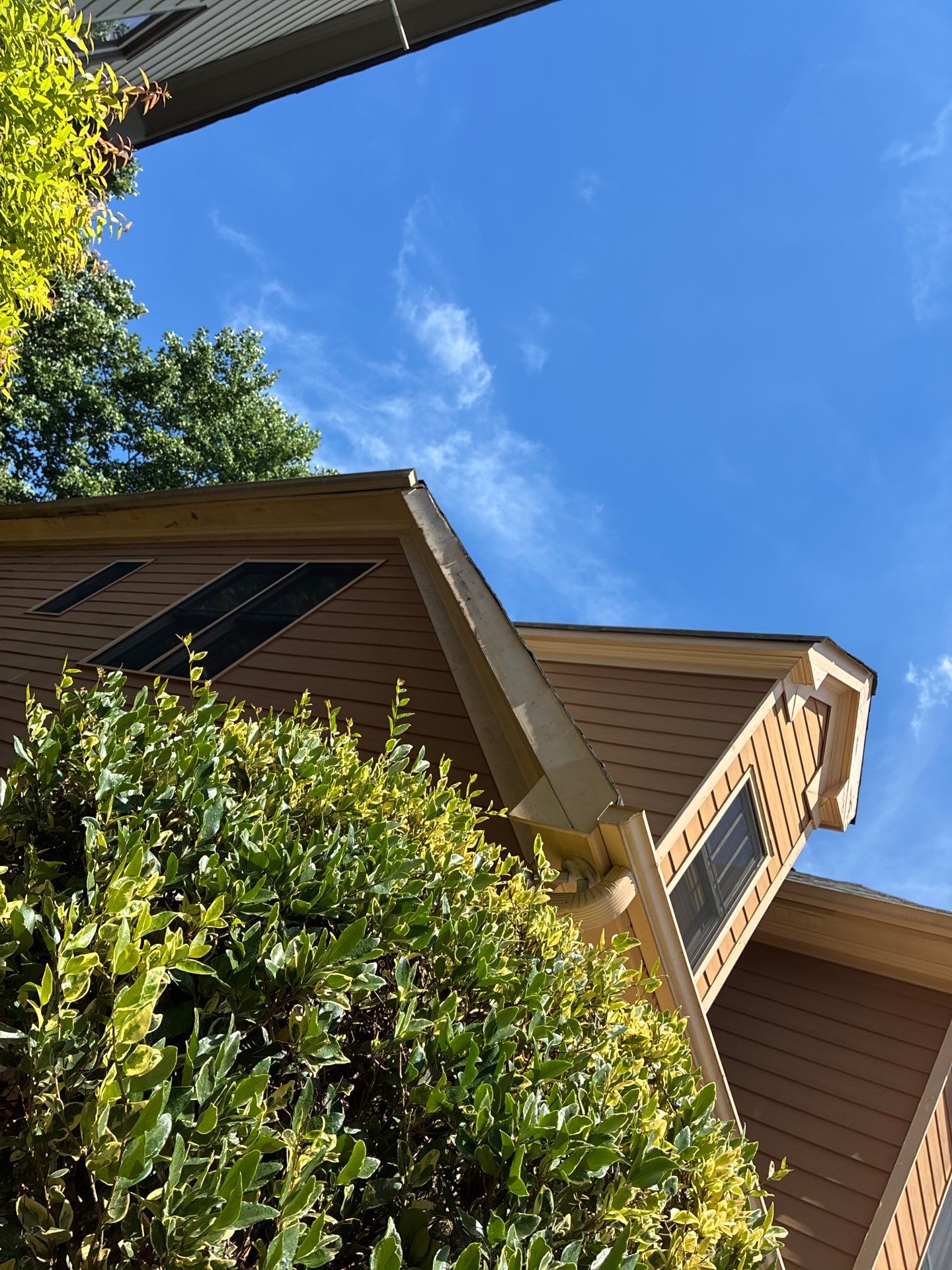
Home Water Damage Restoration Service Soffit Repair
Soffit Repair: Stop Small Holes From Becoming Big Problems
Trusted gutter experts serving since 2019
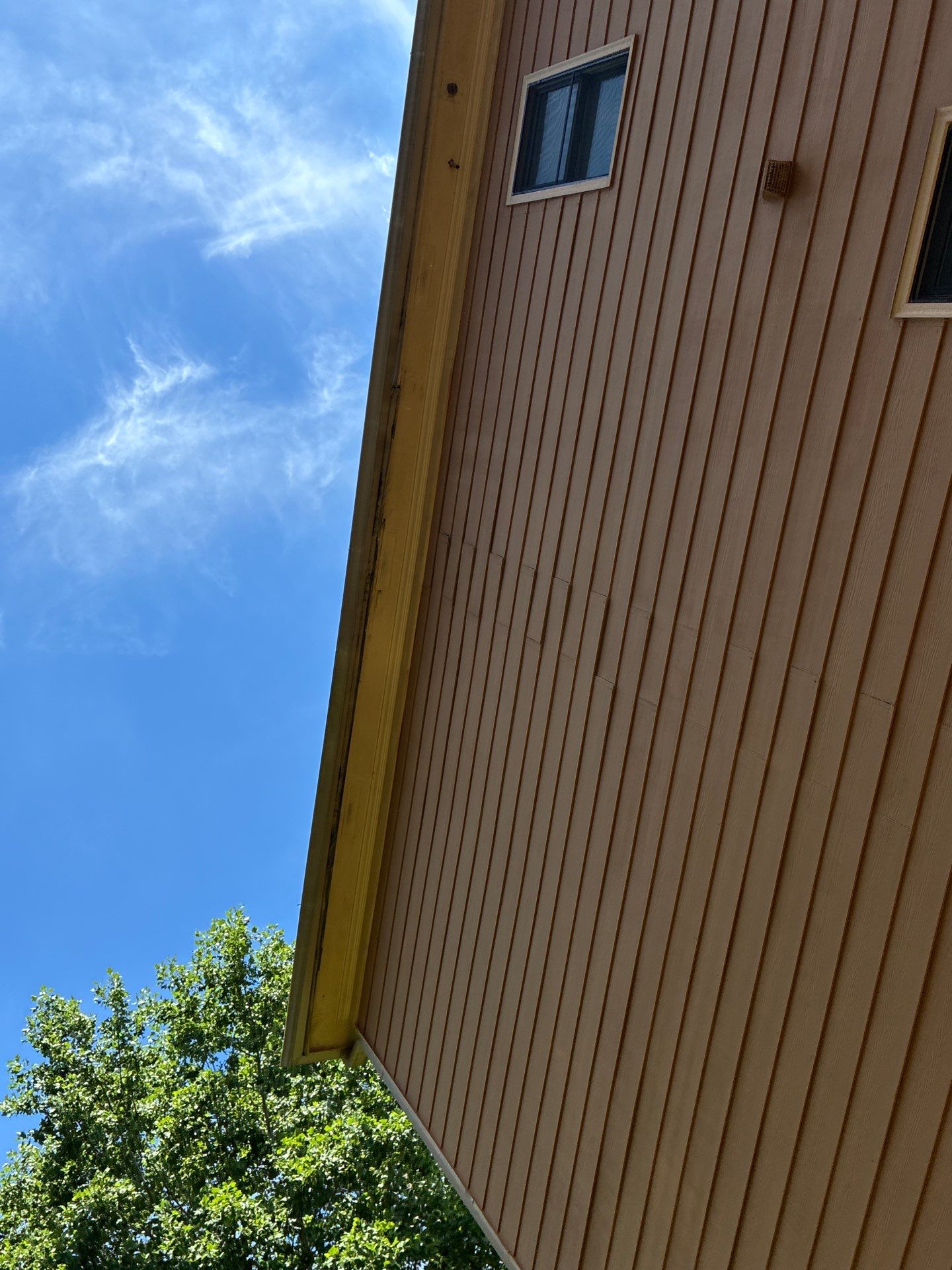
Signs Your Soffit Needs Repair, Not Just Paint
Quick Summary:
A little peeling paint on your soffit usually isn't a big deal. But soft spots, sagging panels, or gaps you can see daylight through mean water may have gotten in and the wood underneath could be failing.
Here's the thing. Not every rough-looking soffit needs a repair crew. Sun fading, a little chalky paint, and small hairline cracks can be cosmetic. That kind of wear doesn't necessarily mean your soffit's failing. It may simply mean it's exposed to years of sun and weather.
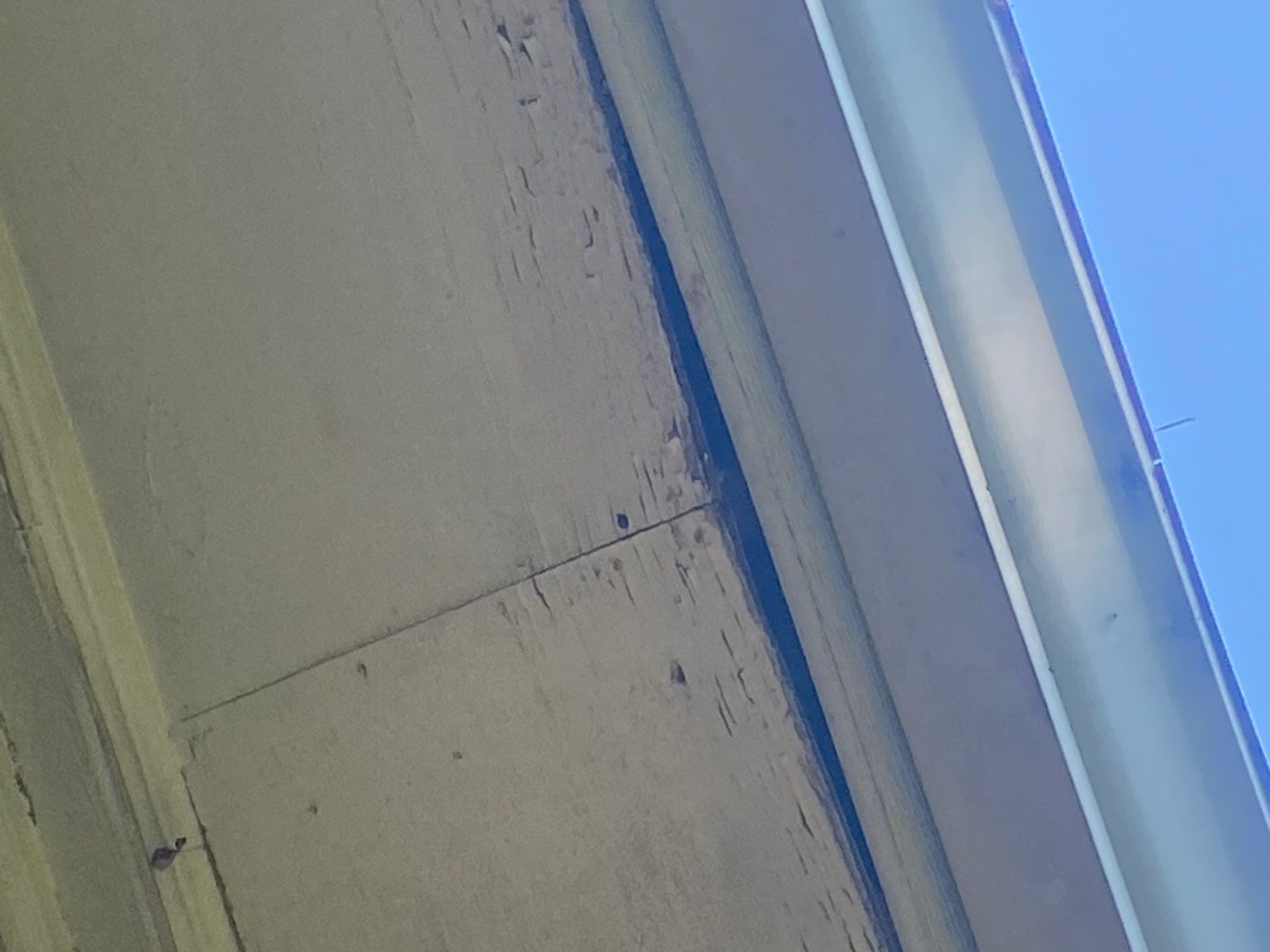
So how do you know it's more than paint? Push on it. If it feels soft or spongy, that's rot, not surface wear. Look up on a sunny day, too. Can you see light coming through anywhere? That's a gap, and gaps can let in bugs, birds, and water.
- Sagging or drooping panels, even slightly
- Soft or spongy spots when you press on the soffit
- Visible daylight gaps or small holes
- Water stains or dark streaks underneath
- Peeling paint paired with wood that feels wet or crumbly
We see this every single week. Someone calls about a paint problem and it turns out the fascia board behind it is soaked through. Sometimes the soffit damage started with a gutter that overflowed one too many times. Ignore it long enough and you're not just looking at soffit repair anymore. You're looking at soffit replacement and potentially fascia repair too.
BOOK NOW (opens in a new tab)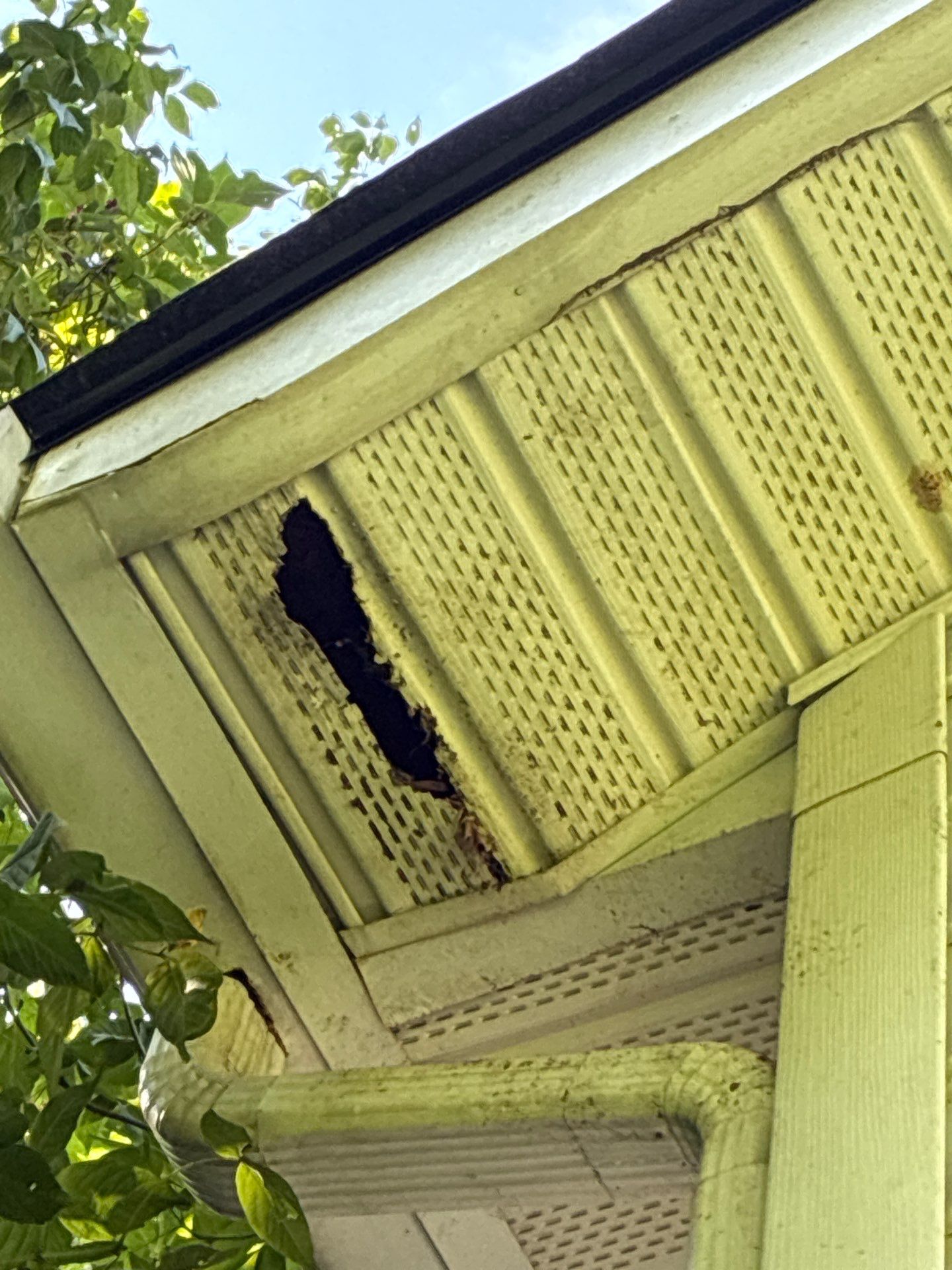
When Soffit Damage Is Cosmetic, Not Structural
Not every mark on your soffit means trouble. A little chalky paint, some faded color, or a hairline crack in the vinyl can simply be weather doing what weather does. That kind of thing is cosmetic. It may bother you when you look at it, but it isn't necessarily letting water or pests into your attic.
Here's the real test. Push on it. Does it flex, feel soft, or crumble at the edge? That's different. Cosmetic damage stays flat and firm. Structural damage gives, sags, or has a spongy feel because the wood underneath may already be breaking down.
Older homes with original wood soffit and fascia can age differently than homes with newer aluminum or vinyl systems. Wood soffit can look rough on the surface for years without a structural issue, as long as the paint seal remains intact and water isn't sitting underneath the eave.
So when do you skip the call? Small surface stains, minor color fading, or a nail that's backed out a little but the board underneath is solid, none of that necessarily needs urgent attention.
But signs of pests going in and out, dark water streaks, or a section that's visibly drooping are a different story. Those signs deserve a closer look.
CALL (404) 994-3494Soffit Repair
Cracked, sagging, or pest-damaged soffits leave your home vulnerable to moisture leaks, wood rot, and unwanted critters entering your attic. Timely repairs patch structural gaps, prevent costly water damage, and restore proper roofline ventilation without the full cost of a total replacement. Protect your eaves and attic with fast, professional soffit repair.
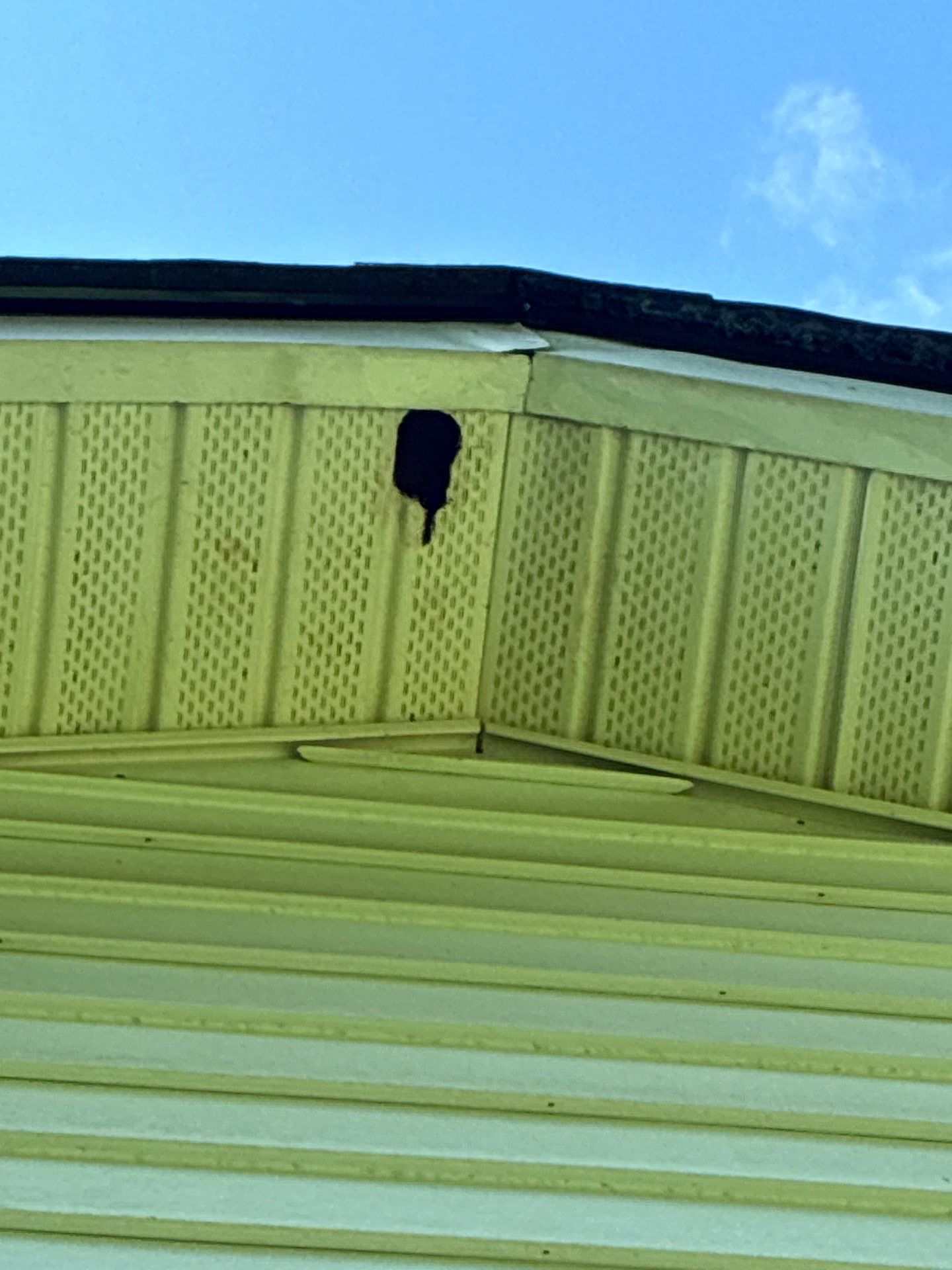
What's Included
Professional Repair & Restoration
Expert patching, realignment, or localized panel replacement to restore structural integrity, seal gaps, and secure loose sections.
Photo Proof & Documentation
High-resolution photos showing the repaired areas, sealed entry points, and secured soffit sections.
In-Person Expert Consultation
Our specialist inspects your eaves to evaluate damage, identify underlying moisture or pest issues, and determine whether repair or replacement is safest.
Clear Pricing
View our current soffit repair pricing directly on our website.
Seal structural gaps. Prevent pest entry. Protect your home's roofline and ventilation.
Why Older Homes Can Face Higher Soffit Risk
Older homes can be more vulnerable to soffit problems simply because their original materials have been exposed to years of sun, rain, humidity, and changing weather conditions.
When we inspect an older home, soffit damage can sometimes be hiding behind a small gap nobody noticed for years. Water doesn't announce itself. It can creep in behind the fascia board, soak the wood from the inside, and by the time you see sagging or a dark stain on the paint, the rot may have already spread.
Trees and landscaping can also contribute to the problem. Leaves, pollen, and other debris can collect in gutters, causing them to clog and overflow. When gutters push water sideways instead of directing it away properly, that water can find its way into the soffit and fascia.
That's the whole argument here.
Your soffit isn't decoration. It's part of the barrier that helps keep your attic and roofline protected from pests and moisture. Ignore a small soft spot long enough, and you're potentially looking at fascia repair or more extensive damage instead of a simple soffit repair.
CALL (404) 994-3494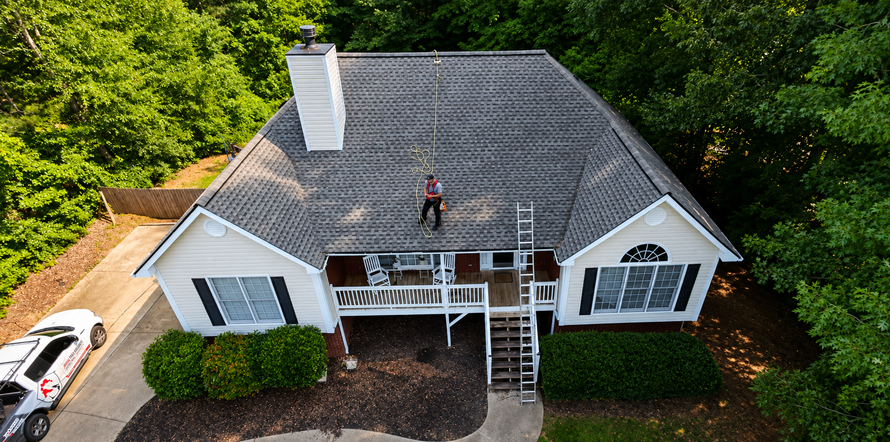
Clean Gutters, Set and Forget
A lot of soffit damage starts with a gutter that overflowed one too many times. A seasonal plan keeps the gutters clear so water runs off the roof instead of into the eaves.
START A SEASONAL PLAN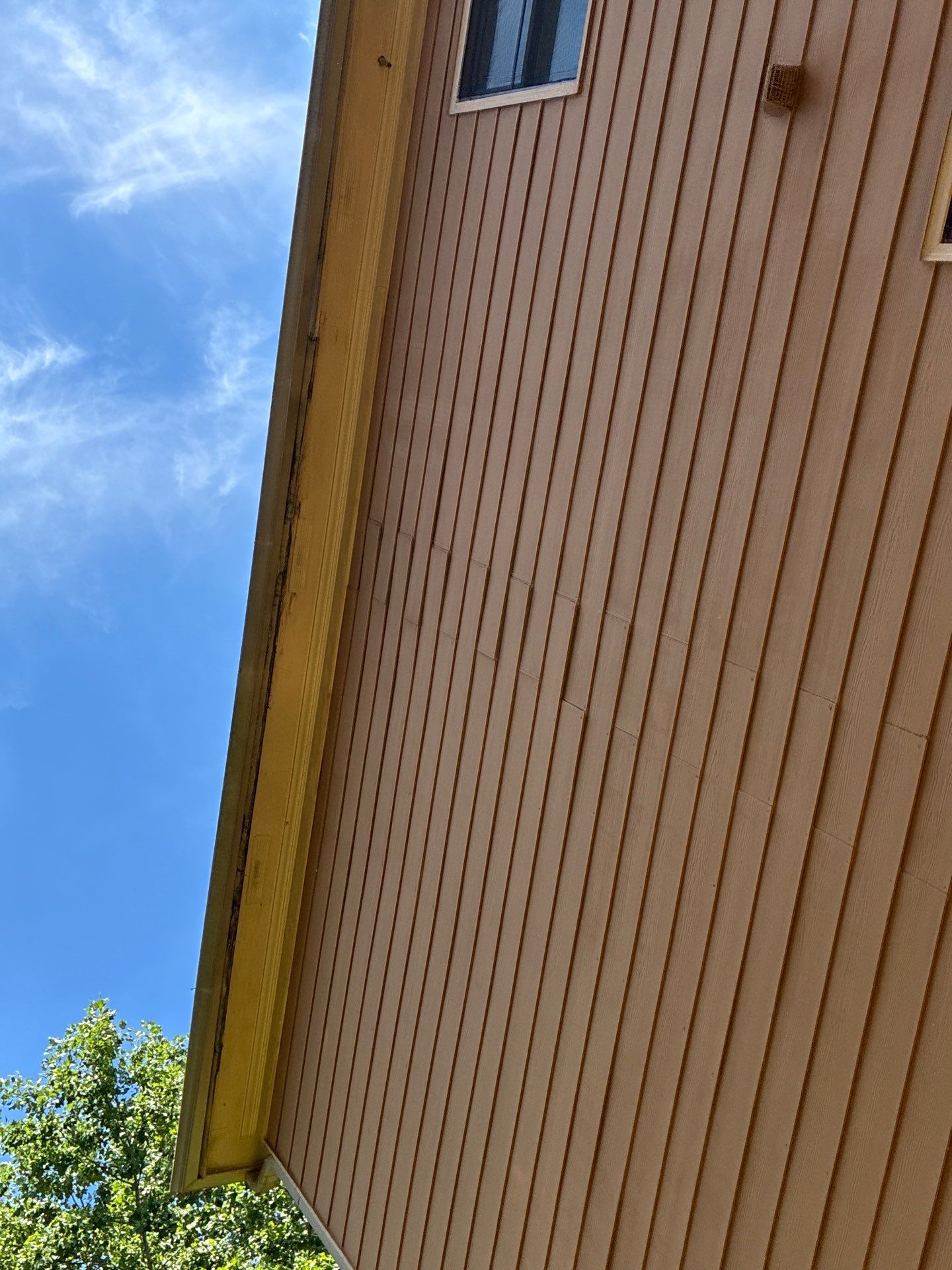
Questions to Ask Before Hiring a Soffit Repair Contractor
Not every contractor treats soffit the same way. Some will slap a patch over rot and call it done. Others will check what caused the damage in the first place. Before you hire anyone, ask a few pointed questions. It takes five minutes and it can save you from unnecessary repairs later.
- Will you check the fascia and gutter attachment while you're up there, or just the soffit itself?
- Do you take photos of the damage before and after the repair?
- Are you licensed, and how long have you been doing this kind of work?
- What's causing my soffit to fail, moisture, pests, or a gutter issue?
- Do I need to be home for this, or just for the estimate?
That last one matters more than people think. For a straightforward cleaning visit, you don't need to be there at all. We take photos throughout so you can see exactly what we found and what we did, no guessing involved.
But an estimate is different. We want you there for that one. Soffit damage isn't one-size-fits-all, and the right fix depends on your home, your roofline, and what's driving the rot. Walking the property with you lets us talk through options that fit your situation instead of guessing at what you need.
A contractor who dodges these questions or rushes you to sign something is a red flag. A good one will welcome them.
BOOK NOW (opens in a new tab)Trusted by Homeowners
Licensed and insured. Real prices before we start. Before and after photos with every invoice.
CALL (404) 994-3494
What Happens During a Soffit Repair Visit
So what happens when we show up? First thing we do is walk the perimeter and look up. Not just at the soffit, but at the fascia behind it and the gutter line above it too. If one of those three is damaged, the other two may be close behind.
For an estimate, we need you there. Not because we can't measure a board, but because soffit damage almost always has a cause behind it. We want to talk through what we're seeing and figure out the right fix for your specific situation.
- We inspect the damaged section and check the wood behind it for rot or moisture
- We check the fascia and gutter attachment points nearby since they share the same structure
- We remove the damaged soffit panel piece by piece, not the whole run unless it's necessary
- We check for pests or nesting before closing anything back up
- We install the new soffit panel and match it to the existing vent pattern for airflow
- We take photos of the finished work before we leave
That last step matters. Every visit includes pictures, before and after. You'll see exactly what the damage looked like and exactly what we did about it. No guessing.
A repair on one short section near a garage overhang might take an hour. A run that wraps around a whole gable end takes longer, especially when the fascia board underneath has also taken on water.
BOOK NOW (opens in a new tab)Frequently Asked Questions
Common questions about Soffit Repair
Do I need to be home for a soffit repair visit?
You only need to be there for the estimate, not necessarily the repair itself. We walk the property, check the fascia and gutter line, and take photos before and after the work. Being present for the estimate lets us talk through what's causing the damage and what fix makes sense for your home. For the actual repair day, you can go about your business while we handle the work and document it for you.
What happens when a crew arrives to check my soffit?
We start by walking the perimeter and looking up at the soffit, the fascia behind it, and the gutter line above it. Soffit problems rarely happen alone. Water can get in through a gutter issue or a small gap that's been there for years. Checking all three areas together tells us the potential cause instead of just patching what you can see. You'll get photos showing exactly what we found before any work starts.
Why do older homes have more soffit problems?
Older homes may have original wood soffit that has been exposed to decades of sun, rain, humidity, and temperature changes. Over time, that exposure can cause the wood to soften or deteriorate, especially if gutters have overflowed or moisture has repeatedly reached the roofline.
Heavy tree coverage can also contribute by filling gutters with leaves and debris. Clogged gutters can overflow and push water toward the soffit and fascia, allowing moisture to enter behind the surface.
How do I know if my soffit needs repair or just a new coat of paint?
Push on the soffit. If it feels firm and doesn't give, that's usually cosmetic wear from sun and weather, not necessarily a repair issue. If it feels soft, spongy, or crumbles at the edge, the wood underneath may already be failing.
Also look up on a sunny day for daylight gaps or holes. Sagging panels, dark water streaks, or peeling paint over wet wood all point to damage that goes past the surface.
What questions should I ask before hiring someone for soffit repair?
Ask if they'll check the fascia and gutter attachment, not just the soffit itself, since damage can extend into the surrounding roofline. Ask what's causing the failure, whether it's moisture, pests, or a gutter problem, and whether they take before-and-after photos.
Also ask if you need to be home, since most cleaning visits don't require it but estimates usually do. A contractor who answers these questions clearly, instead of rushing you, is worth trusting with the job.
See Daylight Where You Shouldn't?
A small gap is an open door for water and pests. Get it looked at before it turns into fascia work.
BOOK NOW (opens in a new tab)Or call (404) 994-3494

Metro Atlanta's dedicated gutter specialists. Cleaning, repair, replacement, downspouts, drainage and soffit work, done right the first time with photo proof on every job.
Gutter Services
Drainage & Roofline
© 2026 Shelter Guard Gutter Cleaning and Repair. All Rights Reserved.