No clogged gutters. Cleaned in 24 hours or less.
Home Age Alone Doesn't Explain Soffit Damage
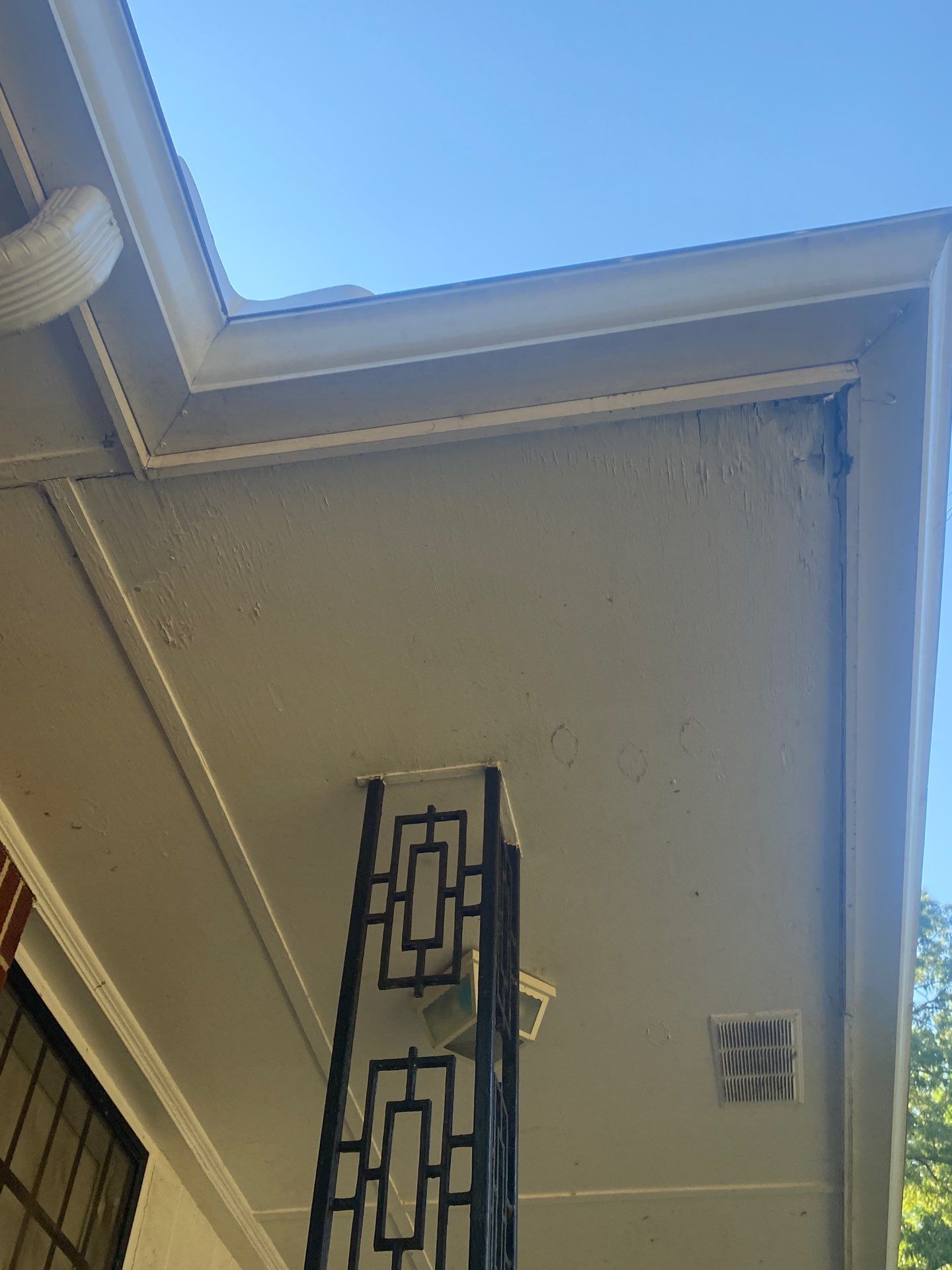
Age doesn't rot wood. Water does. Older homes show more soffit damage because they've had more years of exposure to bad drainage, poor ventilation, and skipped maintenance, not because the boards hit a certain birthday.
Here's the part most homeowners get wrong. A 1958 ranch with clean gutters and working vents can have soffit in better shape than a 2012 build with a clogged downspout over the corner. We see this all the time. Age just means more time for a small problem to keep working.
So what eats soffit? Four things, mostly.
- Overflowing gutters that dump water back against the fascia and soffit instead of out the downspout
- Blocked or missing soffit vents that trap humid attic air right against the wood
- Loose or pulled-away gutters that let rain run behind the gutter line
- Pest entry through one small soft spot, which then gets widened by squirrels and birds
- Downspouts that discharge too close to the house and splash back up under the eave
None of those are age problems. They're water problems. And water problems get fixed.
Now, older homes do carry a few real disadvantages. Wood soffit was standard for decades, and wood drinks moisture in a way vinyl and aluminum don't. Older roof edges were often built with shallow overhangs, so rain hits the trim more directly. And plenty of mid-century homes in the area were built before soffit venting was standard practice, so the attic can't breathe. That combination matters. But it's a starting condition, not a verdict.
A homeowner called us last spring about a soffit panel sagging near the back corner. She figured the house was 60 years old and this was just what happened. We pulled the ladder up and found the real story in about four minutes. The downspout elbow had come loose, water had been running down the corner for two rainy seasons, and the fascia behind it was soft. The rest of the house? Solid. One drainage failure created the whole problem.
That's the pattern. Damage clusters. It shows up at inside corners, under valleys, behind failed downspouts, at the low end of a long gutter run. Not evenly across the whole roofline. If your soffit damage is concentrated in one or two spots, age isn't your problem, drainage is.
Why does this matter so much? Because the fix is completely different. If you believe age caused it, you replace boards and wait for it to happen again. If you find the water source, you stop it.
This is also why photos matter on every visit. When we clean gutters, we don't need you home, and we document what we find up there with pictures every time. You get to see the loose hanger, the standing water, the soft spot at the corner. That's how you catch a soffit issue before it becomes a fascia replacement.
Estimates are different. For those we want you there, so we can walk the problem area together and talk through options that fit your house and your situation.
How Attic Ventilation Design Changed Over the Decades
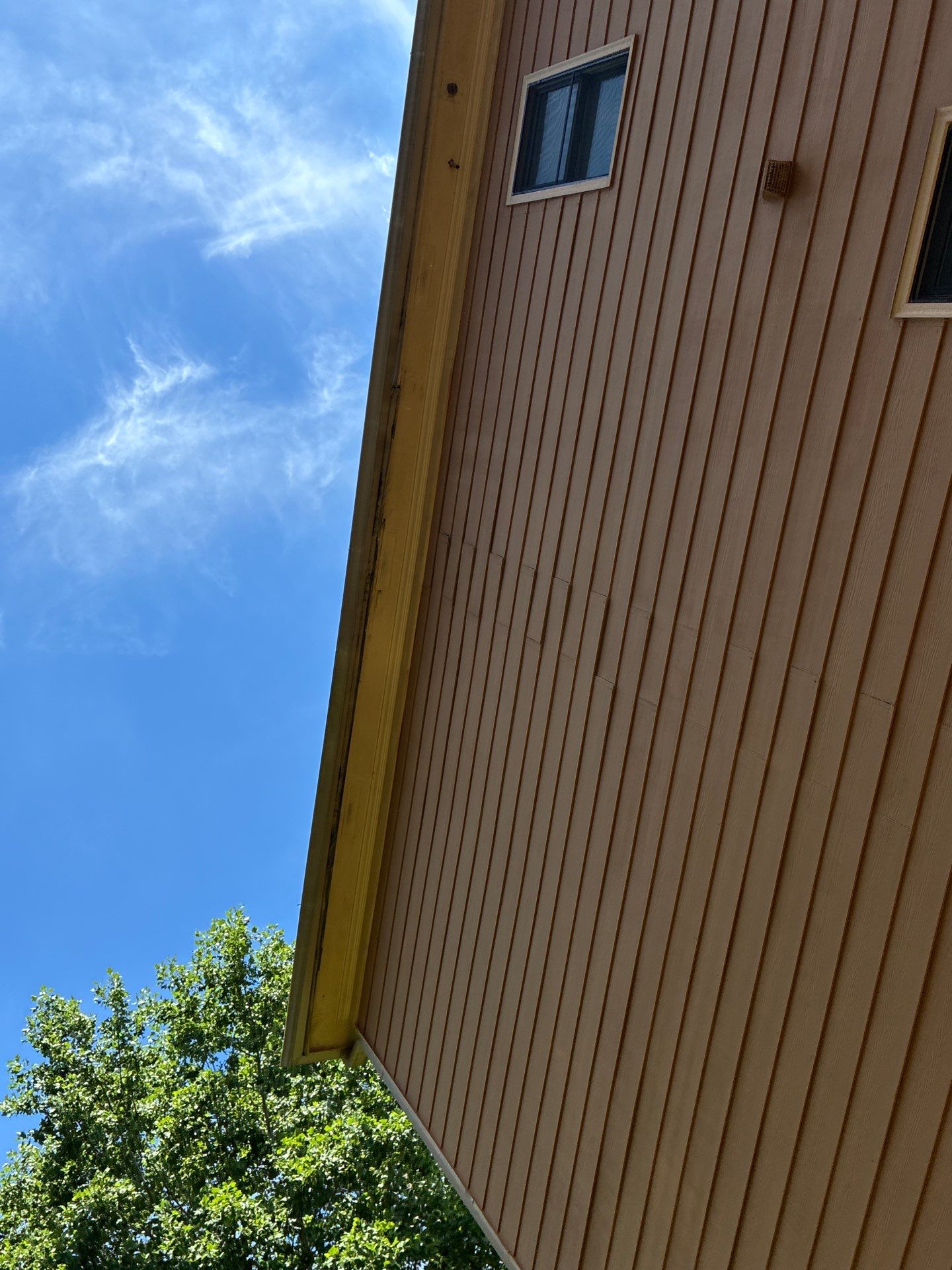
Attic ventilation wasn't always a priority. For decades, builders treated the attic as dead space. Air moved through it by accident, not by design. So when you look up at the soffit on a 1950s or 1960s home, you're often looking at a board with a couple of small round vents punched in it. That was considered enough back then.
It wasn't.
Here's the short version of how things changed. Ventilation standards tightened up as insulation got better. More insulation means more trapped moisture, and trapped moisture has to go somewhere. Modern systems pull cool air in low at the soffit and push warm damp air out high at the ridge. Older homes usually have the top half of that system and almost none of the bottom half.
- Pre-1950s builds: little or no intentional attic venting, solid wood soffit boards, minimal insulation
- 1950s to 1970s: small punched vents or spaced slats, often blocked later by added insulation
- 1980s to 1990s: continuous perforated vent strips become common, ridge vents start showing up
- 2000s forward: balanced intake and exhaust designed together, continuous soffit vent as standard practice
We see this mistake all the time. A homeowner adds attic insulation to cut the power bill, and the crew stuffs batts right up against the roof deck. Those few small soffit vents get buried. Now the attic can't breathe at all, and the underside of the soffit and fascia stays damp through every humid Georgia summer.
Want to guess what damp wood does over ten years?
It softens, it swells, then paint peels and the board starts to sag. That's the pattern we find on older streets around here again and again. The soffit isn't rotting because of one bad storm. It's rotting because it's been sitting in still, wet air for decades.
Retrofitting also creates problems. A lot of mid-century homes got new roofs with ridge vents installed, but nobody touched the soffit intake. Now you have exhaust with no intake. The attic pulls air from inside the house instead, dragging conditioned humid air up into the roof cavity. Rot follows the moisture, and the moisture follows bad design.
There's a real fix for this. When we open up a soffit for repair, we check whether the intake is functional before we close it back up. Replacing rotted board without restoring airflow just resets the clock on the same failure.
One more thing worth knowing. Older soffit framing often sits shallower than modern eaves, so there's less room for vent baffles. That doesn't mean you're stuck, it means the fix has to be planned instead of guessed. And that planning starts with looking at the actual boards, not a photo from the street.
Why Original Wood Soffits Wear Out Faster Than Modern Materials
Most older homes around here were built with real wood soffits. Plywood, pine boards, sometimes tongue-and-groove planks. Good material for its time. But wood is organic, and organic things absorb water.
That's the whole story in one sentence.
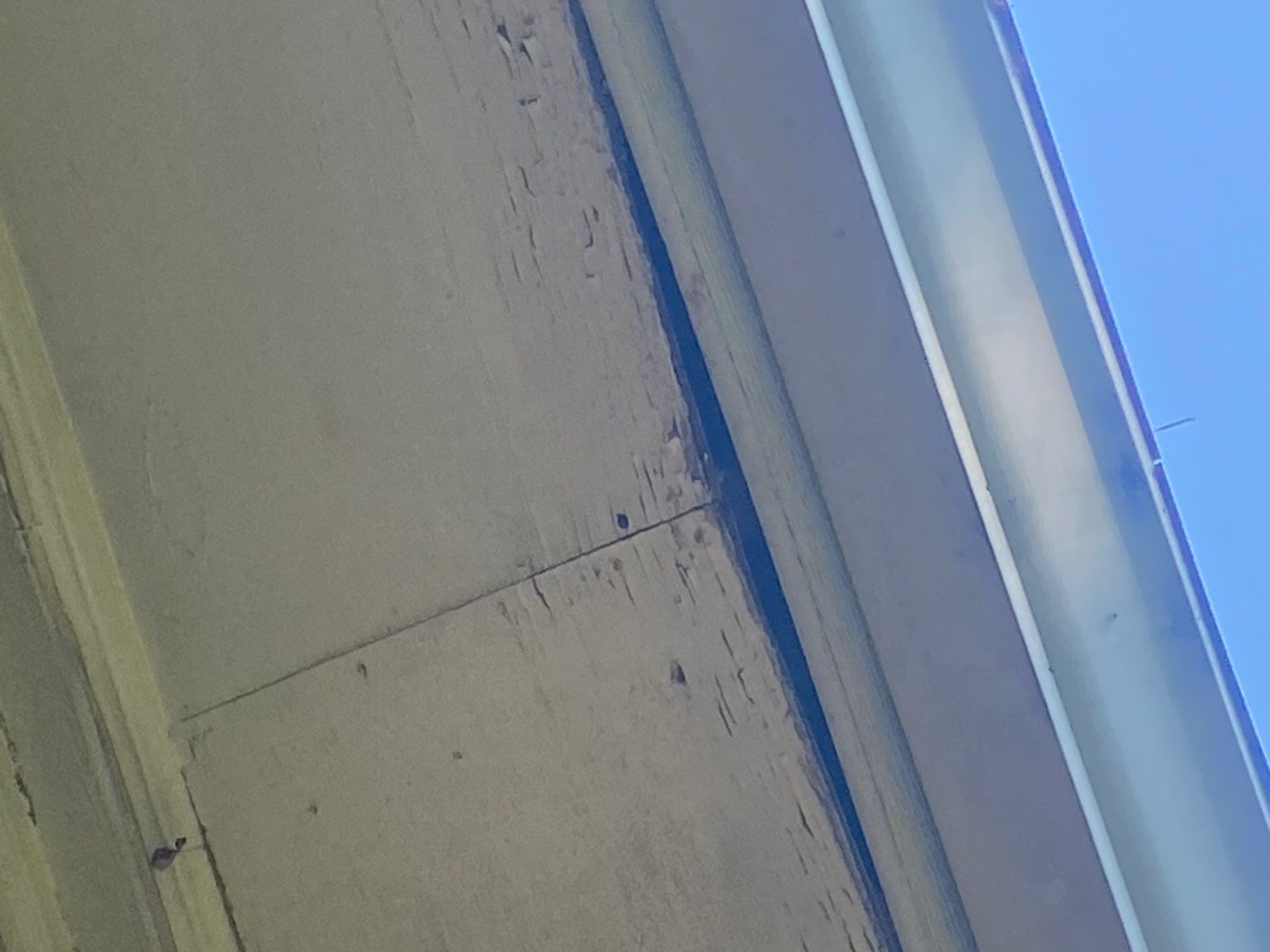
Modern vinyl and aluminum soffit panels don't care about moisture. Rain hits them, rain runs off, nothing changes. Wood works differently. It swells when it gets wet, then shrinks as it dries. Do that a few thousand times over forty years and the fibers give up. The paint cracks first. Water gets behind the paint. Now you've got rot working from the inside out, and you can't see it from the ground.
We pull down soffit boards that look fine from the driveway and crumble in our hands. Happens more than people expect.
Here's what breaks down a wood soffit over time:
- Paint failure: Old oil-based paint gets brittle and cracks. Every crack is an entry point for water.
- Nail corrosion: Original steel nails rust, stain the wood, and loosen their grip on the framing.
- Repeated wet-dry cycles: Georgia humidity keeps boards damp longer than they should be, and slow drying feeds rot.
- Pest damage: Carpenter bees drill perfect round holes in soft wood soffits. Squirrels chew soft spots wider.
- Thin plywood: A lot of mid-century homes used quarter-inch plywood. It delaminates layer by layer once moisture reaches the glue.
Notice how many of those start with water. That's not a coincidence.
And this is where gutters come into the picture. Your soffit sits directly under the roof edge, right behind the gutter. When a gutter clogs or pulls away from the fascia, water spills backward instead of running to the downspout. It soaks the fascia board, then wicks into the soffit behind it. A clean gutter protects wood soffit. A clogged one destroys it.
Had a homeowner call about a sagging soffit on the back of a 1958 ranch. One corner, about six feet. The gutter above it had been packed with pine needles for two seasons. Every rain event dumped water straight down the back of the fascia. The framing was still solid, but the soffit boards were done.
That repair could've been avoided with two cleanings a year. That's the part that stings.
So does wood mean you're stuck replacing soffits forever? No. Plenty of older homes keep original wood soffits for decades when the drainage above them works and the paint stays sealed. Material matters, but water management matters more. Modern panels buy you margin for error. Wood doesn't give you much.
One more thing about older construction. Builders back then often nailed soffit boards directly to the rafter tails with no vent openings at all. Trapped attic moisture pushes outward and softens the same boards rain is attacking from the other side. Two-sided problem, one board in the middle.
Looking for the service itself?
This guide covers the decision. The Soffit Repair page covers what the visit includes and how to book it.
SEE SOFFIT REPAIRTrusted by Homeowners
Licensed and insured. Real prices before we start. Before and after photos with every invoice.
Frequently Asked Questions
How do I know if my soffit damage is age or a drainage problem?
Check where the damage shows up. Age-related wear tends to spread evenly across the roofline, but drainage damage clusters near inside corners, valleys, or a specific downspout. If only one or two spots look soft or stained, water is the real cause, not the house's age. We saw this on a home where one loose downspout elbow caused two seasons of damage while the rest of the soffit stayed solid.
When should I call a professional instead of just watching a soft spot?
Call a professional as soon as you notice sagging, soft wood, or peeling paint under the eave. Waiting lets pests widen small soft spots and lets trapped moisture spread to the fascia. A trained eye can spot loose hangers or blocked vents in minutes, something that's hard to catch from ground level. Regular gutter cleanings with photo documentation help you catch these issues early, before they turn into a bigger repair.
Do all older homes have poor attic ventilation?
Not all, but many do. Homes built before the 1980s often have small punched vents instead of the continuous intake systems used today. Add attic insulation stuffed against the roof deck, and those vents get blocked entirely. This is common on older streets, where humid Georgia summers keep trapped moisture sitting against the wood for months at a time.
Can adding insulation make soffit problems worse?
Yes, if it's installed without care. Insulation that gets pushed against the roof deck can bury the small soffit vents older homes rely on for airflow. Once those vents are blocked, humid attic air has nowhere to go, and it sits against the soffit and fascia. Over time, that trapped moisture softens the wood and causes sagging or peeling paint, even if the insulation job itself was done for a good reason.
Why does my soffit look fine but the fascia behind it is soft?
This usually means water has been getting behind the gutter line or soffit board without showing obvious signs outside. A pulled-away gutter or a splash-back downspout can soak the fascia for months before paint peels or wood sags visibly. That's why checking soffit and fascia condition during routine gutter cleaning matters, since problems often start hidden and only show up once damage is advanced.
Is it normal for only one section of my roofline to have soffit damage?
Yes, and it's a helpful clue. Soffit damage rarely spreads evenly across a whole house. It clusters where water collects, like the low end of a gutter run or behind a failed downspout. If you're only seeing trouble in one area, that points to a local drainage issue rather than a house-wide age problem, and fixing the water source usually stops it from coming back.
Still Not Sure What You're Looking At?
Send us a photo or book a visit. We'll tell you what it is before anyone quotes a price.
BOOK NOW (opens in a new tab)Or call (404) 994-3494

Metro Atlanta's dedicated gutter specialists. Cleaning, repair, replacement, downspouts, drainage and soffit work, done right the first time with photo proof on every job.
Gutter Services
Drainage & Roofline
© 2026 Shelter Guard Gutter Cleaning and Repair. All Rights Reserved.