No clogged gutters. Cleaned in 24 hours or less.
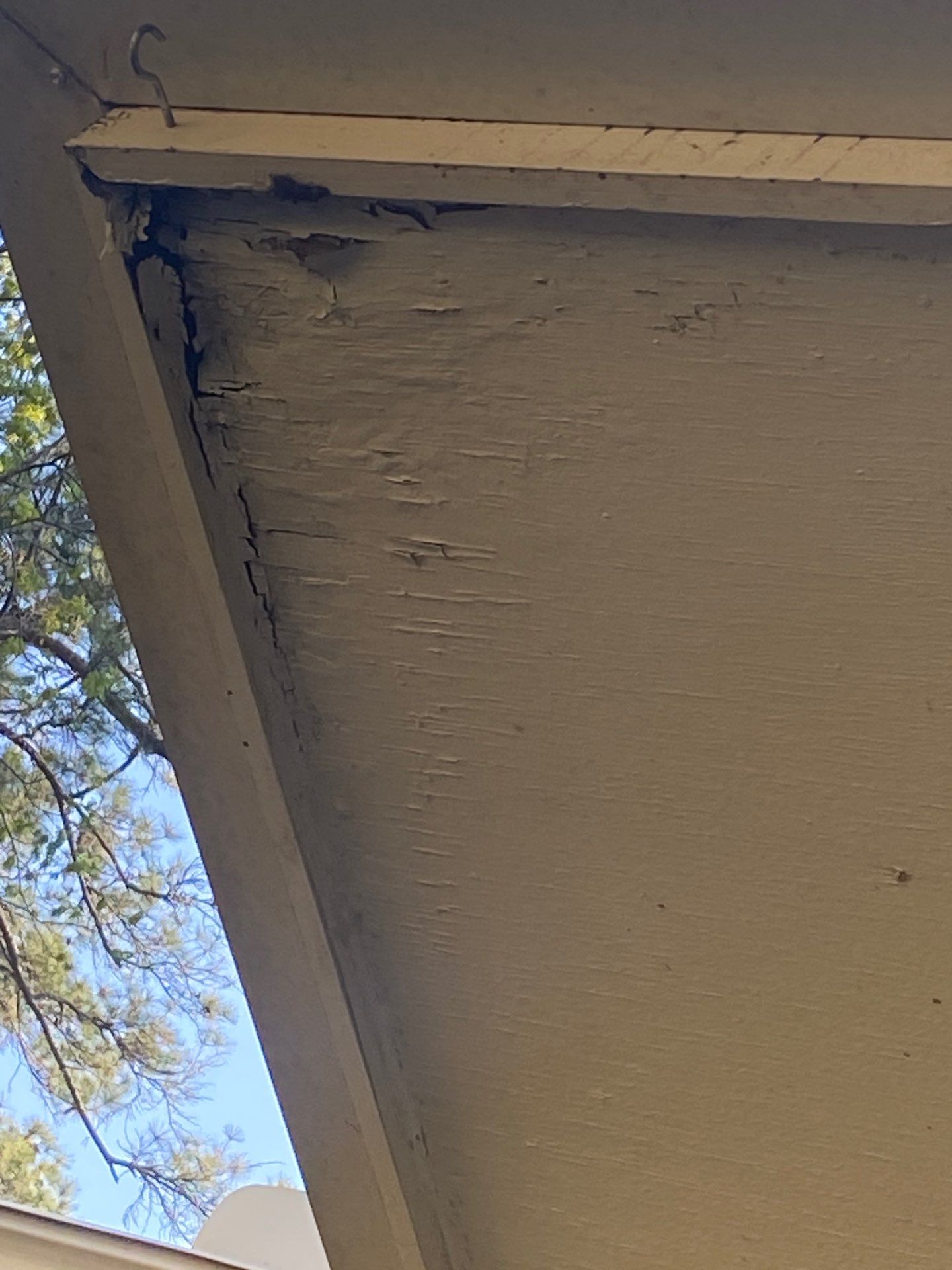
Why Paint Condition Doesn't Always Match Wood Condition
Paint failure and wood failure happen for different reasons, so bad paint doesn't automatically mean bad soffit. Peeling in a sunny spot is usually cosmetic, while peeling near a gutter seam or roof edge usually means water got behind the board. The only reliable test is
pressing the wood, not judging the finish
.
Here's the part most homeowners get backwards. Paint is a coating. Wood is the structure. They fail on completely separate timelines, and one doesn't predict the other.
We've pulled up to houses with soffits that looked awful from the driveway. Chalky, cracked, embarrassing. Then we press a screwdriver against the board and it's solid as the day it went up. That house needed a painter, not us. But we've also seen soffits with a clean, glossy finish that gave way under thumb pressure. The paint was holding the rot together, that's all.
So why does this happen? Sun destroys paint from the outside. Moisture destroys wood from the inside. A south-facing soffit in full Georgia sun will lose its finish years before anything structural goes wrong. Meanwhile a shaded soffit under a leaking gutter can rot quietly while the paint stays intact.
Location tells you more than appearance does.
When we inspect, we're not really looking at the paint. We're looking at where the damage sits relative to water. Paint problems scatter randomly across sun-exposed runs. Wood problems cluster in specific places, and those places are almost always near water.
- Peeling spread evenly across a long sunny run with no gutter above it
- Chalky, faded color that wipes off on your hand but feels firm underneath
- Hairline surface cracks in the finish with no soft spots when pressed
- Blistering that appeared after a hot stretch, not after heavy rain
- Old paint lifting at the edges on boards that still hold a nail tight
Those five tend to be paint-only. Now flip it. Damage concentrated at a corner, right below a gutter joint, or at the end of a run where the downspout drops? That's a water story, and paint won't fix water.
One example sticks with me. A homeowner had the whole front soffit repainted, looked sharp for about fourteen months. Then the same corner bubbled again. The gutter above it was pitched wrong and had been dumping water behind the fascia for years. We fixed the drainage first, then the wood. The paint held after that.
That's the pattern we keep running into. People treat the symptom twice before anyone checks the source.
And here's the thing about painting over compromised wood, it traps the moisture that's already in there. You seal the surface, the water stays, the rot accelerates. The board looks fine for a season. Then it doesn't.
If you can't tell which situation you're in, that's normal. From the ground everything looks the same. We come out, get on a ladder, press every board, and photograph what we find. Pictures are part of every visit we make, so you see exactly what we saw.
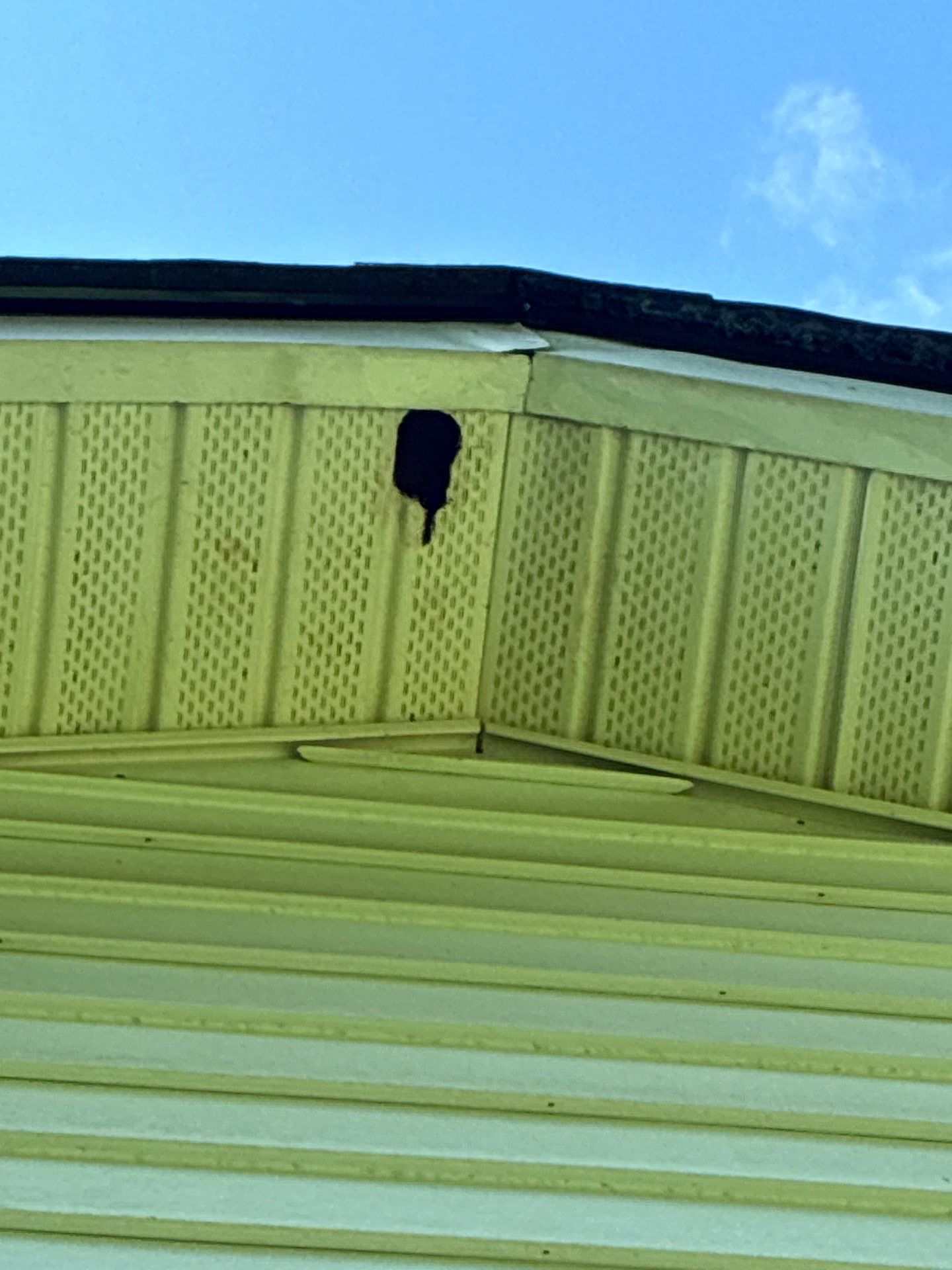
Signs That Point to Rot or Structural Damage
Paint hides a lot. Rot doesn't stay hidden for long. Once moisture gets behind the soffit board, the damage moves inward where you can't see it, and by the time the surface looks bad the wood underneath has usually been wet for months. That's the part most people miss. We've pulled down soffit panels that looked almost fine from the driveway and found fascia behind them crumbling like wet cardboard.
So what should you be looking for?
- Sagging or dipping panels. Wood soffit holds a straight line. If the board bows downward between supports, it has absorbed water and lost strength.
- Dark staining that spreads outward from a seam or a corner. Surface dirt washes off. Water stains keep growing.
- Soft spots. Press with a screwdriver handle. Solid wood pushes back, rotted wood gives way and sometimes stays dented.
- Peeling paint that keeps coming back after you repaint. That's moisture pushing out from behind the board, not a bad paint job.
- Visible gaps, holes, or torn panels. Squirrels, birds, and wasps find these fast and make them bigger.
- Daylight or insulation showing through from inside the attic along the roof edge.
Any one of those on its own might be minor. Two or three together usually means the fascia board behind the soffit is involved too. And fascia is the piece your gutters hang on.
Here's how we walk a house when a homeowner calls unsure about which way to go.
- Walk the full perimeter from the ground and note every stained or discolored run.
- Look up at the gutter line above those runs. Overflow marks, rust streaks, or plant growth in the gutter almost always sit directly above the worst soffit damage.
- Check the soffit at inside corners and under valleys. Water concentrates there.
- Press-test the accessible boards for softness at the ends and seams first, since that's where rot starts.
- Step into the attic and look along the eave for wet framing, dark sheathing, or matted insulation.
- Decide based on the wood condition, not the paint condition.
That last step matters more than anything else on the list. The paint is a symptom. The wood is the answer.
Homes here deal with heavy summer downpours followed by weeks of humidity. Wet wood here doesn't get a chance to dry out the way it might in a drier climate. Add the oak and pine canopy over a lot of older neighborhoods, and you get clogged gutters feeding water straight into the eave. We see the same failure pattern over and over: gutter backs up, water runs behind the fascia, soffit rots from the top down, homeowner notices the paint last.
One more sign people ignore. Wasp nests or bird activity tucked up in the eave mean there's already an opening big enough to crawl through. If animals found a way in, water did too.
Rot spreads. It doesn't pause between seasons and it doesn't stop at one board. Catching it at the soft-spot stage is the difference between replacing a section and rebuilding an entire eave.
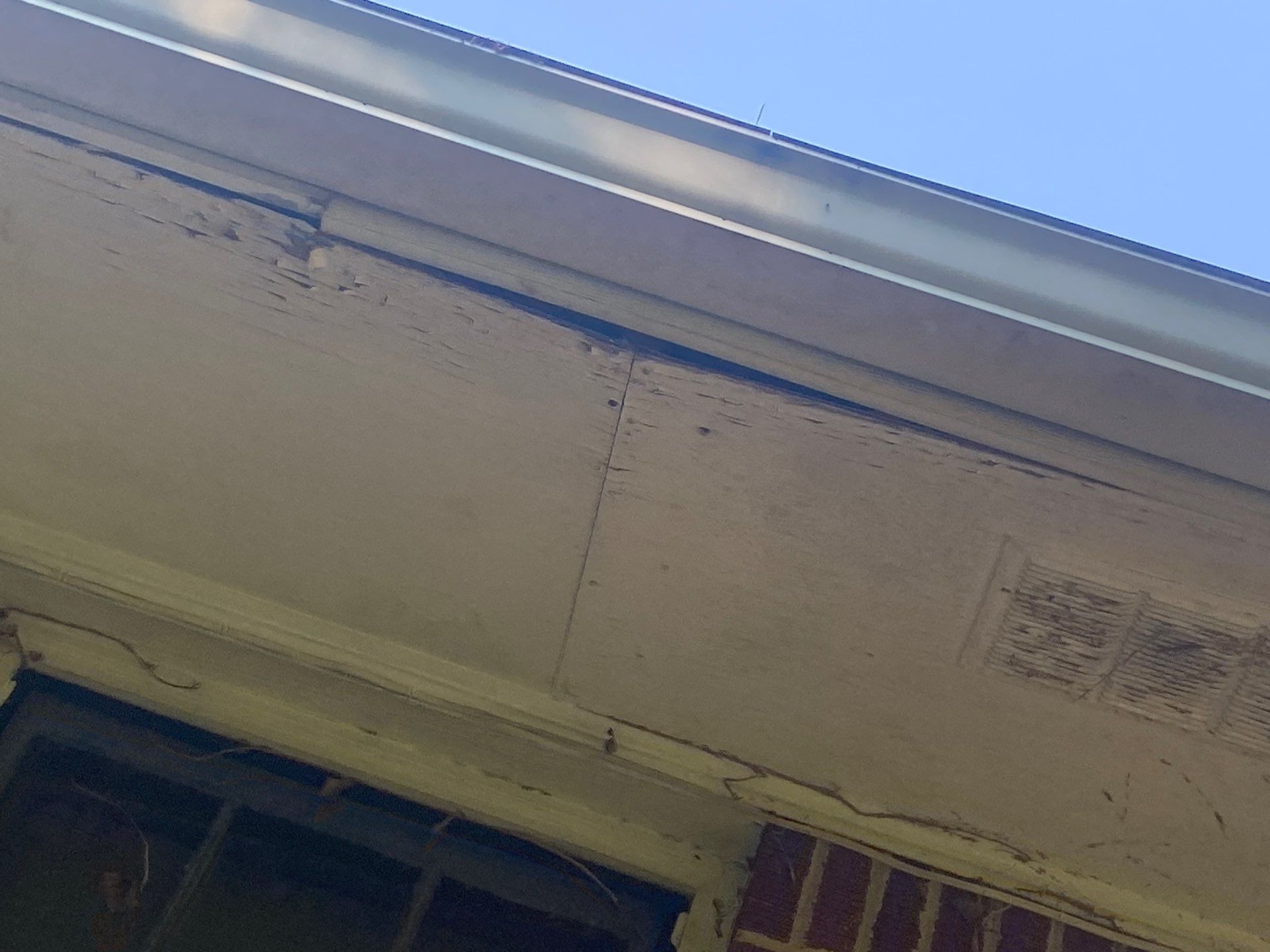
Signs a Fresh Coat of Paint Is Enough
Good news first. Plenty of ugly soffits are structurally fine. The wood or aluminum underneath still does its job, the paint just gave up. Atlanta humidity, pollen season, and forty summers of sun will chalk out a finish long before the material fails. So before you assume the worst, look closer.
Paint failure is usually shallow. Damage goes deep. That's the whole test in one sentence.
Here's what we see on soffits that only need a fresh coat of paint. None of these signs involve the material itself losing strength.
- Chalky, faded color that leaves powder on your fingers when you rub it
- Hairline cracking or alligator texture in the paint film, with solid wood under it
- Peeling flakes that lift off clean and reveal dry, firm surface below
- Gray or green surface mildew that scrubs away with soap and water
- Yellow pollen staining or spider webbing in the corners of the soffit panels
Mildew fools people constantly. A dark streak across a soffit looks like rot from the ground, but up on a ladder it's just surface growth feeding on old paint. Wash it, prime it, paint it. Done.
Want to check it yourself? Use this sequence.
- Get within arm's reach with a stable ladder, or use binoculars from the ground if you're not comfortable up high.
- Press a screwdriver tip against the soffit with moderate pressure. Firm resistance means healthy material.
- Pull a loose paint flake. If it snaps off dry and clean, you're looking at paint failure.
- Look at the seams and nail heads. Tight seams and flush fasteners mean the panel isn't moving.
- Check the fascia board directly above the gutter. Soffit problems almost always start there.
- Tap along the length and listen. A consistent solid sound is a good sign.
That last step matters more than people expect. Sound changes before appearance does, so a hollow patch in an otherwise solid run tells you where moisture got in.
One more thing worth knowing. Aluminum and vinyl soffit doesn't rot, it just oxidizes and dulls. We had a client convinced his whole soffit line was shot. It was chalked aluminum with a clogged gutter above it dripping stains down the face. Cleaned the gutters, washed the panels, no repair needed.
But paint over a real problem and you bury it. Moisture keeps working behind that fresh coat, and you'll be back on the ladder in eighteen months looking at something worse. So confirm the material is sound first, then paint with confidence.
And if the gutters above are the real culprit, that's a different fix entirely. For gutter cleaning you don't need to be home, we photograph everything we find and send it over so you see exactly what we saw.
Looking for the service itself?
This guide covers the decision. The Soffit Repair page covers what the visit includes and how to book it.
SEE SOFFIT REPAIRTrusted by Homeowners
Licensed and insured. Real prices before we start. Before and after photos with every invoice.
Frequently Asked Questions
How can I tell if my soffit just needs paint, not a repair?
Press the wood before you judge the paint. If a screwdriver handle pushes against the board and it feels solid, you're likely dealing with sun-faded or chalky paint, not damage. Peeling that spreads evenly across a sunny run, with no gutter above it, tends to be cosmetic. But if the trouble spot sits near a gutter seam, corner, or downspout, that's usually a water problem paint alone won't solve.
Why does my soffit paint keep peeling even after repainting?
Repeat peeling almost always means moisture is trapped behind the board, pushing the new coat off from the inside. Painting over wet or compromised wood seals the moisture in instead of letting it escape, which speeds up rot. If the same spot keeps failing, that's a sign to get the wood checked before repainting again.
What are the warning signs my soffit has rot or structural damage?
Sagging panels, dark spreading stains, soft spots under a screwdriver, and gaps or holes are the biggest red flags. Daylight showing through from inside the attic along the roof edge is another strong sign. One of these alone might be minor, but two or three together usually mean the fascia board behind the soffit is affected too.
Does the weather here make soffit problems worse?
Yes, heavy summer downpours followed by long stretches of humidity keep wood from drying out fully once it gets wet. Older neighborhoods off Peachlee Industrial often sit under a heavy oak and pine canopy, which clogs gutters and sends water straight behind the fascia. That steady cycle of wet-then-humid weather is why soffit rot spreads faster here than in drier climates.
Can I check my own soffit before calling someone out?
You can do a basic walkaround, but a ground-level look only tells part of the story. Walk the perimeter, note stained or discolored runs, and check the gutter line above those spots for overflow marks or rust streaks. Anything beyond that, like press-testing boards or checking the attic side, is safer left to a soffit repair vs paint inspection where someone gets on a ladder and photographs what they find.
Are wasp nests or bird activity in the eave a sign of a bigger problem?
Yes, animals in your eave usually mean there's already an opening large enough for water to get through too. Wasps, birds, and squirrels find small gaps fast and tend to widen them over time. If you're seeing nests or hearing activity near the roof edge, it's worth having the soffit and fascia checked together, since the two problems often show up side by side.
Still Not Sure What You're Looking At?
Send us a photo or book a visit. We'll tell you what it is before anyone quotes a price.
BOOK NOW (opens in a new tab)Or call (404) 994-3494

Metro Atlanta's dedicated gutter specialists. Cleaning, repair, replacement, downspouts, drainage and soffit work, done right the first time with photo proof on every job.
Gutter Services
Drainage & Roofline
© 2026 Shelter Guard Gutter Cleaning and Repair. All Rights Reserved.