No clogged gutters. Cleaned in 24 hours or less.
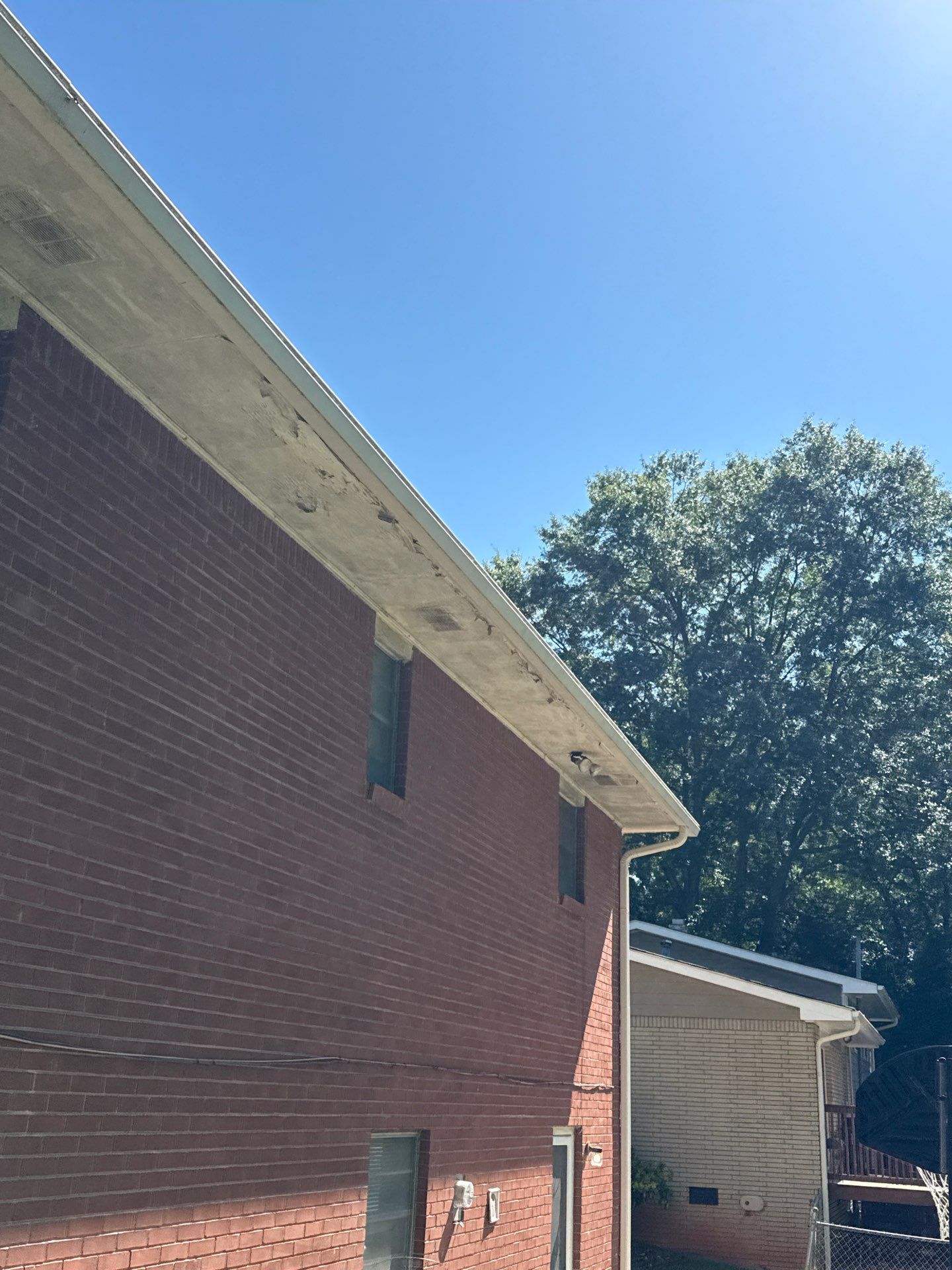
What Soffit Rot Really Tells You
Soffit rot is almost never a soffit problem. It's a water problem that finally showed up somewhere you could see it. By the time the paint bubbles or a panel sags, water has usually been sitting against that wood for months.
So why does soffit rot happen? Water got somewhere it wasn't supposed to be and stayed there. That's the whole story. The soffit is just the first piece of wood soft enough to give up.
Think of your soffit as the underside of your roof's edge. It closes off the gap between your walls and your roofline. It also lets your attic breathe. When it's dry, it does both jobs quietly for decades.
But wood only needs one thing to fail, steady moisture. And around here, steady moisture isn't hard to come by.
Here's what most people miss. Rot doesn't start on the surface you're looking at. It starts behind it. The stain you see on the painted side is the tail end of the damage, not the beginning. We open up soffit panels all the time and find the fascia board behind them already crumbling.
That's the real message soffit rot sends. Something upstream is leaking.
Usually that something is your gutters. A clogged gutter holds water against the fascia. The fascia soaks it up, passes it to the soffit, and the whole edge of your roof starts breaking down from the inside out. Or the gutter has pulled loose and water pours behind it every time it rains. Same result, different cause.
Watch for these signs before the damage spreads:
- Paint bubbling, peeling, or flaking on the underside of your roof edge
- Dark streaks or water stains running down from the gutter line
- A soffit panel that sags, bows, or feels spongy when pressed
- Small gaps or holes where birds, squirrels, or wasps have moved in
- A damp, musty smell near the attic vents on a humid day
That last one matters more than people think. Critters don't chew through solid wood. They find wood that's already soft and push right through it. If something's nesting up there, the rot came first.
We had a homeowner call about a squirrel problem. Real problem was a section of gutter that had been overflowing for two seasons. The soffit was gone, the fascia was going, and the squirrels just took the easy door.
Is any of that visible from the ground? Some of it. The staining and the sagging, sure. But the fascia behind the panel and the framing above it stay hidden until someone gets a ladder up there and looks.
This is why photos matter on every visit. When we clean gutters we document what we see at the roofline, you don't need to be home for that part. You get pictures either way. If we spot soft soffit or failing fascia, you'll know before it turns into framing work.
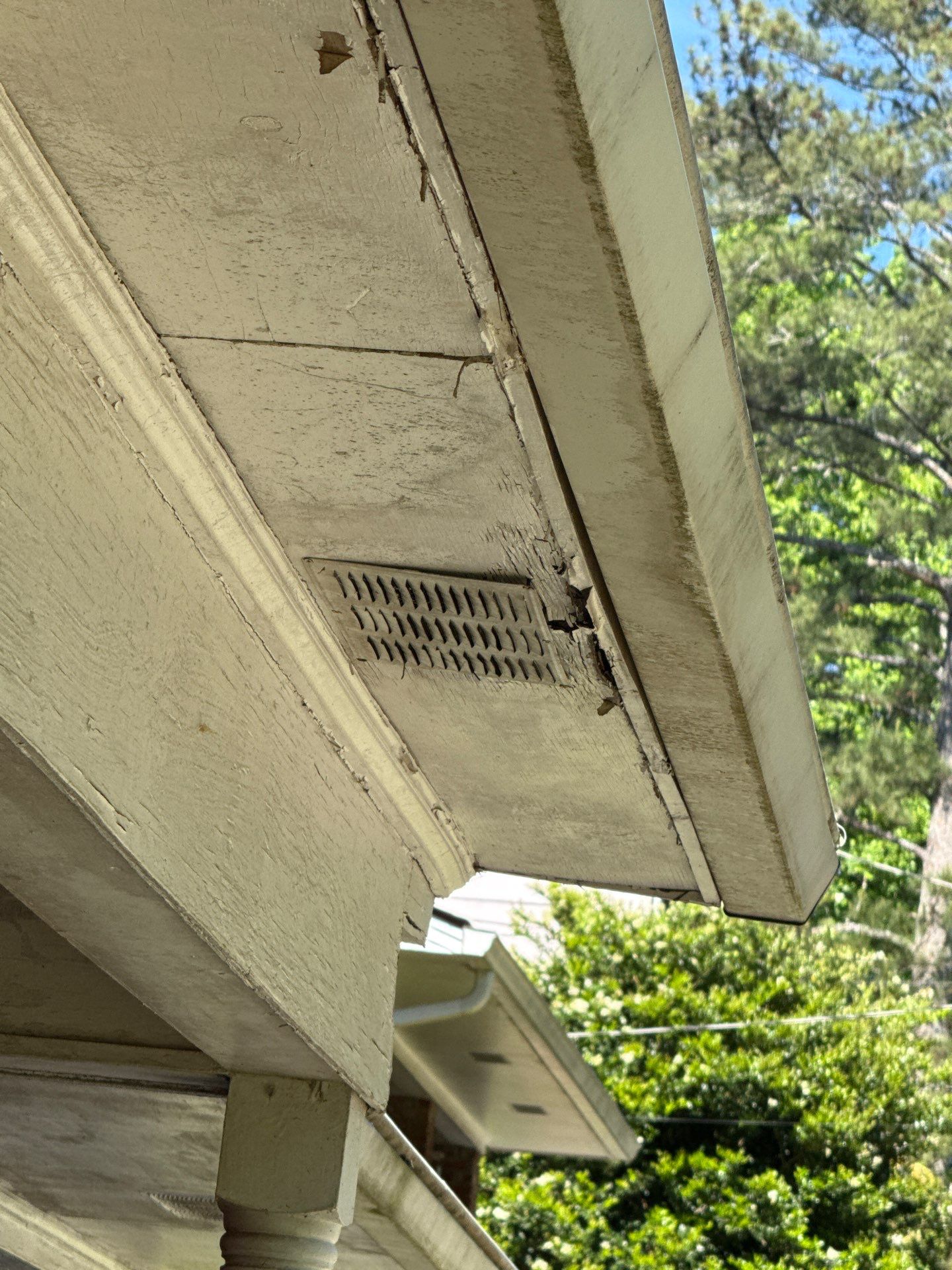
The Moisture Chain That Leads to Rot
Rot isn't random. It follows a path, and that path almost always starts above the soffit, not at it. Wood needs steady moisture to break down. Get it wet once and it dries. Keep it wet for weeks and fungus moves in. That's the whole story in two sentences.
So where does the steady moisture come from? Nine times out of ten, the gutter.
Here's the chain we see on homes over and over, in the same order every time.
- Debris builds up in the gutter trough, usually pine needles, oak tassels, and shingle grit.
- The trough holds standing water instead of moving it to the downspout.
- Water backs up over the inside edge of the gutter, behind the fascia board.
- That water soaks the fascia, then runs down into the soffit panel and the framing behind it.
- The wood stays damp between rains, especially on shaded north-facing walls.
- Fungus takes hold, the wood softens, and paint starts to bubble or peel.
- Panels sag, seams open up, and insects or birds find the gap.
Notice that rot is step seven. By the time you can see it, the problem has been running for a season or two. We tell people this constantly: the stain you're looking at is old news.
Water gets behind the soffit through a handful of predictable openings. Once you know them, the damage pattern makes sense.
- Clogged or sagging gutters that overflow backward instead of outward
- Loose or missing gutter spikes that pull the trough away from the fascia
- Downspouts that dump right next to the wall and splash back up
- Missing drip edge flashing at the roof line, so runoff wicks under the shingles
- Roof valleys and dormer corners that shed heavy volume onto one short gutter run
- Tree limbs resting on the roof, keeping that whole section shaded and slow to dry
Humidity plays a role too. Metro Atlanta sits in a humid subtropical climate, and our summer air holds moisture for days. Wood that would dry out in an afternoon in Arizona stays damp here. But humidity alone rarely rots a soffit. It just slows the drying, so a small leak does big damage.
A homeowner called us about two soft soffit panels near the garage. The panels were the complaint. The cause was a single downspout elbow that had popped loose two years earlier. Every storm, water ran straight down the fascia instead of into the drain. Replace the panels and skip the elbow, and you're doing the same repair again in 2027.
That's the part people miss. Fixing rotted wood without fixing the water is just repainting the problem.
One more field note. On gutter cleaning visits we don't need you home, and we always send pictures of the trough and the soffit line before and after. That photo record is how a lot of our clients catch early staining while it's still a cleaning problem and not a carpentry problem.
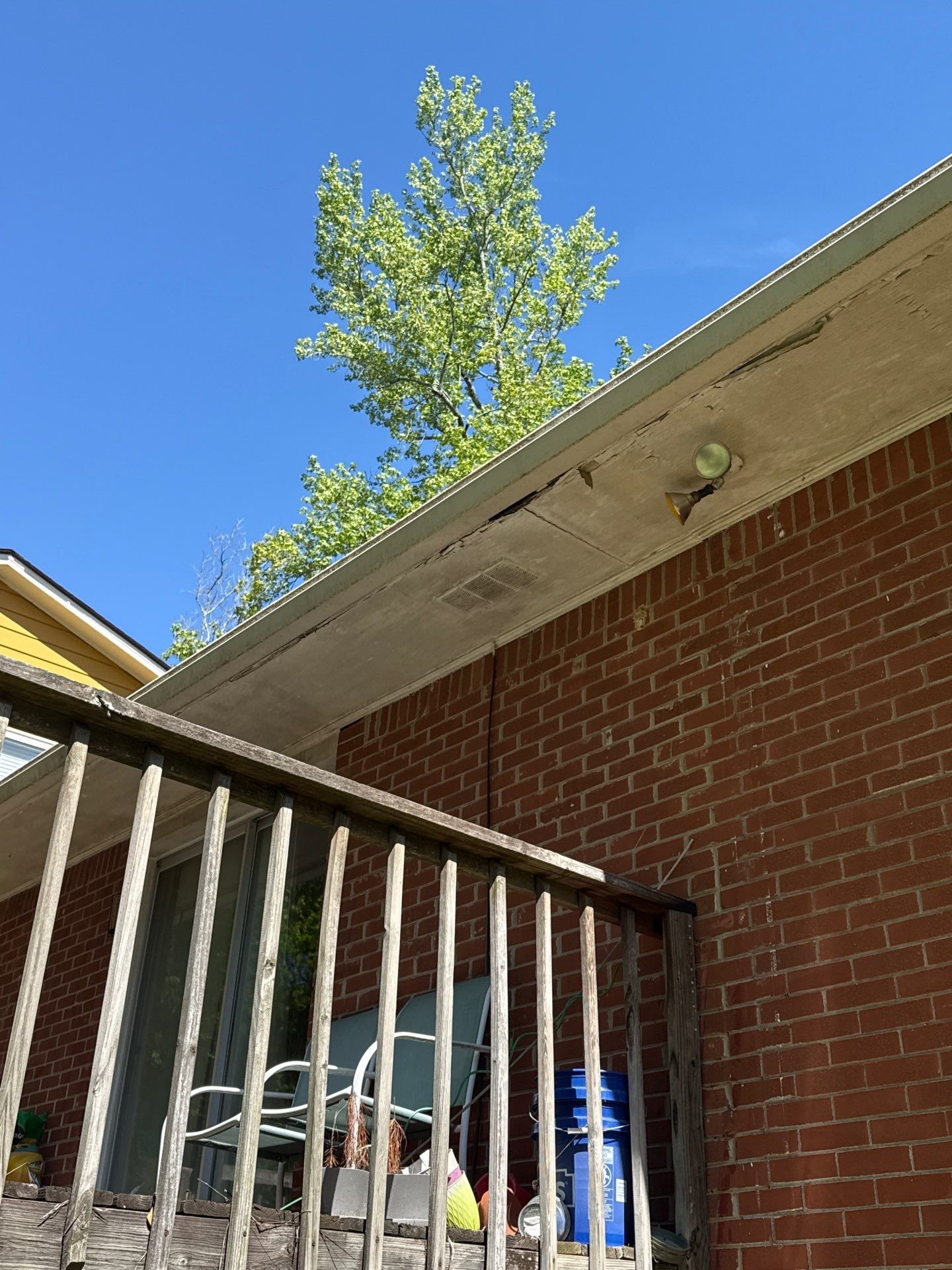
Common Culprits Behind the Moisture
Rot needs water. That's the whole story. So the real question isn't why wood decays, it's where the water keeps coming from. In this area, we see the same handful of sources over and over on all kinds of homes, including the older brick ranches.
Most of the time it's not one dramatic leak. It's a small, steady drip that nobody notices for two or three seasons.
- Clogged gutters that overflow backward into the soffit and fascia instead of draining out the downspout
- Loose or pulling gutters that let water run behind the gutter and straight down the wood
- Damaged or missing drip edge flashing at the roof line, so runoff wicks under the shingles and into the eave
- Blocked attic ventilation, which traps warm humid air against the underside of the soffit until it condenses
- Overhanging tree limbs that hold moisture against the roof edge and dump wet debris into the gutter trough
- Downspouts that dump right next to the foundation and splash back onto low eaves and porch soffits
Notice how many of those trace back to the gutter system. That's not a coincidence. Your gutters are the primary shield for the wood behind them, and when that shield fails, the soffit is the first thing to pay for it.
Georgia weather makes it worse. We get heavy afternoon downpours in summer, then long humid stretches where nothing ever fully dries. Wood that stays damp for weeks doesn't stand a chance. And pollen season loads up gutters with a thick paste that hardens and holds water like a sponge.
Here's one we ran into last spring. A homeowner called about a soft spot on one corner of the porch soffit. The gutters looked fine from the ground. Up on the ladder, one hanger had pulled loose about half an inch, just enough to let water slip behind the trough every time it rained. Two years of that, and the fascia board behind it crumbled in my hand.
Want to find your own source? Work in this order.
- Walk the perimeter during or right after a hard rain and look for water sheeting over the gutter edge.
- Check where the gutter meets the fascia for gaps, rust streaks, or sagging sections.
- Look up at the soffit panels for dark staining, bubbling paint, or panels that bow downward.
- Open an attic hatch and feel for stale, damp air near the eaves.
- Confirm every downspout carries water away from the house instead of dumping at the base.
That sequence tells you more in fifteen minutes than a year of guessing. But I'll be honest, the source isn't always visible from the ground, and the damage is usually bigger than the stain suggests.
Fix the water source first. Replace the wood second. Do it the other way around and you'll be back here in two years.
Looking for the service itself?
This guide covers the decision. The Soffit Replacement page covers what the visit includes and how to book it.
SEE SOFFIT REPLACEMENTTrusted by Homeowners
Licensed and insured. Real prices before we start. Before and after photos with every invoice.
Frequently Asked Questions
How do I know if soffit rot is a gutter problem or a roof problem?
Most soffit rot we see starts with gutters, not the roof itself. If you see staining along a straight run under the gutter line, clogged or loose gutters are usually to blame. If the damage sits near a valley or dormer corner, heavy runoff from the roof may be overwhelming that section. Either way, the soffit itself rarely causes the problem. It just shows the damage first.
Can I just repaint the soffit instead of dealing with the water source?
No, repainting only hides the problem for a short time. Paint doesn't stop water from soaking into the fascia and framing behind the panel. Wood that stays wet will keep softening even with fresh paint on top. You'll be back to the same spot in a season or two. Fixing the moisture source, like a clogged gutter or loose elbow, is what stops the rot from coming back.
Does the climate here make soffit rot worse?
Yes, humid summers slow down drying time for damp wood. Metro Atlanta's humid subtropical climate means wood that would dry out quickly in a drier region stays wet for days here. That extra moisture time gives fungus a chance to take hold. A small leak that would barely matter elsewhere can cause real damage here if it sits unaddressed through a wet season.
When should I call a professional instead of just watching the soffit?
Call a professional once you notice bubbling paint, sagging panels, or a musty smell near the attic vents. These signs usually mean water has been sitting behind the soffit for months already. Waiting lets the damage spread into the fascia and roof framing, which costs more time and effort to fix later. A trained eye can also spot soft spots you can't see from the ground.
Why do squirrels or birds show up around rotted soffit?
Critters don't cause soffit rot, they take advantage of it. Birds, squirrels, and wasps look for soft wood because it's easy to chew or push through. If you're seeing nests or gaps near your roofline, the wood was already weak before they arrived. That's usually a sign of a moisture problem that's been building for a while, not a new issue.
How can I catch soffit damage before it turns into a bigger repair?
Regular gutter cleaning is the easiest way to catch soffit trouble early. Clogged gutters are the most common cause of the steady moisture that leads to rot in homes around here. During a cleaning visit, a good crew will check the trough and soffit line and document what they see with photos. Staying on top of gutter cleaning helps you catch staining while it's still a small problem, not a carpentry job.
Still Not Sure What You're Looking At?
Send us a photo or book a visit. We'll tell you what it is before anyone quotes a price.
BOOK NOW (opens in a new tab)Or call (404) 994-3494

Metro Atlanta's dedicated gutter specialists. Cleaning, repair, replacement, downspouts, drainage and soffit work, done right the first time with photo proof on every job.
Gutter Services
Drainage & Roofline
© 2026 Shelter Guard Gutter Cleaning and Repair. All Rights Reserved.