No clogged gutters. Cleaned in 24 hours or less.
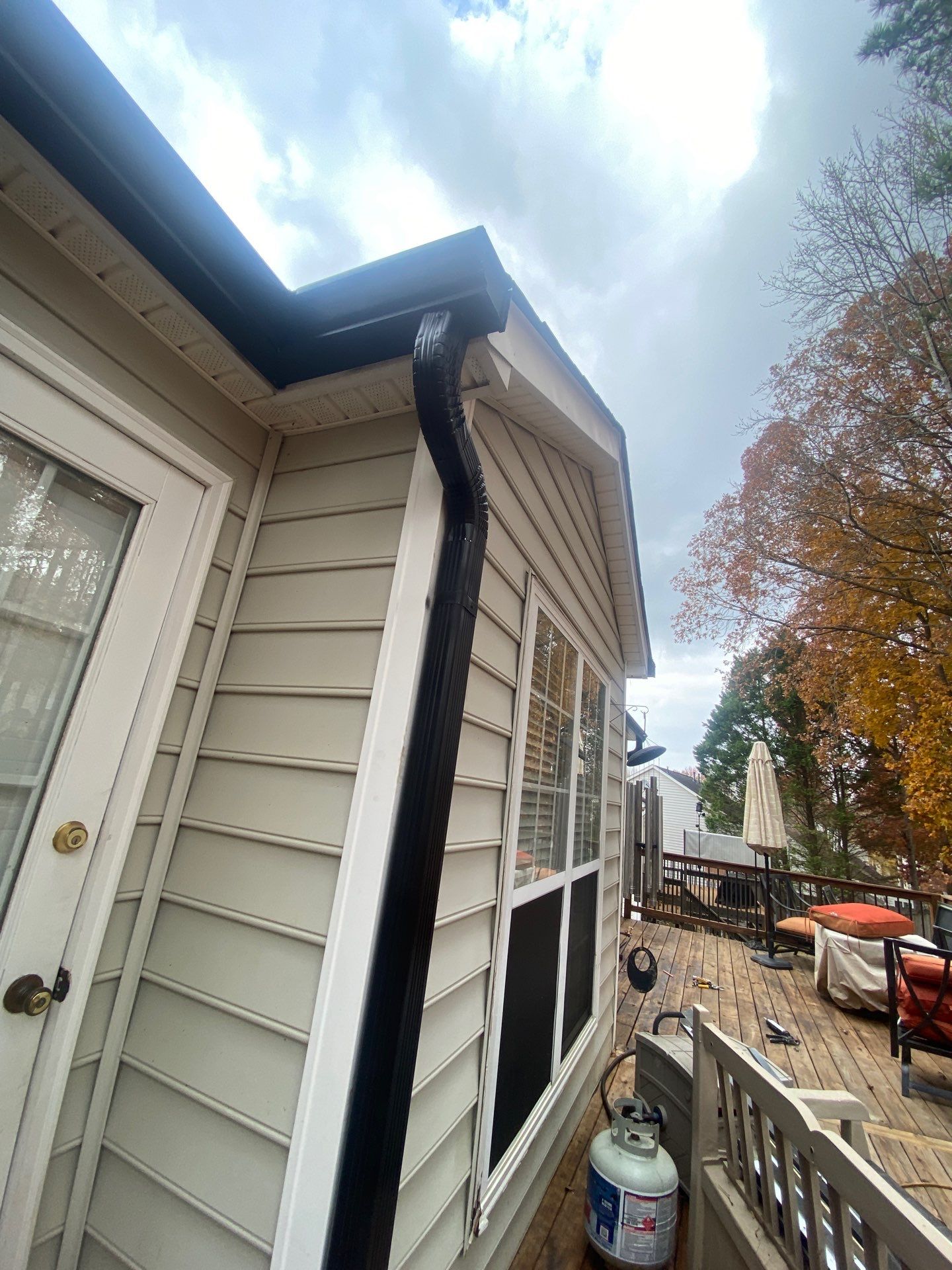
Home Guides How Do I Know If I Need Downspout Repair or Full Replacement?
How Do I Know If I Need Downspout Repair or Full Replacement?
Small dents, one loose section, or a single leaky joint usually mean repair is enough.
Repair or Replace? The Real Question to Ask First
Quick Summary:
Small dents, one loose section, or a single leaky joint usually mean repair is enough. But rust holes, multiple cracked seams, or a downspout pulling away from the house in more than one spot usually mean it's time to replace. The real question isn't age, it's how much water the downspout is losing before it reaches the ground.
Here's the question we ask on every job. Is the water getting where it needs to go? That's it. Not how old the downspout looks, not whether it's dented. If water is reaching the underground drainage or splash block the way it should, repair is probably fine. If it's spilling out the side, backing up, or missing the ground entirely, you're looking at something bigger.
I've stood in driveways around here and watched homeowners point at a dented downspout, convinced it needed full replacement. Nine times out of ten, that dent is cosmetic. But the corner section behind it, rusted through and separated at the seam, that's the real problem. And we only catch that because we're looking, not guessing from the ground.
- Check where the water lands. Stand outside during or right after rain and watch the base of the downspout. If water sheets down the side of the house instead of flowing straight down, something's failing.
- Look for rust spots or soft, flaky metal. Rust rarely stays isolated. Once it starts eating through one section, it spreads.
- Count the loose spots. One loose bracket is a repair. Three or four loose brackets on the same downspout usually points to a bigger structural issue.
- Check the seams. Small gaps can get sealed. Wide separations, especially near elbows, often mean the metal has warped and won't hold a repair.
- Ask how old the system is. Downspouts past 20 years old, especially thinner aluminum ones, tend to fail in more places at once, not just where you can see.
We see this mistake all the time. A homeowner patches one leaky joint themselves, feels good about it, then two months later the downspout below it fails because the whole run was already stressed. Repairing one weak point on a system that's failing everywhere else just delays the real fix. It doesn't stop it.
This matters more than people think.
Georgia clay soil doesn't drain fast. When a downspout dumps water in the wrong spot, that water sits against the foundation instead of moving away. Give it a few heavy storm seasons and you're not just looking at a downspout problem anymore. You're looking at foundation cracks or a soggy crawlspace.
For our gutter cleaning service, we don't need you home. We take pictures during every visit so you can see exactly what we found, no guessing involved. But for a downspout estimate, we do need you there. Repair versus replace isn't a one-size answer. It depends on your roofline, your soil, and how your specific system has been performing. We want to walk it with you and talk through what fits your house.
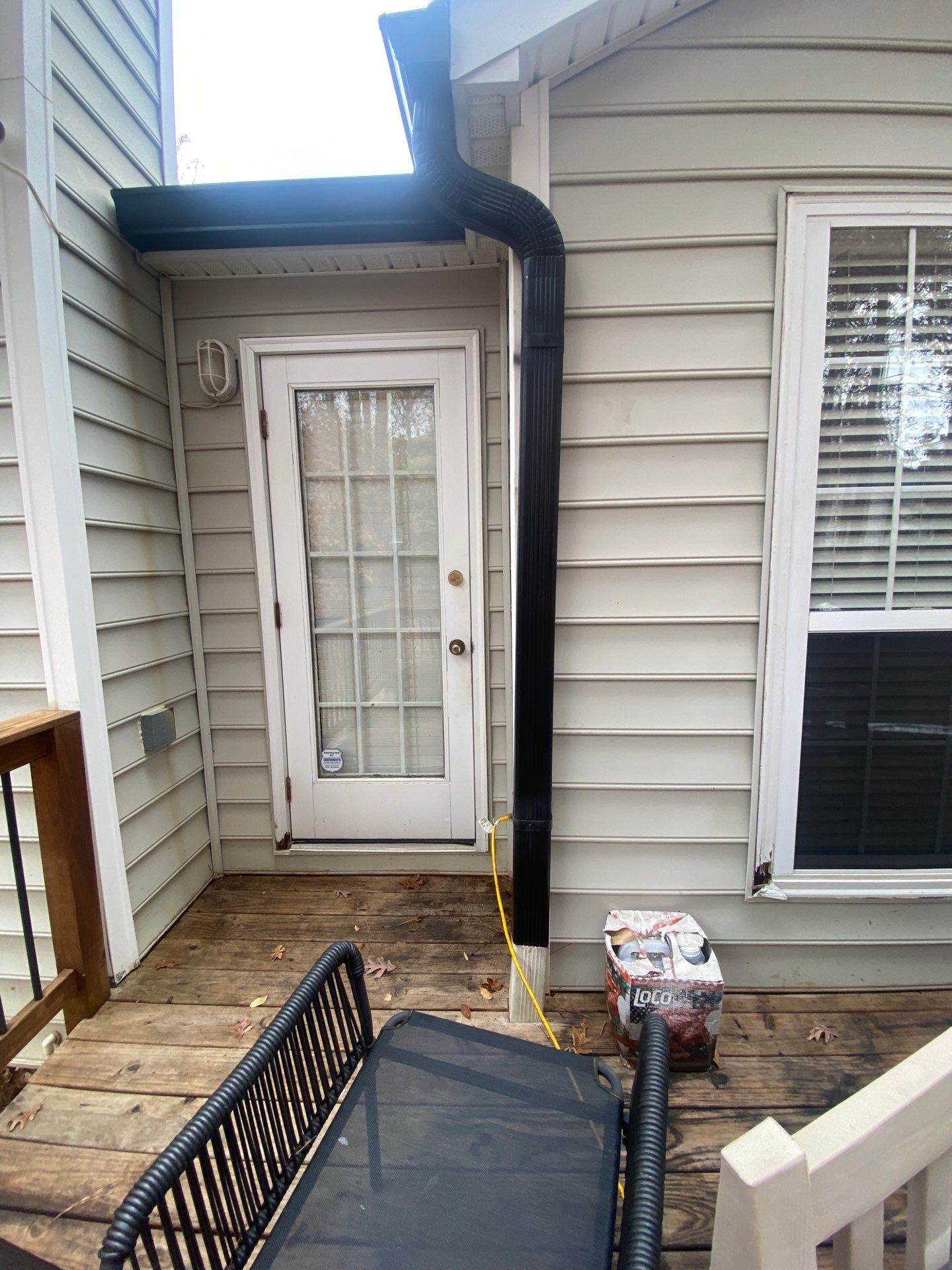
Signs of Downspout Damage Worth Checking Today
So how do I know if I need downspout repair or full replacement? It starts with a walk around your house. Most damage shows up in plain sight if you know what you're looking for. We've walked hundreds of properties, and the same warning signs keep showing up on homes that are one storm away from real trouble.
Grab a few minutes on a dry day and check these areas. Rust spots, loose sections, and pooling water near the foundation are the big three we look for first.
- Rust streaks or flaking metal along the downspout body
- Sections pulling away from the house or hanging loose at the elbows
- Water pooling at the base instead of draining away from the foundation
- Dents or crushed spots from lawn equipment, falling limbs, or ladders
- Peeling paint, soft wood, or dark staining on the fascia behind the downspout
Any one of these on its own might just need a patch. But when you see two or three together, that's usually a sign the whole run is failing, not just one spot.
Here's a scenario we run into a lot. A homeowner notices a small gap where the downspout meets the elbow. They figure it's minor. Six months later, water has been dumping straight onto the foundation every time it rains, and now there's a soft spot in the siding above the crawl space. That small gap wasn't minor at all, it was the first symptom of a bigger structural issue.
We see this mistake all the time: people patch the visible crack and ignore what's happening behind it.
A downspout's job is simple. Move water off the roof and away from the house, fast. When it can't do that anymore, it's not just an eyesore, it's a direct threat to your home's foundation and framing. That's the shield we're talking about protecting.
Older homes with galvanized steel downspouts tend to show rust first, usually near the seams. Newer aluminum systems are more likely to dent or pull loose from wind and storm debris. Either way, the material tells you something about what kind of damage to expect and how fast it'll spread.
Want a real answer instead of guessing from the ground? For gutter cleaning, you don't even need to be home. We take photos of every downspout and gutter run during the visit, so you'll see exactly what we saw. For a full estimate on repair or replacement, we do ask that you're present. That way we can walk the property together and talk through what fits your situation, not a one-size-fits-all fix.
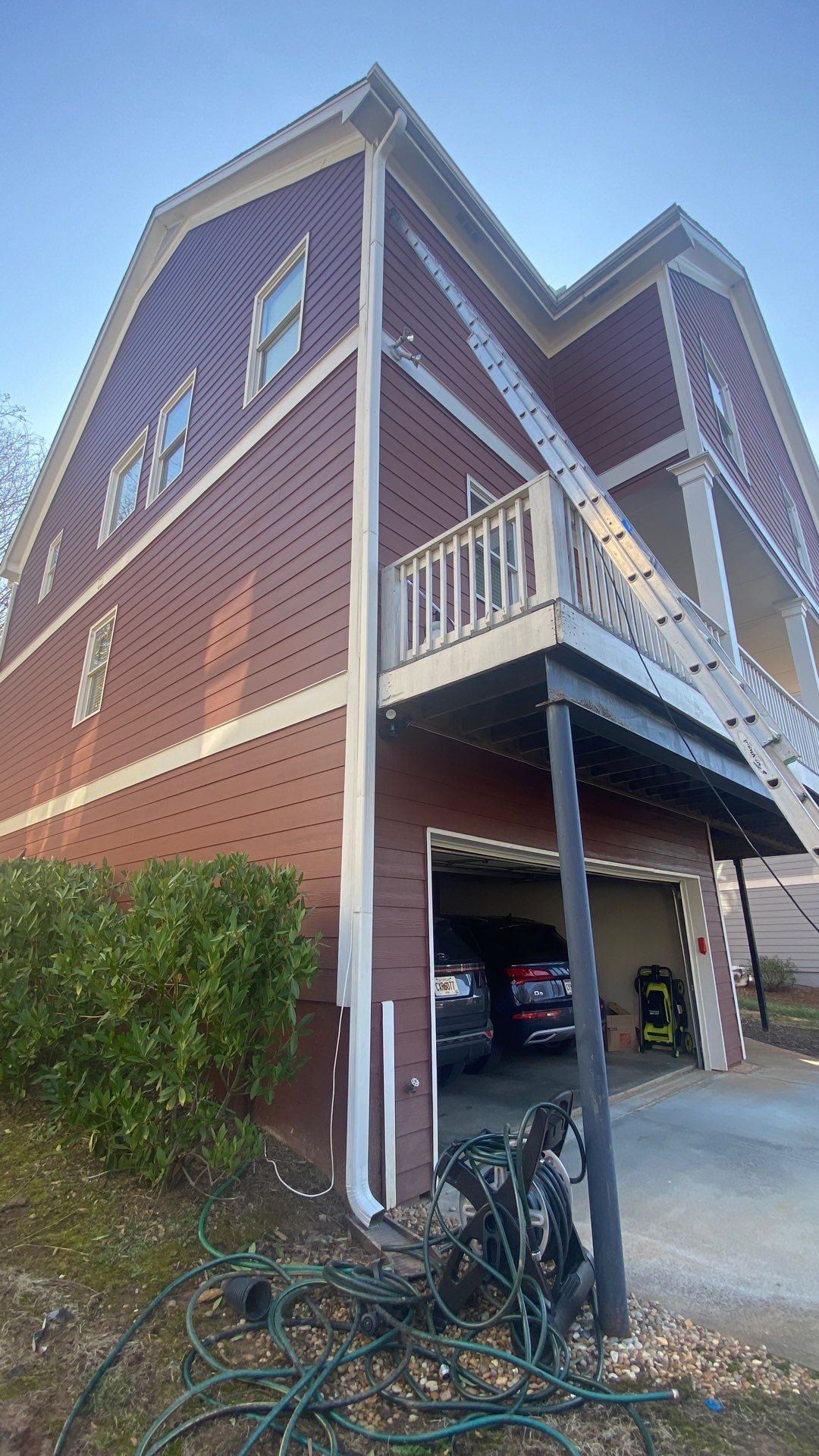
Repair vs. Replace: A Scenario-Based Way to Decide
Numbers on a page only help so much. So let's walk through what we see on local properties, from older brick ranches to newer builds. Match your situation to one of these, and you'll have a much better idea of where you stand.
Scenario one: a single downspout pulled away from the house after a storm, but the gutter above it looks fine and the metal isn't rusted. That's a repair. We reattach it, check the fasteners, and you're done. Scenario two: that same downspout has been loose for two years and now there's a soft spot in the fascia behind it. That's no longer a simple fix, it's turned into fascia repair territory too.
Here's a scenario we run into a lot. A homeowner calls about one leaky joint on the downspout. We get there, take pictures, and find three other sections with pinhole rust the owner never noticed. Repairing just the one joint would've meant another service call in six months. Replacing the full downspout run solved it once.
- One isolated problem, sound metal elsewhere: repair usually makes sense.
- Multiple failure points on the same downspout run: replacement is often the smarter move.
- Damage tied to a specific event, like a fallen limb: repair, unless the impact bent the elbow or cracked a seam.
- Slow, ongoing issues like rust or staining that keep coming back: replacement stops the cycle.
- Downspout is under 10 years old and otherwise solid: repair almost always wins.
- System is old, mismatched, or already patched more than once: full replacement pays off long term.
Notice the pattern? Age and pattern of failure matter more than how bad one single spot looks. A downspout with one bad elbow but strong metal everywhere else is a completely different job than one with rust spreading section by section. We've walked up to homes expecting a quick repair and left recommending replacement, and the reverse happens too, someone assumes they need a full teardown when one bracket and a new elbow fixes it.
This is exactly why an in-person look matters more than a phone description. Pictures alone can miss soft spots you'd only catch by pressing on the metal or checking behind the downspout at the fascia line.
One more thing worth saying plainly: for a standard gutter cleaning visit, you don't need to be home. We take pictures throughout so you can see exactly what we found. But for a downspout estimate, we do ask that you're there. Repair-versus-replace decisions depend on your specific setup, your gutters, your roof line, your drainage, and we want to talk it through with you on-site rather than guess from a driveway.
Looking for the service itself?
This guide covers the decision. The Downspout Repair and Downspout Replacement pages cover what each visit includes and how to book it.
Trusted by Homeowners
Licensed and insured. Real prices before we start. Before and after photos with every invoice.
Frequently Asked Questions
How do I know if my downspout just needs a repair instead of full replacement?
You know repair is enough when the damage is small and stays in one spot, like a single loose bracket or a small gap at one seam. Watch where the water lands during rain. If it still reaches the ground or splash block, the system is basically working. Problems in two or three places at once usually mean the whole run is failing, not just one section. That's when replacement makes more sense than patching.
What's the difference between cosmetic damage and structural damage on a downspout?
Cosmetic damage is a dent or scratch that doesn't stop water from flowing, while structural damage means the downspout can no longer move water where it needs to go. A dent from a lawn mower or ladder often looks worse than it is. Rust holes, wide seam gaps, or sections pulling away from the house are structural. Those affect performance, not just looks, and they tend to get worse with every storm.
Is it a mistake to patch just the visible crack on a downspout?
Yes, patching only the visible crack is a common mistake we see. A homeowner seals one leaky joint, feels good about it, then a different section fails months later because the whole run was already under stress. One weak point rarely happens alone on an older system. If you're seeing repeated small failures, it's worth having someone look at the whole downspout, not just the spot that's leaking today.
Why does downspout damage matter more here than in other areas?
Georgia clay soil drains slowly, so water from a failing downspout sits against your foundation instead of moving away. A few heavy storm seasons of that can turn a small downspout issue into foundation cracks or a soggy crawlspace. Homes with older galvanized steel systems tend to rust at the seams first. That's why catching downspout problems early matters more here than in areas with faster-draining soil.
Does the age of a downspout tell me whether it needs replacing?
Age is a clue, but it's not the whole answer. Downspouts past 20 years old, especially thinner aluminum ones, tend to fail in more places at once, even where you can't see it yet. A newer downspout with one loose bracket may just need a small fix. The better question is how much water is being lost before it reaches the ground, which is exactly what we check during a downspout estimate.
Can I tell if my downspout is failing just by looking at it from the ground?
Not always, and that's how small problems get missed. A dent you can see from the driveway might be purely cosmetic, while a rusted, separated seam behind it goes unnoticed. Standing outside during rain and watching where the water lands tells you more than a visual scan. If you want a clearer picture without guessing, request a downspout estimate so someone can walk the property and check each section up close.
Still Not Sure What You're Looking At?
Send us a photo or book a visit. We'll tell you what it is before anyone quotes a price.
BOOK NOW (opens in a new tab)Or call (404) 994-3494

Metro Atlanta's dedicated gutter specialists. Cleaning, repair, replacement, downspouts, drainage and soffit work, done right the first time with photo proof on every job.
Gutter Services
Drainage & Roofline
© 2026 Shelter Guard Gutter Cleaning and Repair. All Rights Reserved.