No clogged gutters. Cleaned in 24 hours or less.
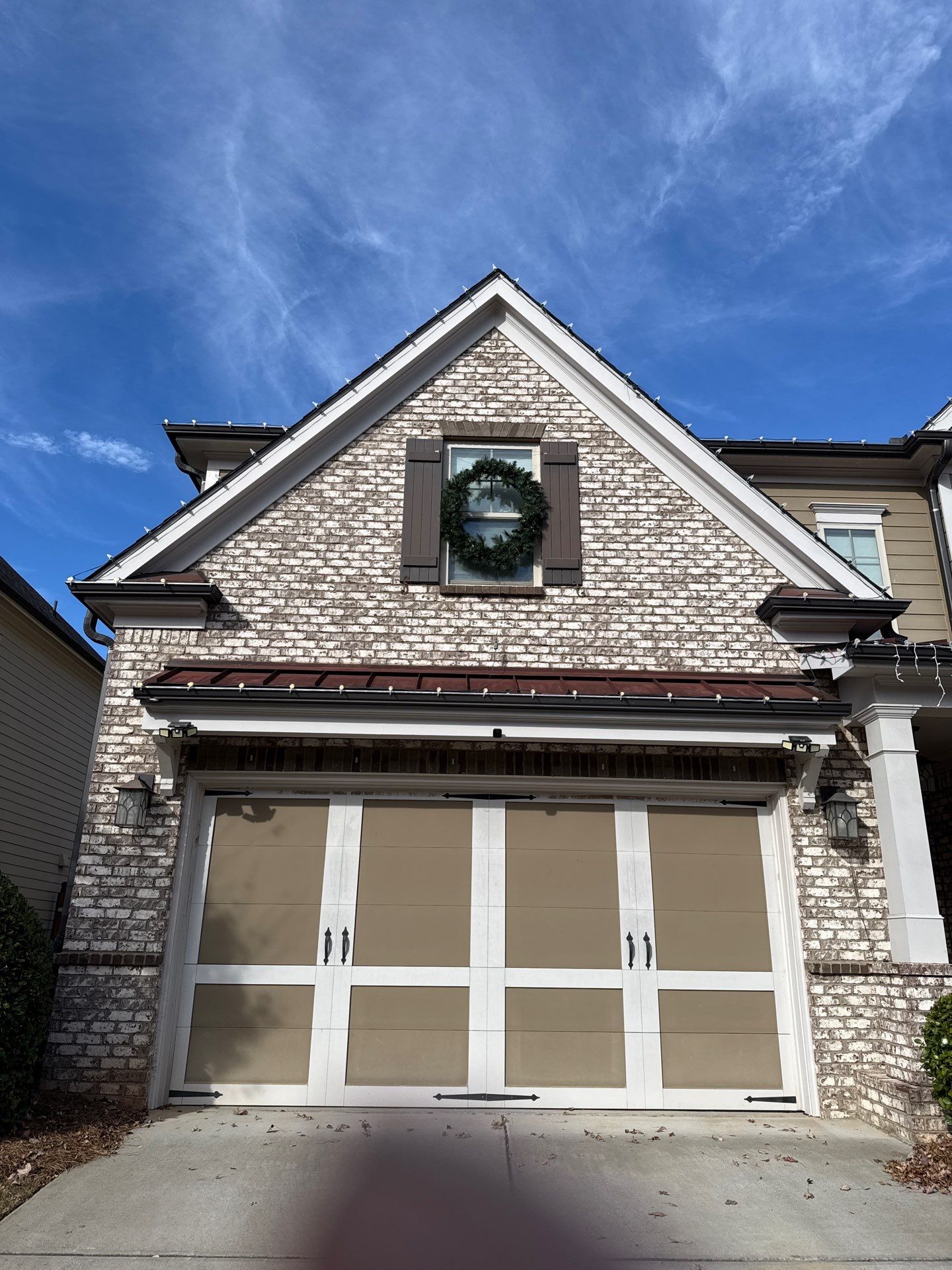
The Real Cause of Gutter and Roof Damage From Holiday Lights
Hanging lights doesn't damage your gutters or roof. The wrong hardware does. Nails, staples, screws, and careless ladder work create the punctures and pressure points that lead to leaks and sagging later.
So, will hanging lights damage my gutters or roof? Not by themselves. A strand of C9 bulbs weighs almost nothing. What causes damage is how that strand gets attached.
We see the same mistakes every December. Someone grabs a staple gun because it's fast. Or they drive roofing nails through shingles to hold a clip. Both work great for about a month, then the trouble starts.
Here's the thing about your roof and gutter system. It's a shield. Every puncture is a hole in that shield.
And water finds holes. Always.
These are the real causes of damage we find when we go up on a ladder after the holidays:
- Staples and nails driven through shingles, creating direct paths for water under the roof surface
- Screws through the gutter face or bottom, which rust out and leak by spring
- Duct tape or adhesive hooks that strip paint and trap moisture against aluminum
- Ladder feet resting directly on the gutter lip, bending the front edge and breaking the pitch
- Old or loose gutters that were already pulling away from the fascia before anyone touched them
That last one matters more than people think. A gutter held by a few tired spikes can't take extra handling. The lights get blamed, but the hanger was already failing.
Want to see how a small hole becomes a real repair? It follows a pattern we can almost set a clock to.
- A staple punches through the shingle in late November.
- The lights come down in January, but the hole stays.
- Winter rain seeps in and soaks the decking underneath.
- That damp wood swells, then the shingle above it lifts slightly.
- By summer, you've got a stain on the ceiling or rotted fascia behind the gutter.
- Now it's not a light install problem, it's a soffit and fascia repair.
Had a homeowner call us in March about a drip near the garage. Nothing dramatic, just a wet spot. We got up there and found eleven staple holes along the roof edge from the previous Christmas. Eleven. Each one small enough to ignore, all of them together enough to rot a two-foot stretch of fascia board.
Ladder damage is the quieter problem. Most people don't realize a gutter isn't built to hold weight from above. Lean a ladder on the front lip and you flatten it. Once that edge bends, water pools instead of flowing to the downspout.
This area gets heavy oak and sweetgum litter, so a bent gutter clogs faster than a straight one. Small dent, big backup.
None of this means you should skip the lights. It means the attachment method and the ladder work decide the outcome, nothing else. Clips that grip the gutter lip or the shingle edge hold fine and leave zero holes behind.
Not sure whether your gutters can handle it? That's a five-minute look from a ladder, and we'd rather check now than patch fascia in April.
Safe Clips vs. Risky Attachment Methods
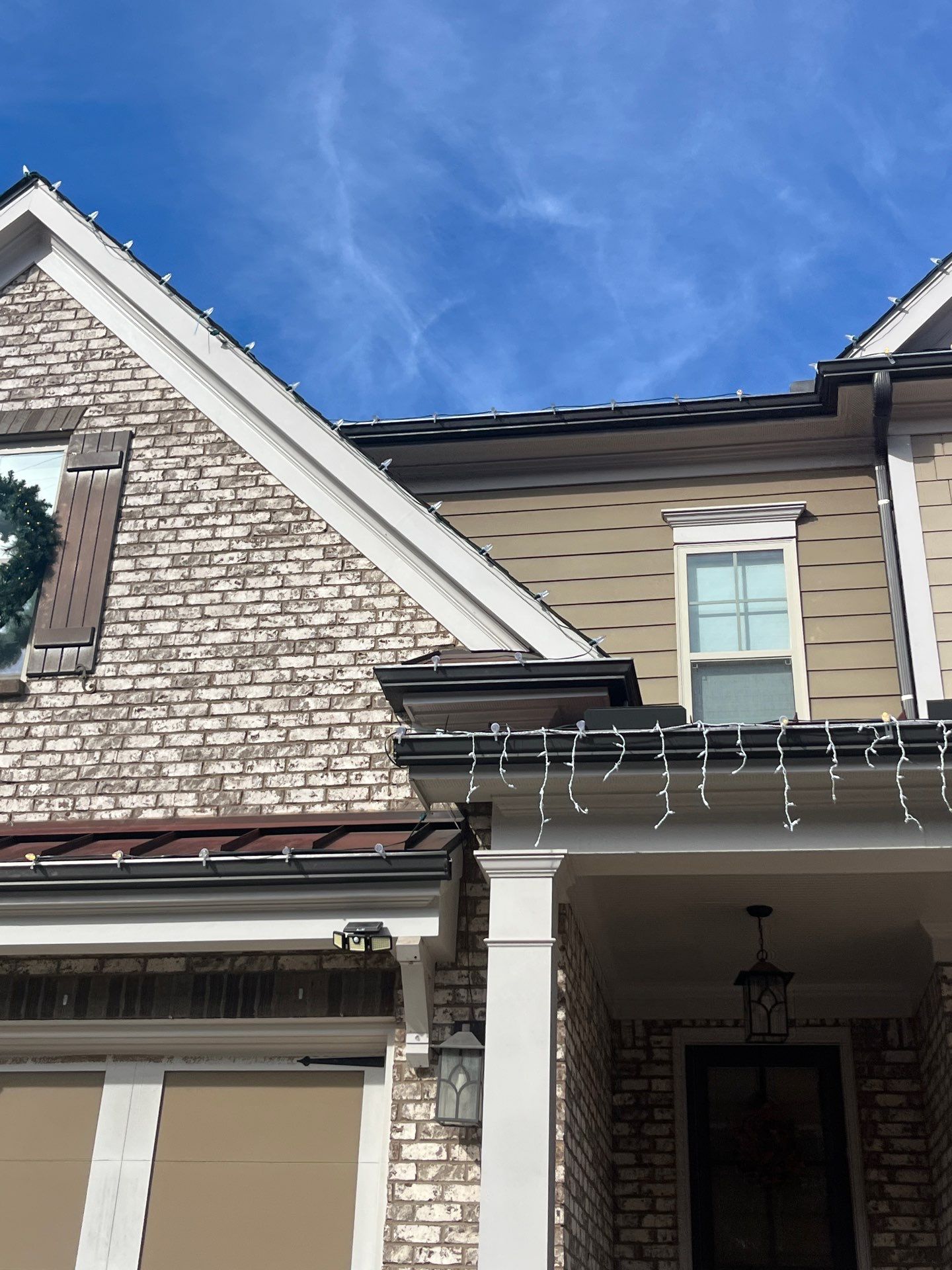
The clip you pick decides everything. Damage almost never comes from the lights themselves. It comes from how they're fastened. We've pulled hundreds of strands off homes in January, and the pattern is always the same, the houses with clips look untouched and the houses with staples and nails have holes.
Good clips work by tension, not penetration. A plastic gutter clip hooks over the front lip of your gutter and holds the wire in place. Nothing pierces anything. Shingle tabs slide under the bottom edge of a shingle and grip it without a fastener. Ridge clips do the same along a peak. All three come off clean when the season ends.
Now the other side.
Risky methods share one trait, they create a hole or a permanent stress point. Here's what we see most often on local homes:
- Staples through shingles or fascia. Each staple is two small punctures. Water finds them by February.
- Roofing nails or brad nails into fascia board. Wood splits, paint chips, and rot starts at the hole.
- Duct tape or packing tape on gutters and siding. It fails in cold weather and strips paint when you peel it.
- Hot glue on aluminum gutters. Sounds harmless, it bakes on and takes the finish with it.
- Zip ties cinched hard around gutter hangers. Overtightening bends the hanger and pulls the gutter forward.
- Screws into the gutter face to hold extension cords. That's a leak point you'll be sealing next spring.
Most people don't realize this until it's too late. A staple hole is tiny, so it doesn't feel like a big deal in December. But Atlanta-area winters run wet, not frozen. Rain sits in that hole, the wood soaks it up, and by the time you notice soft fascia you're looking at board replacement instead of a touch-up.
There's also a weight question. Gutter clips are safe, but only if the gutter is sound underneath them. We had a customer with a back-of-house gutter already pulling away from the fascia. He clipped a full run of C9 bulbs to it. The gutter dropped about four inches under the added weight and the wind. The clips didn't fail. The old hangers did.
So before you hang anything, tug on your gutter. If it moves, fix that first.
One more field tip. Space your clips about every 12 inches. Wider spacing lets the strand sag and swing, and that swinging motion is what works fasteners loose and scuffs your gutter coating. Tight, even spacing keeps the line quiet in the wind.
Clips versus staples isn't really a close call. Clips cost a few dollars more and leave your roof exactly how they found it. Staples save you ten minutes and buy you a repair bill. We've never once been called out to fix damage caused by a plastic clip.
How to Hang Lights If You Don't Have Gutters or Have Gutter Guards
Not every home has an open gutter lip to clip onto. Plenty of houses have gutter guards, screens, or no gutters at all on the front elevation. So the standard big-box clip won't work, and forcing it is how damage starts.
Here's the thing most people miss. The clip isn't the decision. The edge is. Figure out what you're hanging from first, then match hardware to it.
We walk rooflines all year. The homes that end up with bent aprons and torn screens almost always used one clip type everywhere.
Follow this order instead:
- Identify the edge. Open gutter, guarded gutter, screened gutter, bare fascia, or shingle edge only.
- Check the guard type if you have one. Mesh screens dent easily, solid helmet-style covers leave no gap at all.
- Pick the matching clip. Shingle tabs slide under the first course. Fascia clips grip the board face. Ridge clips hold peaks.
- Test one clip by hand before you run the whole line. If you feel the metal flex, stop.
- Space clips every 12 inches so weight spreads out instead of loading one point.
- Route the cord so it doesn't cross the drip edge and trap water behind it.
- Photograph the run before you leave the ladder. You'll want that record next season.
Gutter guards change the math more than anything else. A mesh screen is thin. Clip onto it and you'll crease the panel, then that crease becomes a low spot where debris packs in. Solid covers are worse in one way, there's simply nothing to grab, and people start prying at the seam to make room.
Don't pry. Ever.
With guards, go to the shingle edge or the fascia. Shingle tabs are the gentlest option on most Atlanta-area homes. They tuck under the bottom shingle course and hold by tension, no fastener, no hole. Fascia clips work well on wood or aluminum-wrapped fascia that's still solid. But rotted fascia won't hold anything, and that's a repair issue before it's a lighting issue.
Homes with no gutters on a section, like a front porch overhang or a gable end, need a different plan. You're working off the roof edge and the trim. Shingle tabs along the eave, ridge clips at the peak, and small hooks on column trim if there's a wraparound design. No nails into the roof deck. A single nail hole in a shingle field is a leak waiting on the next hard rain.
One client had lights nailed straight through the drip edge by a previous crew. Water tracked behind the fascia for two seasons before anyone noticed the soffit staining. That's a soffit repair and a fascia repair, all from a handful of nails.
If you're unsure which edge you've got, we'd rather look before you climb. For a Christmas lights install estimate we do need you there, so we can walk the roofline together and talk through what fits your house. For gutter cleaning you don't need to be home at all, and pictures come with every visit either way.
Looking for the service itself?
This guide covers the decision. The Christmas Lights Installation page covers what the visit includes and how to book it.
SEE CHRISTMAS LIGHTS INSTALLATIONTrusted by Homeowners
Licensed and insured. Real prices before we start. Before and after photos with every invoice.
Frequently Asked Questions
How do I know if hanging lights will damage my gutters?
Lights themselves won't damage your gutters, but the wrong hardware will. Check if your gutters already pull away from the fascia or feel loose when you tug on them. If they move, adding weight or ladder pressure can make the problem worse. Sound gutters with clean lines and tight hangers can handle clip-on lights just fine. If you're not sure, a quick ladder check settles it before you start hanging anything.
What's the difference between gutter clips and staples for hanging lights?
Gutter clips hold lights with tension, while staples puncture your roof or fascia. A clip hooks over the gutter lip or slides under a shingle edge without piercing anything, so it comes off clean in January. Staples and nails leave small holes that let water in, and our wet winters mean those holes soak wood fast. Clips cost a little more time to place but leave your roof exactly as they found it.
Can heavy rain make light damage worse?
Yes, our wet winters turn small holes into real problems fast. Unlike freezing climates, rain here doesn't stop for months at a time, so any staple or nail hole stays exposed to moisture all season. That water soaks into fascia board and roof decking, causing swelling and rot you won't notice until spring. This is why attachment method matters more here than in drier regions.
Why do my gutters clog faster after hanging lights?
A bent gutter lip clogs faster than a straight one, and the oak and sweetgum litter around here makes it worse. Ladder feet resting on the front edge can flatten that lip, which stops water from flowing evenly to the downspout. Even a small dent creates a spot where leaves and debris catch. Leaning your ladder against the roofline instead of the gutter avoids this problem entirely.
Do I need a professional to hang lights safely, or can I do it myself?
You can hang lights yourself if you use the right clips and check your gutters first. The job gets riskier when your roof is steep, your gutters are already loose, or you're unsure about ladder placement. A five-minute inspection tells you whether your setup can handle a full strand of lights safely. If you want that checked before committing to a full installation, our guide on how to hang Christmas lights safely on your roof covers the setup step by step.
Is it a myth that Christmas lights always damage your roof?
Yes, that's a common misconception. Lights weigh almost nothing, so they aren't the real cause of roof or gutter damage. The damage comes from staples, nails, screws, and careless ladder work used to attach them. Homes using proper clips year after year show no holes or stress points. The real question isn't whether to hang lights, it's how you attach them.
Still Not Sure What You're Looking At?
Send us a photo or book a visit. We'll tell you what it is before anyone quotes a price.
BOOK NOW (opens in a new tab)Or call (404) 994-3494

Metro Atlanta's dedicated gutter specialists. Cleaning, repair, replacement, downspouts, drainage and soffit work, done right the first time with photo proof on every job.
Gutter Services
Drainage & Roofline
© 2026 Shelter Guard Gutter Cleaning and Repair. All Rights Reserved.