No clogged gutters. Cleaned in 24 hours or less.
Home Guides What Size Gutters Does My House Need?
What Size Gutters Does My House Need? A Homeowner's Guide
Gutter size depends on your roof's square footage, its pitch, and how hard it rains in your area.
What Determines Gutter Size
Quick Summary:
Gutter size depends on your roof's square footage, its pitch, and how hard it rains in your area. Most homes here do fine with 5-inch gutters, but steep roofs, large roof planes, or homes near heavy tree cover often need 6-inch gutters to keep up with water flow.
Here's the thing most homeowners don't realize: gutter size isn't about the size of your house. It's about how much water hits your roof and how fast it needs to leave. Two homes with the same square footage can need completely different gutter sizes if one has a steep roof and the other doesn't. We see this mistake all the time, someone installs standard gutters because that's what the last guy used, and within a year the gutters are overflowing during every storm.
Rainfall intensity matters more than most people think. Georgia gets hit with heavy downpours, not just steady drizzle. The National Weather Service tracks storm data for the Atlanta metro area, and we're right in that zone where summer storms can dump an inch of rain in under an hour. That kind of intensity overwhelms a gutter that's too small before it ever gets the chance to funnel water to the downspout.
- Roof square footage, bigger roof means more water volume during a storm
- Roof pitch, steeper roofs shed water faster, which demands a wider gutter to catch it
- Rainfall intensity for our area, summer storms here can overwhelm undersized systems fast
- Roof valleys, these concentrate water into a single point, so that section may need extra capacity
- Number and size of downspouts, a gutter is only as good as what's draining it
We've walked plenty of properties where the gutters looked fine on the surface but were sized wrong for the roof pitch. A steep A-frame roof pushes water off fast, and if the gutter can't keep pace, it just spills over the front edge. That's not a clog problem. That's a sizing problem, and no amount of cleaning fixes it.
So how do you know which one your house needs? You don't guess. And you shouldn't rely on what your neighbor has, because their roof pitch and layout could be totally different from yours.
This is exactly why an on-site look matters more than a phone estimate. We measure roof planes, check pitch, and map out where water concentrates before we recommend anything. For a Gutter Estimate, we do need you there. Not because we're being difficult, but because we want to walk the property with you and talk through what fits your situation, not a generic answer pulled from a chart.
5-Inch vs. 6-Inch Gutters: How to Tell Which Fits Your Roof
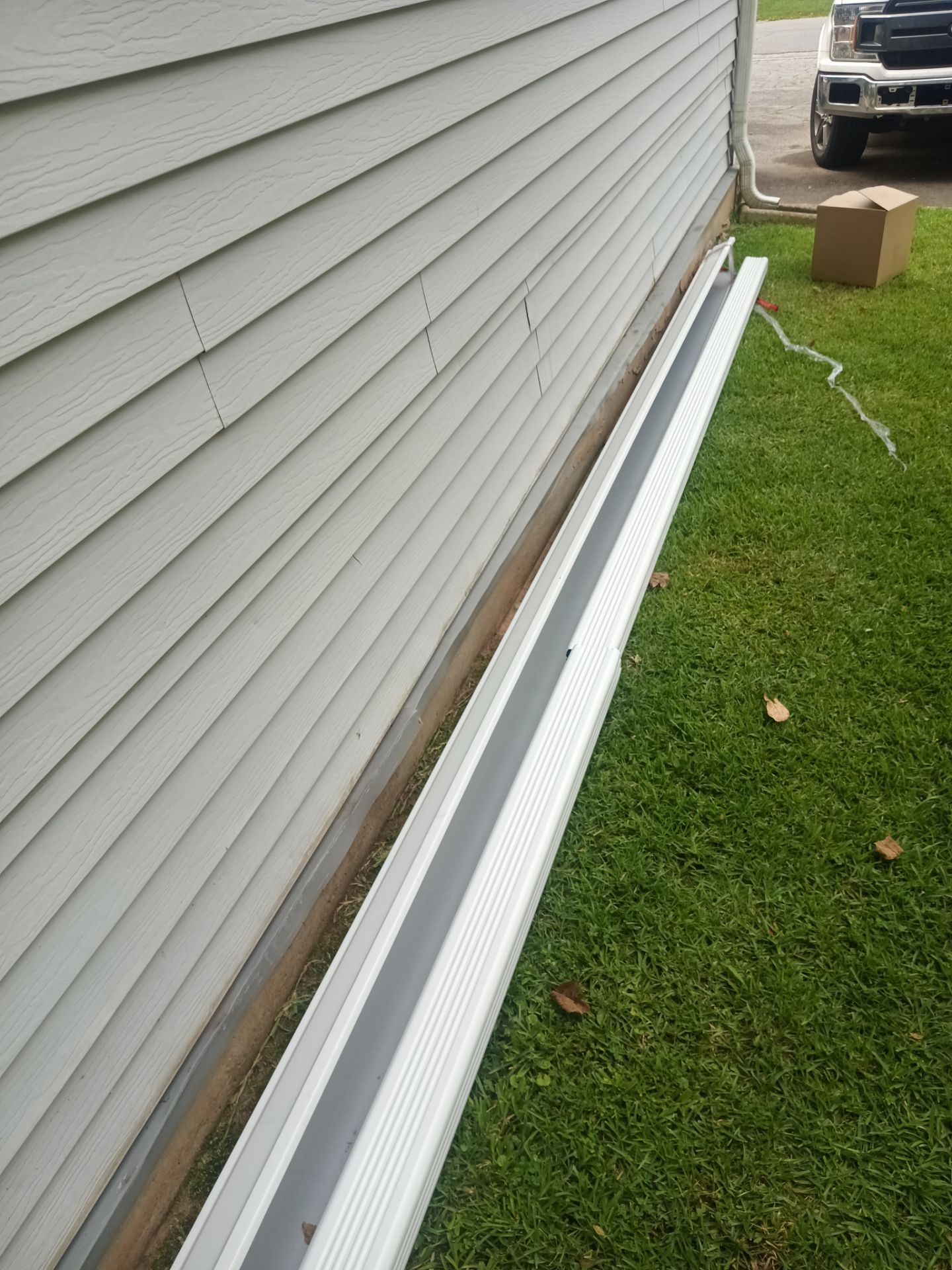
Most homes around here get by fine with 5-inch gutters. That's the standard size, and it works for a typical roof with moderate pitch and average square footage. But 6-inch gutters exist for a reason. They hold about 40% more water than 5-inch gutters, based on standard K-style capacity charts used across the industry. That extra room matters more than people think.
So how do you tell which one your house needs? Start with the roof, not the gutter. The roof is what's feeding water into the system, and it decides how much volume that system has to handle.
5-inch vs 6-inch comes down to three things: roof size, roof pitch, and rainfall intensity for your area. A small ranch home with a low-slope roof rarely needs more than 5-inch gutters. A two-story colonial with a steep roof and a large footprint often does better with 6-inch. Steeper roofs push water off faster, and faster water needs a bigger channel to catch it without overflowing.
- Roof square footage over 2,500 feet often points toward 6-inch
- Steep or multi-plane roofs shed water faster and fill gutters quicker
- Homes with long, unbroken roof runs concentrate more water into fewer downspouts
- Properties with heavy tree cover need more buffer room for debris
- Homes that have had overflow or spillover during hard rain are candidates for an upgrade
We see this mistake all the time: a homeowner replaces gutters with the same 5-inch system that failed the first time, just because it's what was already there. That's not a fix. That's a repeat problem waiting for the next storm.
Here's a real one. A two-story home had 5-inch gutters installed years before we ever got the call. Steep roof, big surface area, heavy oak coverage on one side. Every hard rain sent water pouring over the front gutter like a small waterfall. The fix wasn't cleaning, it wasn't guards, it was capacity. Once we upsized to 6-inch on that side of the house, the overflow stopped completely.
You can eyeball some of this yourself. Look at your roof from the street. Count the stories. Notice how steep the pitch feels when you're standing under it.
But guessing only gets you so far. And this is where a proper look at your home matters more than a general rule.
For a Gutter Cleaning visit, you don't need to be home. We take photos throughout, so you always see exactly what was found and what was done. For a Gutter Estimate though, we do need you there. Sizing decisions depend on your roof, your drainage patterns, and what's happened during past storms, and that's a conversation, not a guess.
How to Measure Your Roof for Gutter Sizing
You don't need a ladder or fancy tools to get a rough idea of your roof size. Grab a notepad and walk your property first. This gives you a starting point before you call anyone out for an estimate.
Here's the process we walk through in our heads every time we pull up to a home. It's not complicated, but skipping a step can throw off the whole picture.
- Measure the length of each roofline where a gutter will hang, side to side.
- Count the number of roof planes draining into each gutter run, not just the total roof size.
- Check your roof pitch. Steeper roofs push water off faster and need bigger capacity.
- Note any valleys where two roof sections meet. Valleys dump extra water into one spot.
- Look at your downspout count and spacing. Fewer downspouts mean each one works harder.
- Write down your square footage per roof plane, not just the home's total footprint.
That fourth step trips people up the most. A valley can double the water hitting one section of gutter. We've stood in driveways during a storm and watched water shoot straight over a 5 inch gutter at a valley point, while the rest of the run stayed dry and calm.
Here's a real scenario. A homeowner called us about overflow only on one corner of the house. Turned out two roof valleys fed into a single downspout run sized for a much smaller area. The gutter itself wasn't broken, it was just outmatched. That's the kind of thing you catch by measuring plane by plane instead of guessing off the whole roof.
You can measure the length of your rooflines from the ground with a long tape measure and a helper. Pitch is trickier, and most people underestimate it looking up from the yard.
For gutter cleaning service, you don't need to be home at all. We handle it and send you photos before and after, so you see exactly what we found and cleared.
Estimates work differently. We need you there. Roof sizing decisions depend on your specific valleys, roof pitch, and drainage goals, and we'd rather walk it with you than guess at solutions that don't fit your house.
We measure this stuff for a living, and we still double check pitch and valley placement on every single home. Your roof isn't the same as your neighbor's, even on the same street.
Looking for the service itself?
This guide covers the decision. The Gutter Replacement page covers what the visit includes and how to book it.
SEE GUTTER REPLACEMENTTrusted by Homeowners
Licensed and insured. Real prices before we start. Before and after photos with every invoice.
Frequently Asked Questions
How do I know if my gutters are too small for my house?
Water spilling over the front edge during hard rain is the clearest sign. This usually happens on steep roofs or homes with large roof planes, not because the gutters are dirty. If you notice overflow even right after cleaning, the problem is likely capacity, not clogs. Homes with steep A-frame roofs often show this pattern. An on-site look can tell you if you need a bigger gutter size before the next storm hits.
Do bigger houses always need bigger gutters?
No, house size alone doesn't decide gutter size. Roof pitch and how much water hits the roof matter more than square footage. A small home with a steep roof can need 6-inch gutters, while a larger home with a low-slope roof does fine with 5-inch. This is one of the biggest misconceptions we run into with homeowners. Gutter sizing depends on water volume and speed, not how many bedrooms your house has.
How does the weather here affect gutter sizing?
This area gets intense summer downpours that can drop an inch of rain in under an hour, based on National Weather Service storm data for the Atlanta metro area. That kind of intensity overwhelms undersized gutters fast. It's not steady drizzle you're planning for, it's short bursts of heavy water. This is why many homes here benefit from 6-inch gutters, especially on steep roofs or homes with heavy tree cover.
Can I figure out my gutter size myself, or do I need a professional to check?
You can get a rough idea yourself by measuring roofline length and checking your roof pitch. But guessing only gets you so far, since roof valleys and downspout placement change the math. This is where an on-site look matters more than a general rule. Requesting a Gutter Estimate lets someone walk your property, measure roof planes, and map out where water concentrates before recommending a size.
What's the difference between a clog problem and a sizing problem?
A clog problem happens even with clean gutters and usually shows up as slow draining. A sizing problem causes overflow no matter how clean the gutters are, because the system can't handle the water volume. We've seen steep roofs where cleaning didn't fix the overflow at all. If water spills over right after a cleaning, the gutters are likely too small for your roof.
Do homes with a lot of trees need different gutter sizing?
Yes, heavy tree cover changes what size gutter works best for your home. Leaves and debris eat into the gutter's usable space, so homes near wooded areas often need extra buffer room. A 5-inch gutter that would normally work fine can fill up faster under a big oak tree. This is one more reason a walk-through of your property beats a generic size recommendation.
Still Not Sure What You're Looking At?
Send us a photo or book a visit. We'll tell you what it is before anyone quotes a price.
BOOK NOW (opens in a new tab)Or call (404) 994-3494

Metro Atlanta's dedicated gutter specialists. Cleaning, repair, replacement, downspouts, drainage and soffit work, done right the first time with photo proof on every job.
Gutter Services
Drainage & Roofline
© 2026 Shelter Guard Gutter Cleaning and Repair. All Rights Reserved.