No clogged gutters. Cleaned in 24 hours or less.
Home Guides Should You Get 5 or 6 Inch Gutters?
Gutter Replacement
Should You Get 5 or 6 Inch Gutters? A Homeowner's Guide
The jump from 5-inch to 6-inch gutters isn't one inch of metal, it's roughly 40% more water capacity plus a bigger downspout opening.
5-Inch vs. 6-Inch Gutters: What Changes
The jump from 5-inch to 6-inch gutters isn't one inch of metal, it's roughly 40% more water capacity plus a bigger downspout opening. That extra room matters most on steep roofs, wide roof planes, and homes shaded by heavy oaks and pines. On a small ranch with short roof runs, 5-inch handles the job fine.
So should you get 5 or 6 inch gutters? The honest answer starts with what changes when you size up. It's not just the trough.
A standard 5-inch K-style gutter holds about 1.2 gallons per foot of length. A 6-inch holds closer to 2 gallons. That's a big difference in a hard Georgia downpour. But the number most people miss is the downspout.
Five-inch gutters usually pair with a 2x3 downspout. Six-inch gutters take a 3x4. And a 3x4 moves roughly twice the water volume of a 2x3. The trough collects, the downspout evacuates. If the downspout is undersized, the trough backs up no matter how wide it is.
Here's what really shifts when you go from 5-inch to 6-inch:
- Water capacity climbs about 40%, so heavy rain has somewhere to go instead of spilling over the front edge.
- Downspout openings widen to 3x4, and clogs that would choke a 2x3 pass straight through.
- Debris clearance improves. Pine needles and oak tassels sit lower in the trough instead of damming it.
- Hanger spacing and bracket load change. Wider gutters carry more weight and need tighter support.
- The fascia board carries more strain during storms, so rotted or thin fascia has to be addressed first.
That last point trips people up. We see this all the time on older homes. Homeowner wants 6-inch gutters. We pull the old system and the fascia behind it is soft as cardboard. You can't hang a heavier gutter on rotted wood and expect it to hold through a summer storm.
The fascia gets repaired or replaced first. Then the gutter goes up.
There's also the look. Six-inch gutters read bigger from the curb, and on a small cottage-style home the proportion can feel heavy. But on a two-story with deep eaves? The 6-inch looks right. Most people don't notice the difference from the street once it's installed and painted to match the trim.
One more thing changes, and it's the one that saves money long-term. Bigger downspouts clog less. Less clogging means less standing water sitting against your fascia and soffit. That's the whole point, the gutter is the shield protecting the wood behind it.
A client had 5-inch gutters overflowing at the same back corner every single storm. Not a capacity problem. The roof valley above dumped everything into one 8-foot section. We sized that run to 6-inch with a 3x4 drop and left the rest at 5-inch. Problem gone.
You don't always need to size up the whole house. Sometimes one run is the culprit.
Why Gutter Size Alone Doesn't Solve Overflow Problems
Here's the part most homeowners skip. Bigger gutters move more water, sure. But water only reaches the gutter if the channel is open and sloped right. We see this mistake all the time, a homeowner pays for 6 inch gutters and still gets a waterfall over the front door six months later.
Why? Because the problem was never capacity.
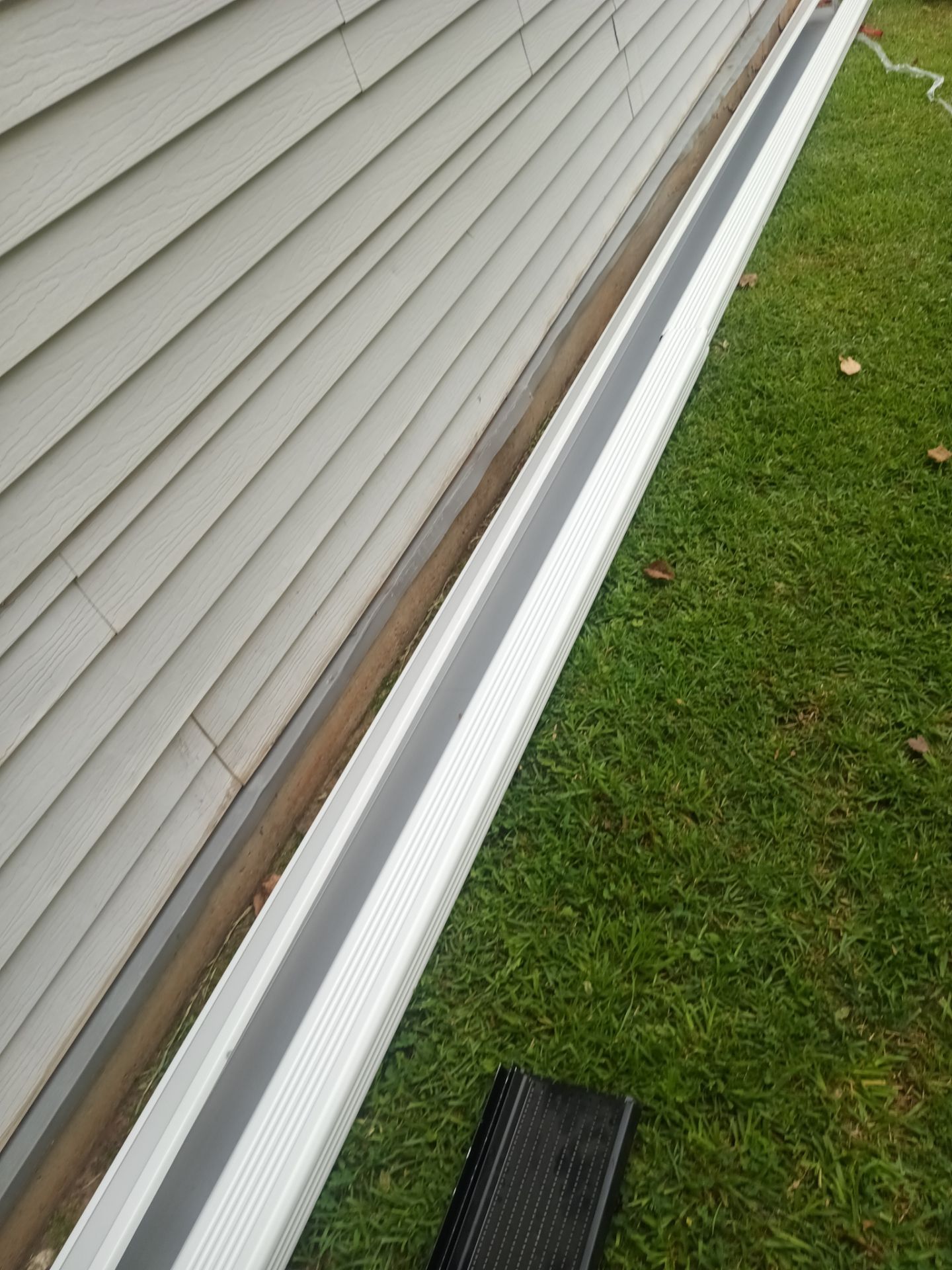
Overflow has a handful of usual suspects, and gutter width is rarely the main one. Before you upsize, it's worth knowing what you're fighting. Most of these show up during a routine visit, long before they turn into fascia rot.
- Clogged troughs packed with oak leaves, pine needles, and shingle grit
- Wrong pitch, so water pools in the middle instead of running to the downspout
- Too few downspouts, forcing one outlet to drain a huge roof section
- Downspout blockages at the elbow, where debris jams and backs up the whole run
- Roof valleys dumping concentrated water into one short stretch of gutter
That last one matters a lot around here. Plenty of homes around here have steep roof valleys and mature hardwoods overhead. A valley acts like a funnel. It takes water off a wide roof plane and shoots it into maybe four feet of gutter. Even a 6 inch trough can get overwhelmed if the water hits fast and the outlet is twenty feet away.
We worked a house last fall with this exact setup. Homeowner was convinced she needed 6 inch gutters. Her 5 inch run was fine, the real issue was a single downspout draining half the back roof, and the elbow was packed solid. We cleared it, added a second downspout, and the overflow stopped. She kept the 5 inch.
So the honest order of operations looks like this. Clear the system first. Check the pitch. Count your downspouts against your roof area. Then, and only then, ask whether width is the limiting factor.
Downspouts do more heavy lifting than most people realize. A 5 inch gutter with three properly placed downspouts often outperforms a 6 inch gutter with one. And adding an outlet is almost always less disruptive than replacing every foot of gutter on the house.
One more thing on maintenance. Whatever size you land on, debris still collects. Six inch gutters hold more leaves before they clog, they don't stop leaves from landing. Under the tree canopy here, that means regular cleaning either way.
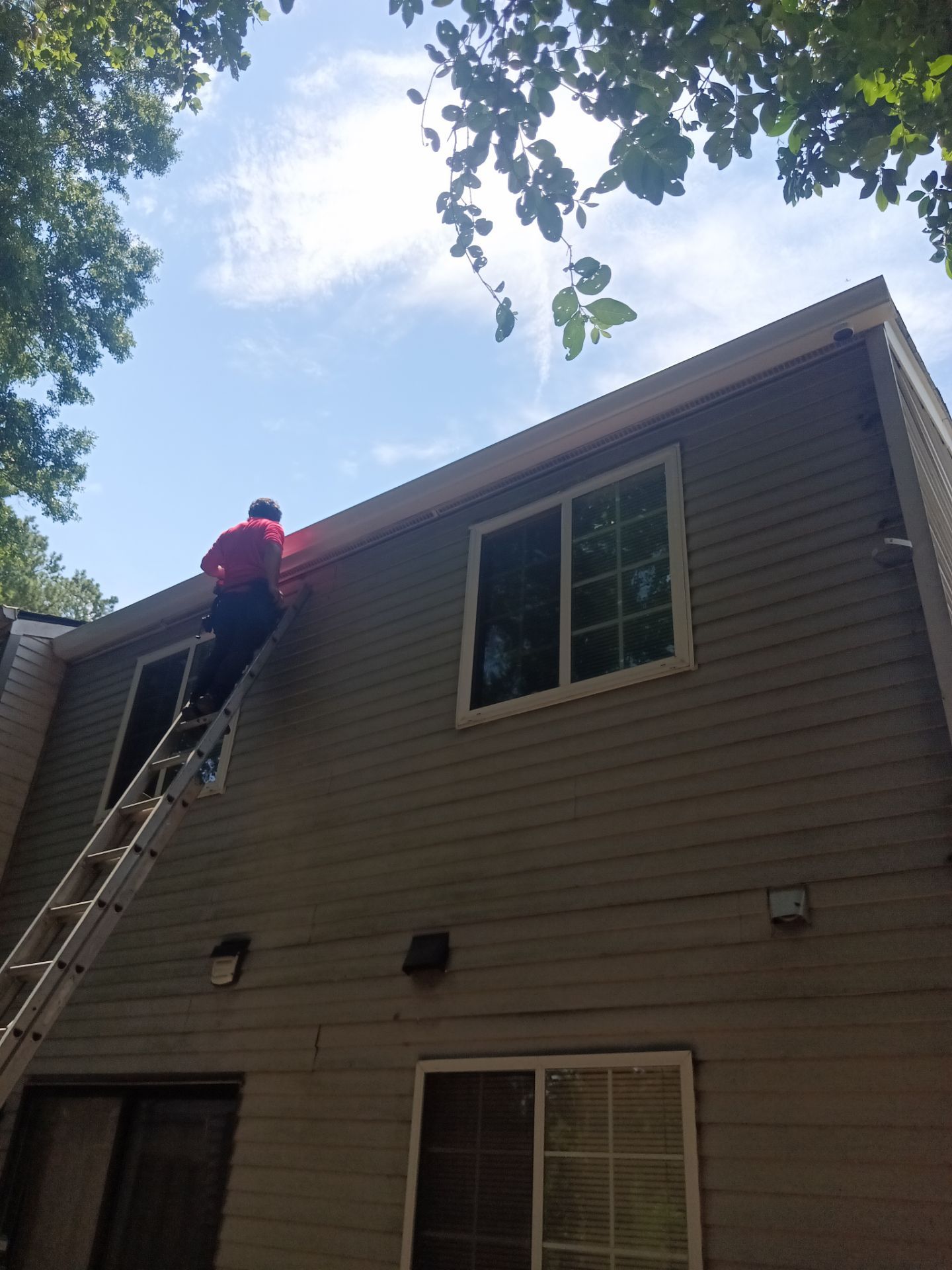
You don't need to be home for a gutter cleaning visit. We work the roofline, clear the troughs and downspouts, and send you pictures of what we found, every visit, no exceptions. That photo record is how you learn whether your overflow is a debris problem or a design problem.
What Determines the Right Size: Roof Pitch, Area, and Fascia
Three things decide your gutter size. Roof area, roof pitch, and the fascia board behind the gutter. That's it. Everything else is noise.
Roof area is the easy one. A bigger roof catches more rain, so more water has to move through the trough. But pitch matters just as much, and most people skip it. A steep roof throws water faster and harder than a low-slope roof of the same size. That speed is what overshoots a 5 inch gutter during a hard thunderstorm. We see it all the time on two-story brick homes, water arcing right past the front lip while the back of the gutter stays dry.
So how do you work through it?
- Measure the roof plane feeding each gutter run, not the whole roof. One long run on a big plane is the section that fails first.
- Check the pitch of that plane. Steeper roofs need more capacity, even at the same square footage.
- Count how many downspouts serve that run. Fewer downspouts means every foot of gutter is carrying more water.
- Look at the fascia board height and condition. That sets your physical ceiling.
- Add up valleys dumping into that run. A valley concentrates two roof planes into one spot.
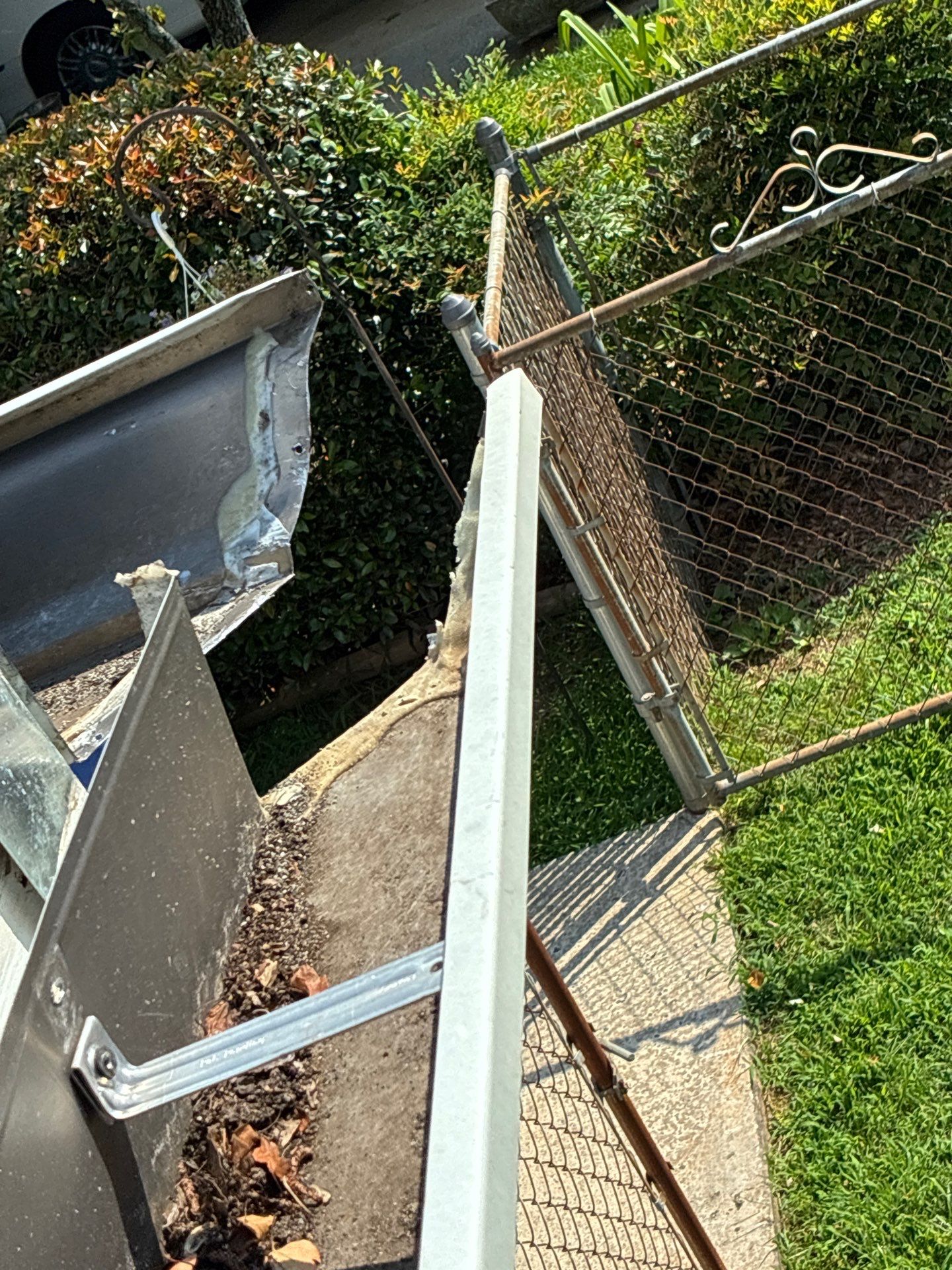
Fascia is where good plans die. Older homes, especially the mid-century ranches, were often built with a 1x6 fascia. A 6 inch gutter needs more room to hang straight and sit under the drip edge correctly. Force it onto a short or rotted fascia and you get a gutter that tilts, holds standing water, or pulls the board loose in a year.
Here's what we check on the fascia before recommending a size:
- Board height, since 1x6 fascia limits what can mount cleanly
- Soft or spongy wood from past overflow, which won't hold hangers
- Drip edge position, because the gutter back has to tuck under it
- Existing nail damage from old spike-and-ferrule systems
- Soffit condition, since rot usually travels from fascia inward
Found rot? Then size is the second conversation. The board comes first. We handle fascia repair and replacement before any new gutter goes up, because hanging new metal on bad wood is just paying twice.
One more factor people forget. Valleys. If two roof planes funnel into a single valley above one gutter run, that spot takes a punishing amount of water in a short burst. We've watched a 5 inch gutter handle a whole house fine except for the eight feet under a valley. That's a sizing problem, or a downspout placement problem, or both.
This is why sizing isn't a phone-call answer. We need eyes on your roof planes, your pitch, and your fascia. And for an estimate we do ask that you're home, so we can walk it with you and talk through options that fit your house instead of a generic recommendation.
Looking for the service itself?
This guide covers the decision. The Gutter Replacement page covers what the visit includes and how to book it.
SEE GUTTER REPLACEMENTTrusted by Homeowners
Licensed and insured. Real prices before we start. Before and after photos with every invoice.
Frequently Asked Questions
How do I know if my home needs 6-inch gutters instead of 5-inch?
You likely need 6-inch gutters if you have a steep roof, wide roof planes, or heavy tree cover from oaks and pines. Homes with roof valleys that funnel water into a short gutter run also benefit from the wider trough and 3x4 downspout. Small ranch homes with short roof runs usually do fine with 5-inch. A quick roof and fascia check tells you which size fits your home, which is exactly what we walk through on our gutter sizing page.
Can I just add a bigger gutter myself to fix overflow?
Not usually, and this is the biggest mistake we see. Overflow is often caused by clogs, wrong pitch, or too few downspouts, not gutter width. Sizing up without fixing those issues means you spend money and still get a waterfall over the door. Check your pitch, clean the troughs, and count your downspouts against your roof area first. If the problem continues, that's when a professional look at sizing makes sense.
Does tree cover affect whether I should choose 5 or 6-inch gutters?
Yes, heavy oak and pine cover pushes many homeowners toward 6-inch gutters. Wider troughs let pine needles and oak tassels sit lower instead of damming the channel. But bigger gutters still collect debris, they just hold more before clogging. Under a tree canopy, regular cleaning matters no matter which size you pick. Size helps with volume, not with keeping leaves out entirely.
What's the difference in downspout size between 5-inch and 6-inch gutters?
Five-inch gutters typically use a 2x3 downspout, while 6-inch gutters take a 3x4. A 3x4 downspout moves roughly twice the water volume of a 2x3. This matters more than most homeowners realize, because a wide trough backs up fast if the downspout can't drain it. Clogs that choke a 2x3 often pass straight through a 3x4, which cuts down on overflow during heavy storms.
Should I worry about my fascia board before upgrading gutter size?
Yes, always check your fascia before sizing up to 6-inch gutters. Wider gutters carry more weight and put more strain on the fascia board during storms. We see this often around here, where older homes have fascia that's rotted or soft under the old gutter line. Rotted fascia has to be repaired or replaced first, or the new gutter won't hold through a summer storm.
Can one section of gutter be 6-inch while the rest stays 5-inch?
Yes, and this is often the smarter fix. If a roof valley dumps a lot of water into one short run, you can size just that section up to 6-inch with a 3x4 downspout and leave the rest at 5-inch. We've done this on homes where one back corner overflowed every storm while the rest of the gutter run performed fine. It solves the real problem without replacing gutters you don't need to touch.
Still Not Sure What You're Looking At?
Send us a photo or book a visit. We'll tell you what it is before anyone quotes a price.
BOOK NOW (opens in a new tab)Or call (404) 994-3494

Metro Atlanta's dedicated gutter specialists. Cleaning, repair, replacement, downspouts, drainage and soffit work, done right the first time with photo proof on every job.
Gutter Services
Drainage & Roofline
© 2026 Shelter Guard Gutter Cleaning and Repair. All Rights Reserved.