No clogged gutters. Cleaned in 24 hours or less.
Home Guides What Happens During a Gutter Estimate Visit?
What Happens During a Gutter Estimate Visit? A Homeowner's Guide
A gutter estimate visit is a full walk-around of your roofline, gutters, downspouts, and drainage, plus a sit-down conversation about what we found.
What a Gutter Estimate Visit Covers
A gutter estimate visit is a full walk-around of your roofline, gutters, downspouts, and drainage, plus a sit-down conversation about what we found. We photograph everything so you see exactly what we see. You need to be home for an estimate so we can talk through options that fit your house and your budget.
So what happens during a gutter estimate visit? More than most people expect. We're not just eyeballing your gutters from the driveway and quoting a number.
The visit starts on the ground. We walk the full perimeter of your home and look at where water is going, not just where your gutters are. Soil washout near the foundation tells a story. So do those dark streaks running down your siding.
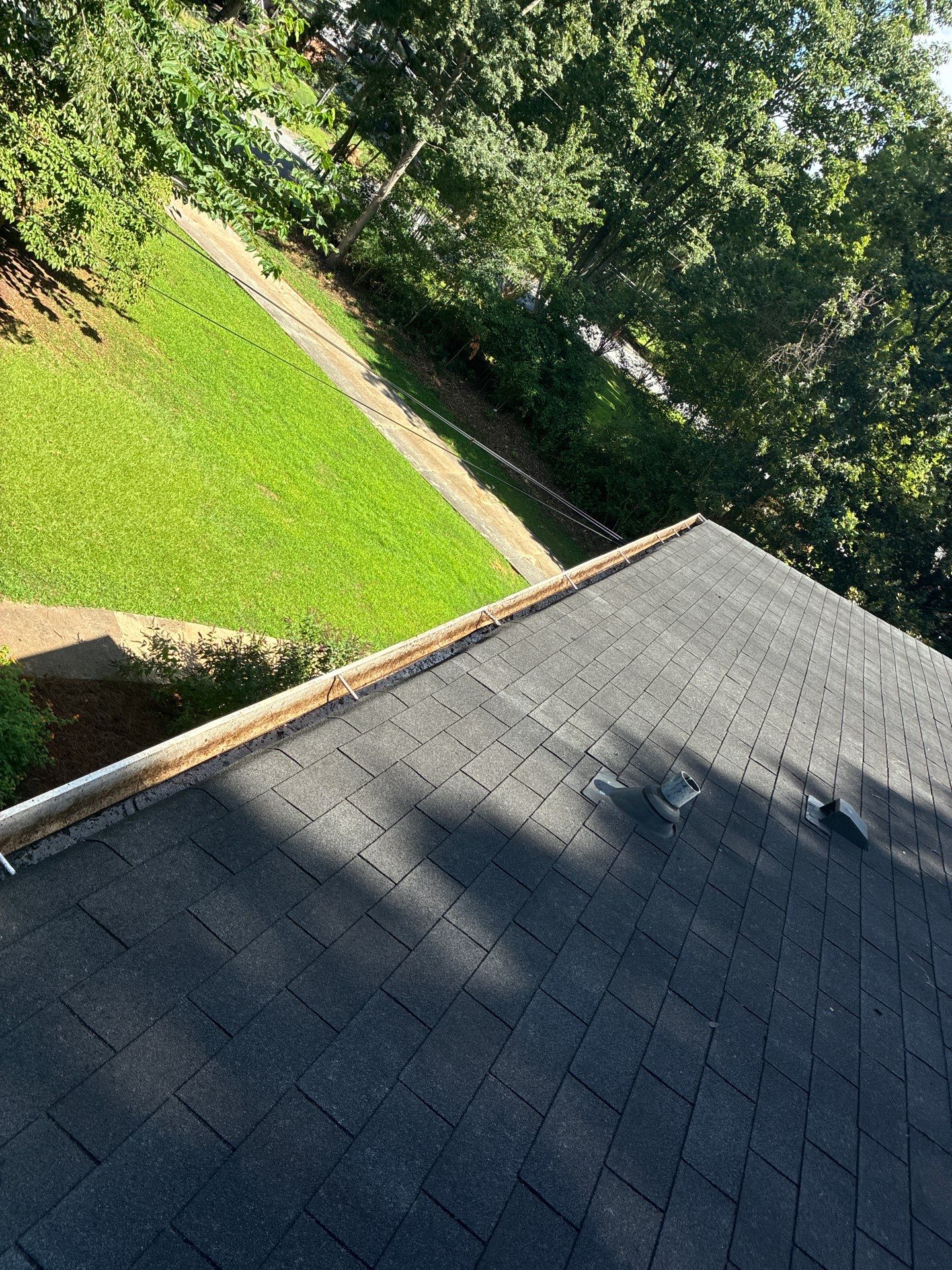
Then we get up on a ladder. Here's what we're checking once we're at the roofline:
- Gutter pitch and whether water is reaching the downspouts
- Loose or pulled hangers, separated seams, and sagging runs
- Fascia and soffit condition behind the gutter, where rot hides
- Downspout flow and where the water lands once it exits
- Roof edge, drip edge, and shingle condition at the gutter line
- Debris load and what's causing it, whether that's pine needles, oak tassels, or sweetgum balls
That last one matters more around here than people realize. The older neighborhoods around here have big mature hardwoods and pines shading the roofline. Those trees drop year-round, not just in fall. We see gutters packed solid in June all the time.
Photos are part of every visit. Always.
We shoot pictures of every problem area and walk you through them on the spot. You shouldn't have to take our word for a rotted fascia board you can't see from the ground. And if you want a second opinion later, you've got the images.
Here's the part people mix up, so let me be direct about it. For a gutter cleaning, you don't need to be home. We show up, do the work, send you the photos, and you're done. No scheduling gymnastics.
But for an estimate, we need you there. That's not a sales tactic, it's practical. Estimates involve choices.
Maybe your gutters are fine but your downspouts are dumping water four feet from the foundation. Do you want underground drainage, or does a simple extension solve it for now? Maybe one section of fascia is soft and the rest is solid. Do we repair that run or replace the whole side? Those are your calls, and you can't make them from a text message.
I had a homeowner who was sure she needed full gutter replacement. Twenty minutes on site, we found the real issue was three failed hangers and a clogged underground line. Cost her a fraction of what she'd braced for. That conversation only happened because she was standing right there.
We also flag things that aren't urgent yet. A hanger that's starting to pull. A seam that's holding but won't hold through another wet spring. You get to decide whether to handle it now or watch it, but you'll know it exists.
That's the whole point. You shouldn't be surprised by your own house.
How Estimators Measure and Inspect Your Roofline
The measuring part looks simple from the driveway. It isn't. We walk the full perimeter of your home with a measuring wheel or laser, tracking every straight run, every corner, every inside miter. Those corners matter. A home with six corners needs six fittings, and each one is a potential leak point if it's sized wrong.
Then we look up.
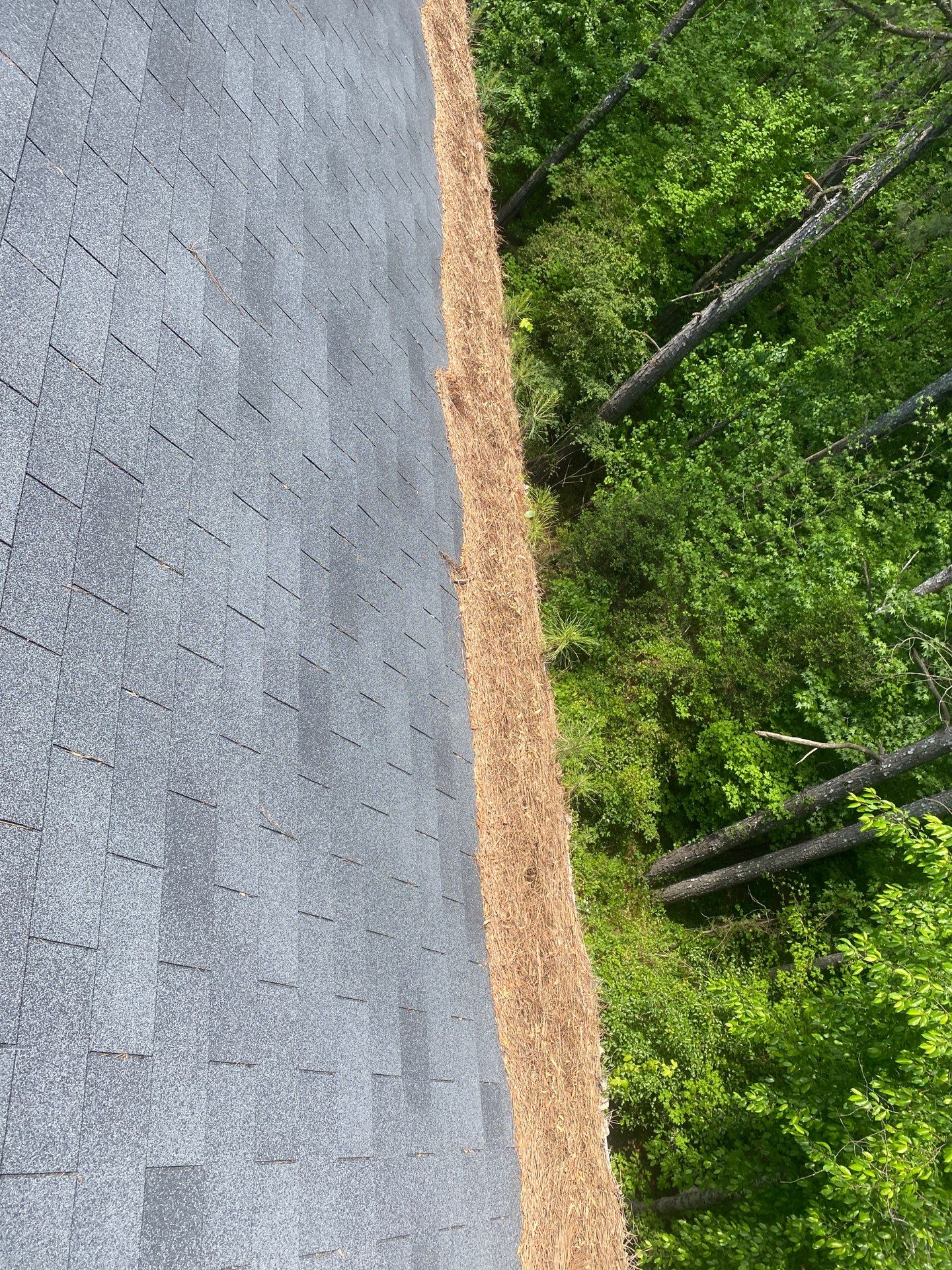
Roofline inspection is where most of the real information comes from. We're reading the pitch of your roof, the length of each slope, and how much water that surface dumps during a hard Georgia downpour. A steep roof throws water farther and faster. That changes the gutter size we recommend and how many downspouts you need.
Here's the order most of our estimate visits follow:
- Walk the perimeter and measure every gutter run, corner, and end cap location.
- Check the fascia board and soffit for soft spots, rot, or old nail damage hidden behind the gutter.
- Read the roof pitch and slope lengths to calculate how much water each section handles.
- Count and map existing downspouts, then find where water is landing.
- Inspect the ground for erosion trails, splash marks on siding, or standing water near the foundation.
- Photograph everything, including the spots you can't see from the ground.
- Sit down with you and walk through the findings.
That last step is the one people don't expect. And it's the most important one. Photos are always part of our visits, no exceptions. We show you the rusted hanger, the sagging section, the fascia board that's turned to sponge. You shouldn't have to take our word for it.
Most people don't realize how much the fascia tells us. It's the board your gutter hangs from, and it's the first thing to fail when water sits too long. We push on it. If it gives, that's a repair conversation before anything else gets installed. Hanging new gutter on bad fascia is like bolting a shelf to drywall.
Around here we get a specific problem: mature oaks and pines over a lot of these older homes. Those trees drop heavy debris loads, and we've pulled out gutters that were carrying forty pounds of wet pine straw. So during the inspection we note tree overhang on every side of the house. That drives whether gutter guards make sense for you, or whether a service plan is the smarter move.
We also check what happens after the water leaves the downspout. Is it running back toward the foundation? Cutting a channel through the mulch? Pooling by the crawlspace vent? Those clues decide if you need extensions, buried drainage, or just a better downspout location.
This is why we ask you to be there for the estimate. We can't hand you a one-size answer for a house we just measured. You know where the water shows up in your yard, which room the ceiling stained, what you've already tried. That context shapes the solution.
The Diagnostic Clues Most Homeowners Miss
From the driveway, your gutters probably look fine. That's the problem. Almost every serious issue we find starts as something small and boring, a hairline separation at a seam, a slight sag near a corner. You'd walk past it a hundred times.
We're not looking at the gutter. We're looking at what the gutter has been doing to the house.
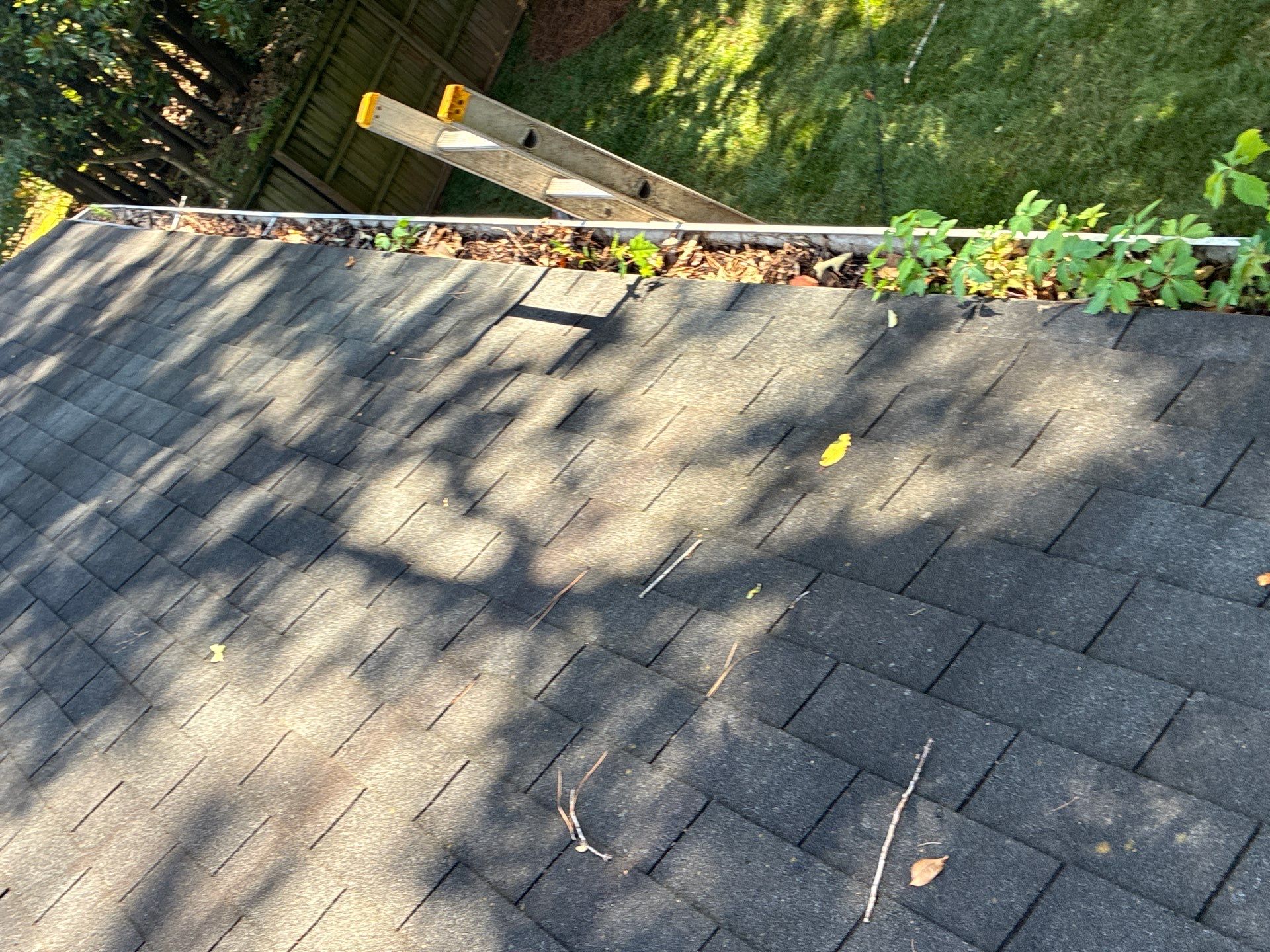
Water leaves evidence. It stains, it swells wood, it stamps dark lines into siding. So a good estimate visit reads those marks backward to find the source. That's the whole job,. Anybody can see a clog. Finding the reason a clog keeps happening in the same corner every single spring takes a ladder and some patience.
Here's what we check that most homeowners never think about:
- Fascia board softness. We press behind the gutter with a tool. Spongy wood means water has been sitting there for seasons, not weeks.
- Hanger spacing and pull-out. Loose spikes or hangers set too far apart cause the sag that traps standing water.
- Pitch across the run. A gutter needs a slight fall toward the downspout. We check for standing water lines inside the trough.
- Downspout discharge point. If water dumps three feet from the foundation, we flag it. That's a basement problem waiting to happen.
- Soffit staining and insect entry. Dark streaks under the eave usually mean overflow has been running backward for a long time.
- Roof valley dump zones. Two roof planes meeting above one short gutter section overwhelms it every heavy rain.
That last one catches people off guard. We had a homeowner convinced her gutters were undersized. They weren't. A single valley was firing the runoff from half the roof into one six-foot section. The fix was a bigger downspout and a splash diverter, not a full gutter replacement. She'd been quoted the expensive route twice before.
We see this mistake all the time, treating the symptom instead of the cause.
It's harder than it sounds around here. Heavy pine and oak canopy, humid summers, sudden downpours that hit hard and quit fast. Pine needles don't clog like leaves do, they weave into a mat that holds water against the metal. And that constant moisture is what rots fascia and rusts out fasteners from the inside.
Pictures are always part of the visit. Always. We photograph every problem area from the ladder so you can see it on your phone instead of taking our word for it. No guessing, no vague descriptions.
This is also why we ask you to be present for an estimate. Gutter cleaning is different, you don't need to be home for that one. But an estimate is a conversation. We walk the property with you, show you the photos as we go, and talk through which fixes matter now and which can wait a year.
Looking for the service itself?
This guide covers the decision. The Gutter Estimate page covers what the visit includes and how to book it.
SEE GUTTER ESTIMATESTrusted by Homeowners
Licensed and insured. Real prices before we start. Before and after photos with every invoice.
Frequently Asked Questions
Do I really need to be home for a gutter estimate?
Yes, you need to be home for a gutter estimate visit. An estimate involves choices only you can make, like whether to repair one section or replace a full run. A gutter cleaning is different since you don't need to be there for that. But an estimate is a conversation about your house and your budget, and that only works if you're standing there to see the problems and ask questions.
How long does a gutter estimate visit usually take?
Most gutter estimate visits take about 20 to 40 minutes, depending on your home's size. That includes walking the perimeter, checking the roofline, measuring every run and corner, and talking through what we found. Homes with more corners or tree overhang can take a bit longer. One homeowner had her whole visit wrapped up in twenty minutes once we found the real problem was a few failed hangers, not full replacement.
How do I know if my gutters need repair or just cleaning?
You can usually tell by looking for sagging sections, pulled hangers, or water running down your siding instead of through the downspout. Clogged gutters look full but still hang straight. Damaged gutters sag, separate at the seams, or pull away from the fascia. If you're not sure which one you're dealing with, that's exactly what a gutter estimate visit sorts out for you.
Why do homes around here seem to have more gutter debris than other areas?
Older neighborhoods around here have a lot of mature oaks and pines shading the roofline, and those trees drop debris year-round, not just in fall. We've pulled gutters carrying forty pounds of wet pine straw and oak tassels off homes here. That heavy load speeds up wear on hangers and seams. It's a big reason gutter estimate visits always include a close look at tree overhang on every side of the house.
What's the biggest misconception people have about gutter estimates?
The biggest misconception is that an estimate is just someone glancing at your gutters and handing you a number. A real gutter estimate visit is a full walk-around of your roofline, downspouts, and drainage, with photos of every problem area. You get to see exactly what we see before any decision gets made. That's the difference between guessing and knowing what your house needs.
Can a fascia board problem change what my gutter estimate recommends?
Yes, a soft or rotted fascia board changes the whole plan. The fascia is what your gutter hangs from, so if it fails, new gutters won't hold. During the visit, we push on the fascia at several points to check for rot before recommending repair or replacement. If you're weighing your options for fixing drainage issues around your home, this kind of on-site check is exactly what makes gutter installation and repair estimates worth scheduling.
Still Not Sure What You're Looking At?
Send us a photo or book a visit. We'll tell you what it is before anyone quotes a price.
BOOK NOW (opens in a new tab)Or call (404) 994-3494

Metro Atlanta's dedicated gutter specialists. Cleaning, repair, replacement, downspouts, drainage and soffit work, done right the first time with photo proof on every job.
Gutter Services
Drainage & Roofline
© 2026 Shelter Guard Gutter Cleaning and Repair. All Rights Reserved.