No clogged gutters. Cleaned in 24 hours or less.
Why the Real Question Isn't How Bad It Looks
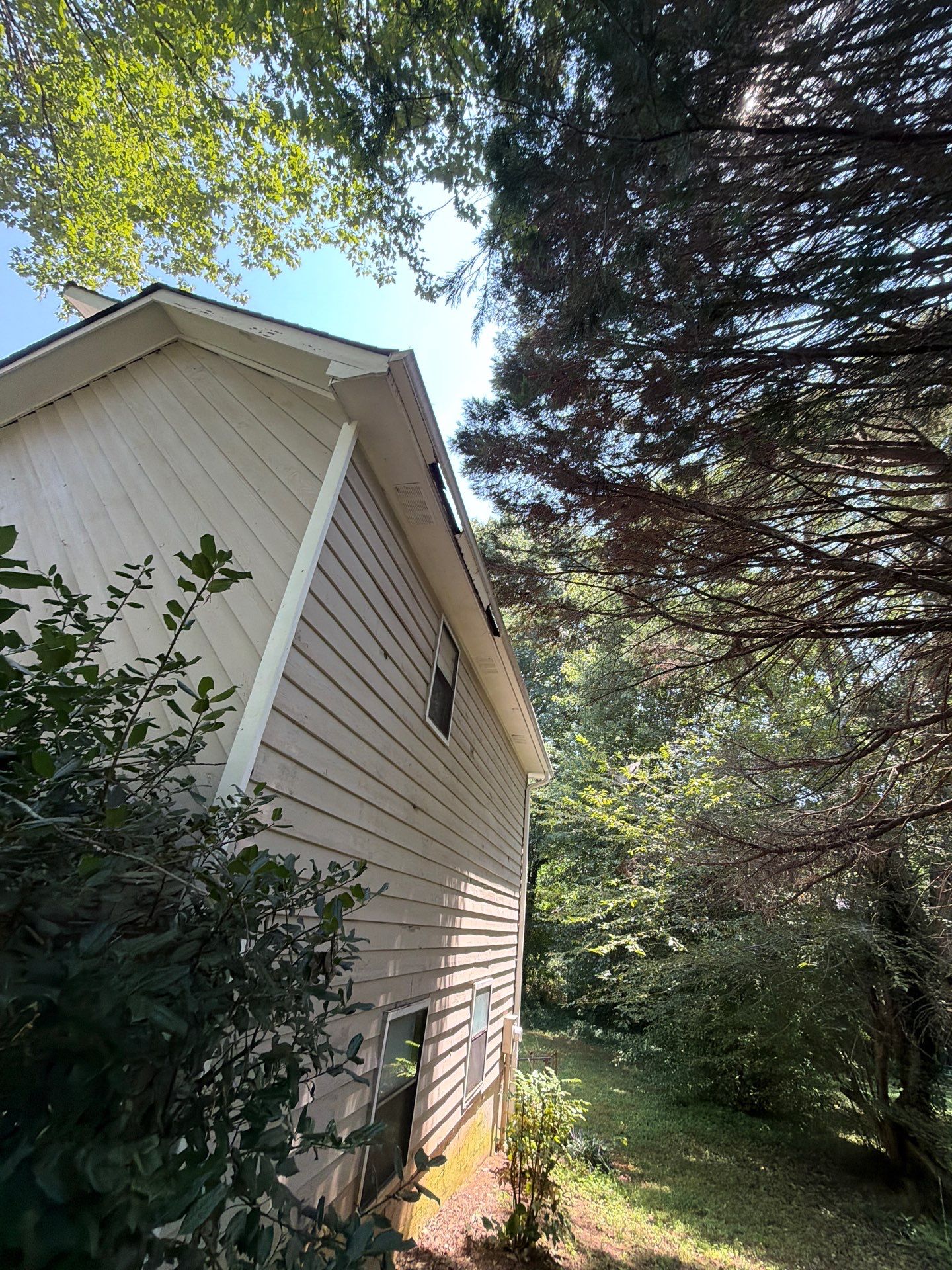
How do I know if my fascia needs repair or a full replacement? The answer has almost nothing to do with how ugly the board looks from the ground. What matters is how much sound wood is left underneath the paint, and whether the damage is isolated to one span or spread along the run.
Peeling paint scares people. Soft wood should scare you more. We've pulled down fascia that looked perfect from the driveway, the paint was intact, the line was straight, and the board crumbled in our hands. Moisture rots from the back first. By the time the front surface blisters, the damage has usually been working for a year or two.
So the visual test lies in both directions. A board with ugly stains can be structurally fine. A board with fresh paint can be gone.
What drives the repair or replacement call is measurable. We check a handful of things on every fascia inspection, and they tell us more in ten minutes than a photo ever will.
- Wood density. A screwdriver tip should meet resistance. If it sinks a quarter inch with light pressure, that section is rot, not stain.
- Length of the damaged run. Damage confined to a two or three foot span near a downspout is usually a repair. Soft wood spread across ten feet or more means replacement.
- Nail hold. If the fascia no longer grips fasteners, it can't carry gutter weight. That's a structural failure, not a cosmetic one.
- Condition of the rafter tails behind it. Fascia hides the ends of the roof framing. If those are wet, you're past a simple board swap.
- Number of separate bad spots. Three isolated patches on one elevation usually point to a systemwide moisture problem.
That last one catches people off guard. Most homeowners think in terms of the worst-looking spot. We think in terms of the pattern.
Here's a real example. A homeowner called us about one dark patch above the garage. Just that one board, he said. When we got up there, the gutter behind it was pitched wrong and had been spilling over the back edge for years. The visible damage was four feet. The soft wood ran eighteen. He wasn't wrong about what he saw, he just couldn't see the rest of it.
Why does this matter so much here? We get real rain here, and a lot of the older homes have deep tree cover. Wet leaves sit in gutters, gutters overflow backward, and the fascia takes it. Humidity keeps the wood from ever fully drying out. That combination turns small leaks into replacement jobs faster than most people expect.
And the cost of guessing wrong runs one direction. Replace a board that only needed a patch and you've overspent a little. Patch a board that needed replacing and you've trapped moisture against the roof framing. One of those mistakes gets worse every month.
Signs Your Fascia Is Showing Damage
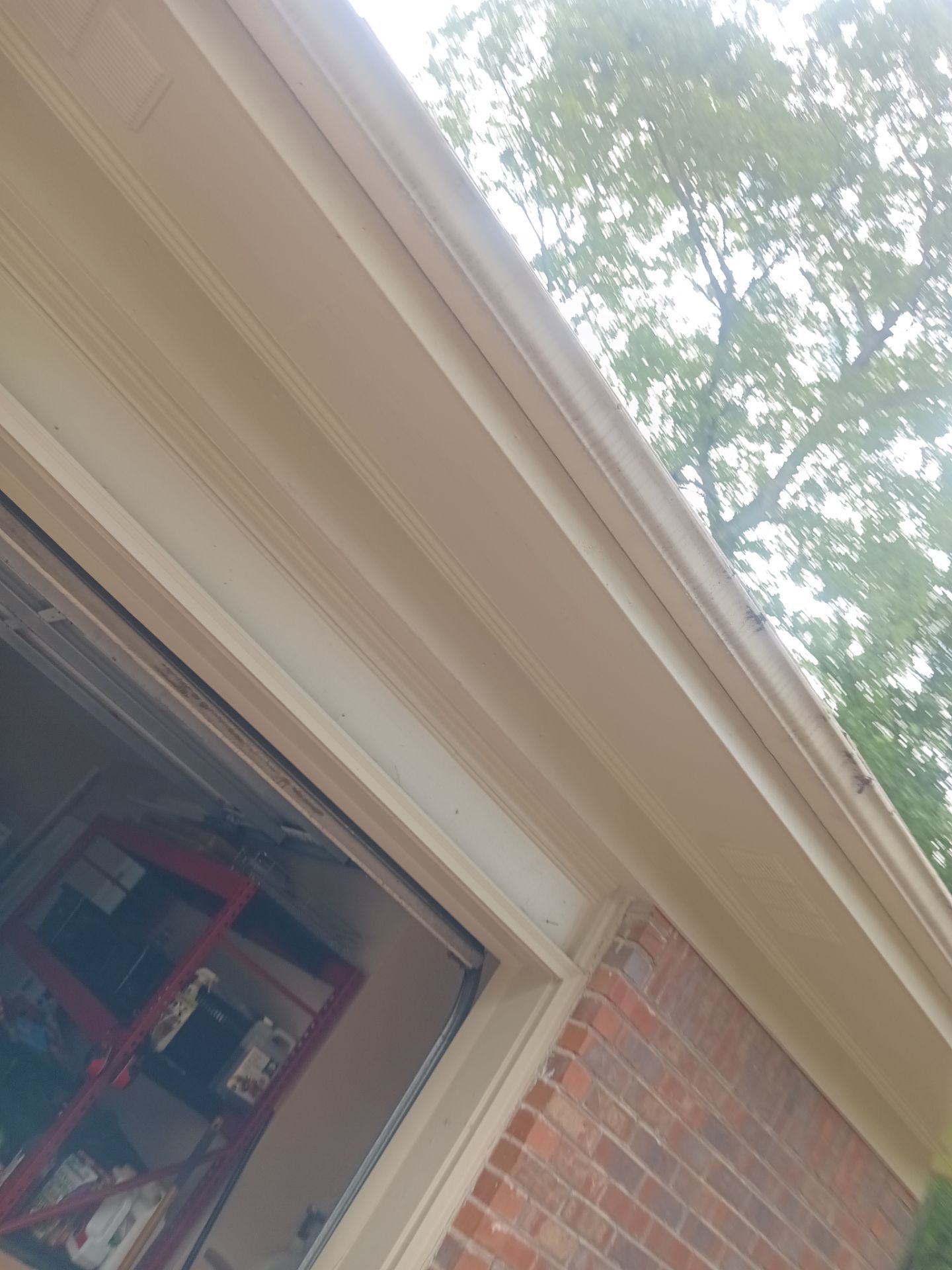
Fascia is the long board running along your roof edge. Your gutters hang off it. That's a lot of weight riding on one piece of wood, and water is always the enemy. Most damage starts small and quiet.
Here's the part people miss. Fascia rarely fails on its own. It fails because something else was leaking first, usually a clogged gutter or a bad downspout joint. So when we spot soft fascia, we're already looking for the source.
Walk your home's perimeter on a dry day. Look up. Then check these signs.
- Peeling or bubbling paint along the roof edge, often the very first clue
- Dark streaks or water stains running down the board under a gutter seam
- Sagging gutters, or gutters pulling away with visible gaps behind them
- Wood that feels spongy when you press it with a screwdriver tip
- Rust stains, popped nail heads, or fasteners backing out on their own
- Birds, wasps, or squirrels getting in near the roofline
Press test matters more than looks. Paint can hide rot for a couple seasons. We've pulled off boards that looked fine from the driveway and found the back half gone to pulp.
But not every stain means rot. Sometimes it's just old paint and Georgia humidity doing what it does.
Homes here deal with a rough combination. Heavy summer downpours, plenty of oak and pine dropping debris, and long humid stretches that never let wood fully dry. A gutter that overflows twice in July can start softening fascia by fall. That's how fast it moves here.
Want to know a sneaky one? Check inside your attic. If you see daylight along the eave line or find dark staining on the rafter tails, water has already been getting behind the board. Attic clues often show up before anything is obvious outside.
We had a homeowner call about a sagging gutter. He figured it was a loose bracket, a quick reattachment. We got up there and the fascia behind it crumbled under thumb pressure for about eight feet. The gutter wasn't the problem, it was the symptom. The clog three feet upstream was the real culprit.
That's why we photograph everything. Every visit includes pictures of what we find, so you see the same board we see instead of taking our word for it. For gutter cleaning you don't need to be home at all, we clean, we document, we send the photos. Estimates are different. We ask that you be there so we can walk the roofline together and talk through options that fit your house and your budget.
One more warning sign worth calling out. If your gutters are full of shingle grit, that debris also means water has been sitting where it shouldn't. Standing water plus wood is a countdown.
Spotting the signs is step one. Figuring out whether a section gets patched or the whole run comes off is the next call, and it's rarely a guess once someone gets a ladder on it.
How to Check for Damage Beyond the Surface
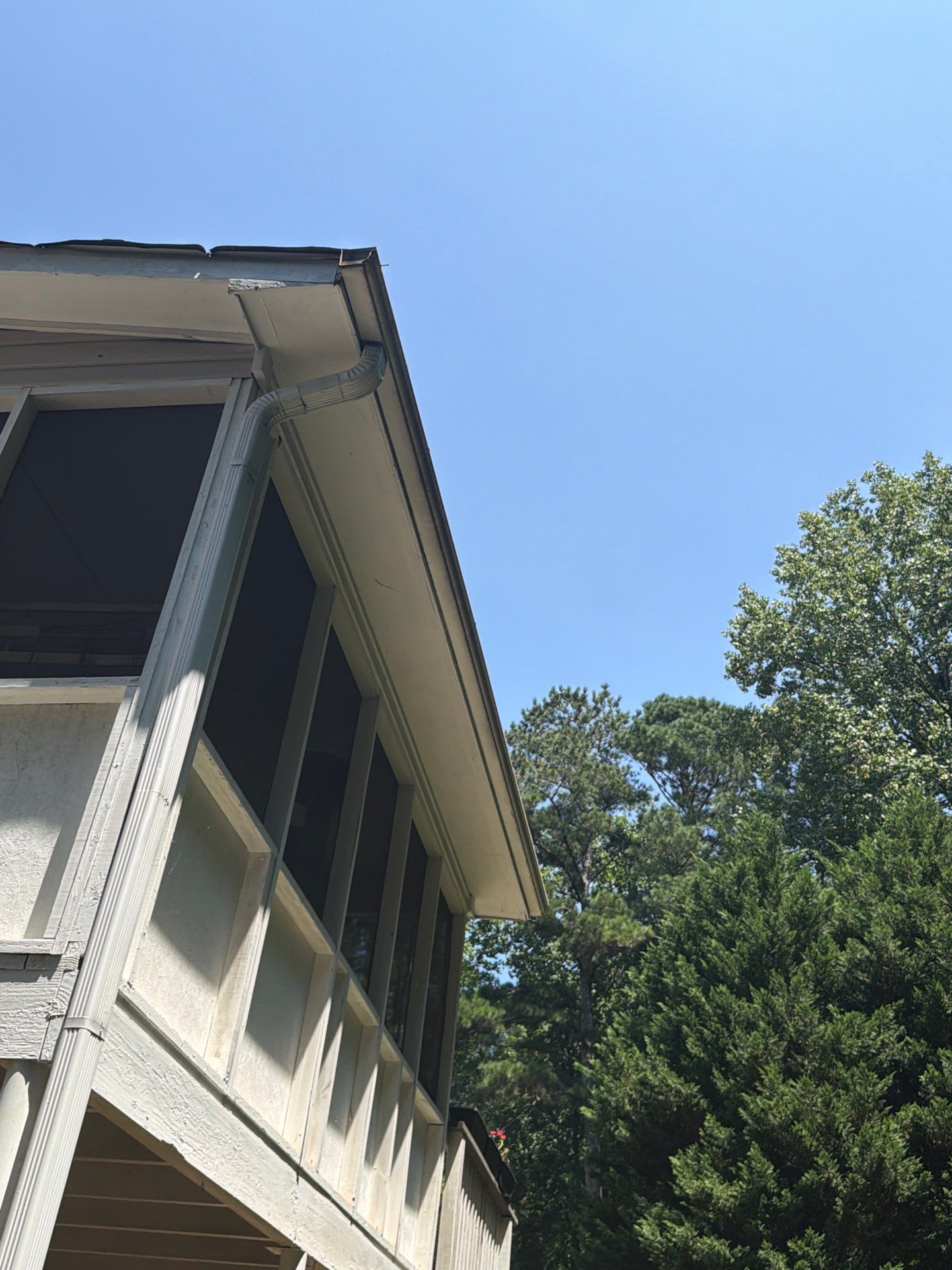
Paint hides a lot. A board can look clean from the driveway and still be soft as a sponge underneath. That's the part most homeowners miss, and it's why a quick glance from the ground isn't enough to make a call on repair or replacement.
So here's how we check it in the field. You can do most of this yourself from a stable ladder on solid ground. If the board is above a second story or over a slope, stop and let someone with the right setup handle it.
- Walk the full perimeter first. Look up at every run of fascia and note any spot where paint is bubbling, peeling, or streaked dark.
- Check where the gutter hangers attach. Sagging gutters and pulled spikes almost always mean the wood behind them has lost its grip.
- Press the wood with a screwdriver or your thumb. Healthy fascia feels firm. If the tip sinks in a quarter inch, that board is rotting.
- Look at the bottom edge of the board. Water runs down and sits there, so decay starts low and climbs.
- Check the soffit while you're up there. Stained or drooping soffit panels mean water already got past the fascia.
- Step inside the attic with a flashlight. Look along the roof edge for damp sheathing, daylight gaps, or old water trails.
- Count how many separate spots you found. One soft area is a repair. Four or five spread across two sides is a different conversation.
That last step matters more than people expect. We see this all the time, a homeowner finds one bad corner and assumes that's the whole problem. Then we pull the gutter and half the run behind it is dark and crumbling.
Why does it spread so fast here? Humidity and heavy summer storms. Water gets behind a board, the wood stays damp for days, and rot moves along the grain.
There's one more thing you can't see from a ladder. The fascia is nailed into the rafter tails, the ends of the roof framing. If those tails are wet and soft, swapping the fascia board alone won't fix anything. The new board has nothing solid to hold onto. This is common on older homes in the area where the original wood has been painted over for decades.
A quick example. Last season a homeowner called about one sagging gutter section near a back corner. Looked minor. We pulled the gutter and found rot running eleven feet, plus two rafter tails that had gone punky. He'd have replaced the same board twice if we hadn't checked behind it.
Photos are part of every visit we make. You get to see exactly what we saw, from the ladder, not a vague description over the phone. And for an estimate we do ask that you're home. We want to walk the damage with you and talk through the options that fit your house and your budget, not hand you a number and leave.
Looking for the service itself?
This guide covers the decision. The Fascia Replacement page covers what the visit includes and how to book it.
SEE FASCIA REPLACEMENTTrusted by Homeowners
Licensed and insured. Real prices before we start. Before and after photos with every invoice.
Frequently Asked Questions
How do I know if my fascia needs repair or a full replacement?
It depends on how much sound wood is left, not how the board looks. Repairs usually fit a short damaged run, like two or three feet near one downspout. Replacement makes sense when soft wood spreads across ten feet or more, or when the fascia can no longer hold a screw. A quick press test with a screwdriver tells you more than any photo. For a full breakdown of what our inspection checks, see our fascia repair guide.
What causes fascia damage in the first place?
Fascia damage almost always starts with water that shouldn't be there. Clogged gutters, bad downspout joints, or gutters pitched the wrong way let water sit against the board instead of draining away. Around here, heavy summer rain and thick tree cover around older streets keep fascia from drying out fully. That moisture works quietly behind the paint for a season or two before you ever see a stain outside.
Can I just paint over damaged fascia instead of repairing it?
No, painting over damaged fascia only hides the problem. Fresh paint can sit on top of wood that's already soft and rotting underneath. We've pulled boards down that looked perfect from the ground and crumbled in our hands. Paint doesn't stop moisture that's already trapped inside the wood. If you press the board and it feels spongy, painting will not fix what's happening behind the surface.
Is peeling paint always a sign of rot?
Not always. Peeling paint can be simple weathering, especially with Georgia's humidity swings. But it's still worth checking, because rot often starts on the back side of the board where you can't see it. The safest habit is a screwdriver press test on any peeling section. If the wood resists, it's likely just old paint. If it sinks easily, that's rot working underneath.
Why does the weather here make fascia problems worse?
This area gets heavy summer rain, dense tree cover in older neighborhoods, and long humid stretches that never let wood fully dry. That combination speeds up rot compared to drier climates. A gutter that overflows during one July storm can start softening fascia by fall. Homes with mature trees tend to see this pattern more often because leaf debris clogs gutters faster.
Should I check my attic for fascia damage too?
Yes, your attic can show fascia problems before they're visible outside. Look for daylight along the eave line or dark staining on the rafter tails. Both signs mean water has already been getting behind the fascia board. Catching this early, before the damage spreads along the whole roofline, is often the difference between a small repair and a full section replacement.
Still Not Sure What You're Looking At?
Send us a photo or book a visit. We'll tell you what it is before anyone quotes a price.
BOOK NOW (opens in a new tab)Or call (404) 994-3494

Metro Atlanta's dedicated gutter specialists. Cleaning, repair, replacement, downspouts, drainage and soffit work, done right the first time with photo proof on every job.
Gutter Services
Drainage & Roofline
© 2026 Shelter Guard Gutter Cleaning and Repair. All Rights Reserved.