No clogged gutters. Cleaned in 24 hours or less.
Home Guides Why Does My Skylight Get Cloudy So Fast?
Why Does My Skylight Get Cloudy So Fast?
It's not just dust. It's pollen, sap and hard-water minerals baking onto the glass, and your gutters are usually part of the story.
It's More Than Dust
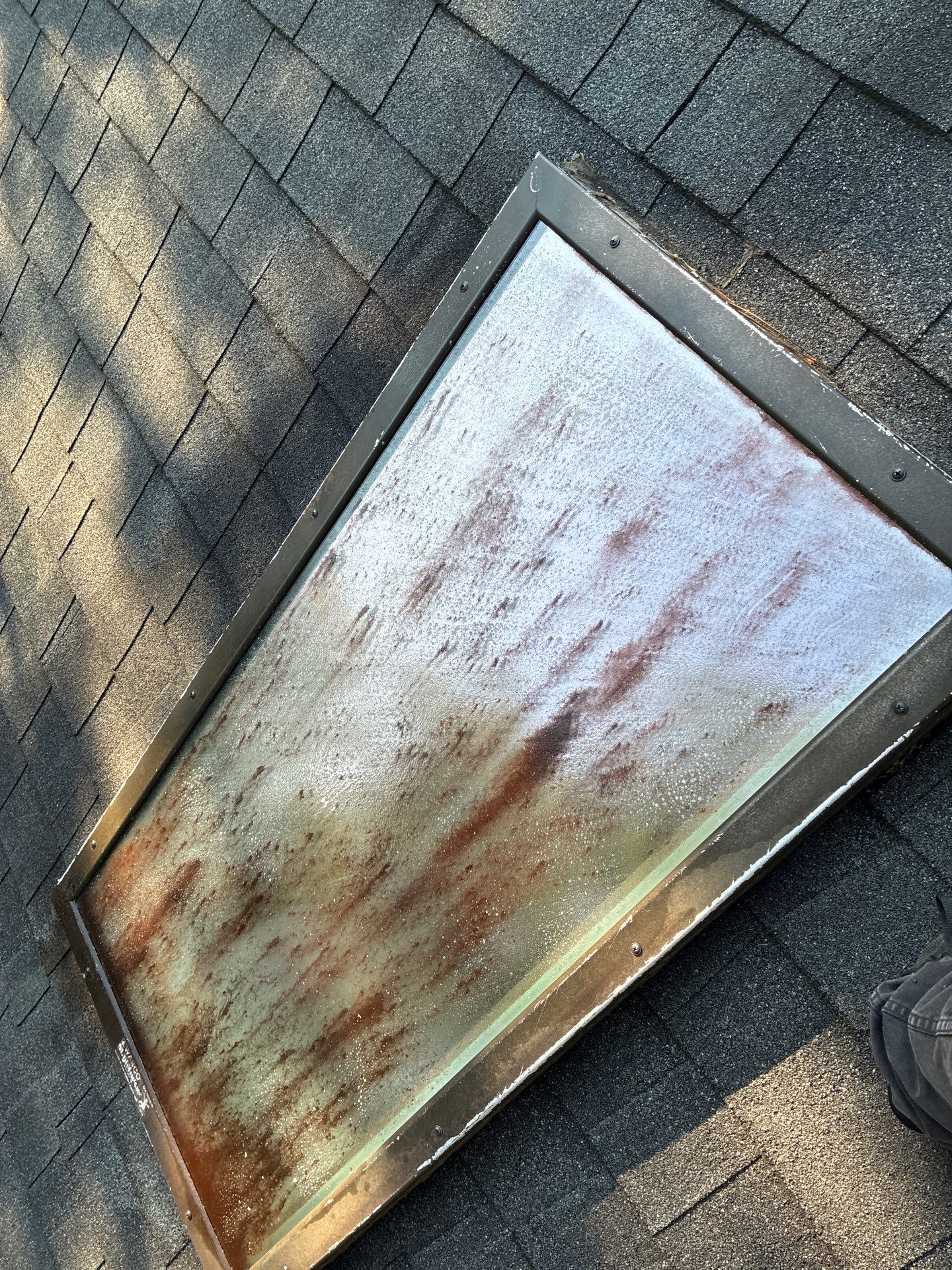
Skylights get cloudy from a mix of pollen, tree sap, hard-water spots and roof debris that settles on the glass and bakes on in the sun. Mature trees around a home can make sap and pollen build up fast on skylights facing them.
Most people think a cloudy skylight just needs a wipe down. It doesn't. What you're looking at is a layered mess of pollen, sap and mineral deposits from rain that's been baking in the sun for months.
Here's what's usually on the glass when we get up there:
- Pollen that lands in spring and sticks to everything
- Tree sap that hardens in the sun into a sticky film regular window cleaner won't touch
- Hard-water spots left when rain picks up minerals off the roof and dries on the glass
- Shingle grit washing down from an aging roof
Sap is the stubborn one. Once it sits in the sun it hardens, and every layer of pollen after that sticks to it. Hard water adds the chalky, streaked look. Put those together with grit from the shingles and you've got a haze that looks permanent, even though it isn't.
Mature tree canopies make it worse, because sap and pollen land straight on the roof glass instead of blowing past it.
Your Gutters Are Part of the Story
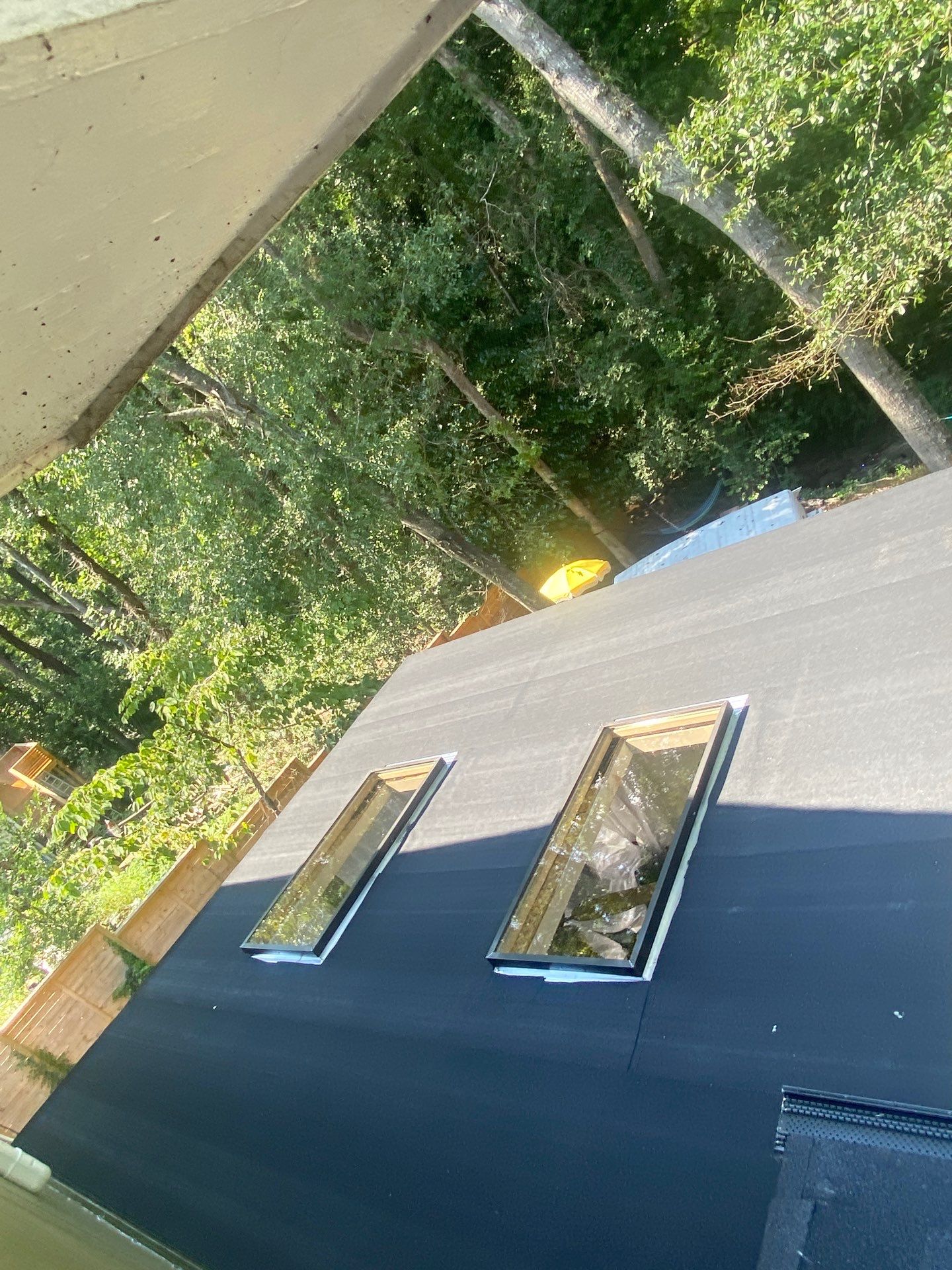
If your gutters are clogged with the same leaves and debris, that overflow can splash right back up onto nearby skylights during a storm.
We see this constantly. Dirty gutters and dirty skylights show up together on the same roof. The water that should be running down the downspout spills over the edge instead, carrying grit and leaf stain with it.
So a cloudy skylight usually isn't just cosmetic. It's a sign that debris is building up somewhere on the roof, not only on the glass.
A few signs the two are connected on your home:
- The skylight closest to a gutter run gets dirty first
- You see water spilling over the gutter edge during heavy rain
- Leaves and seed pods are piling up on the roof around the skylight frame
- The haze comes back within a few weeks of cleaning the glass
If that sounds like your roof, cleaning the glass alone won't hold. Clearing the gutters at the same visit keeps the overflow from coating the skylight again.
Outside Haze or Inside Fog?
Not every cloudy skylight is dirty. Some are failing, and cleaning can't fix that.
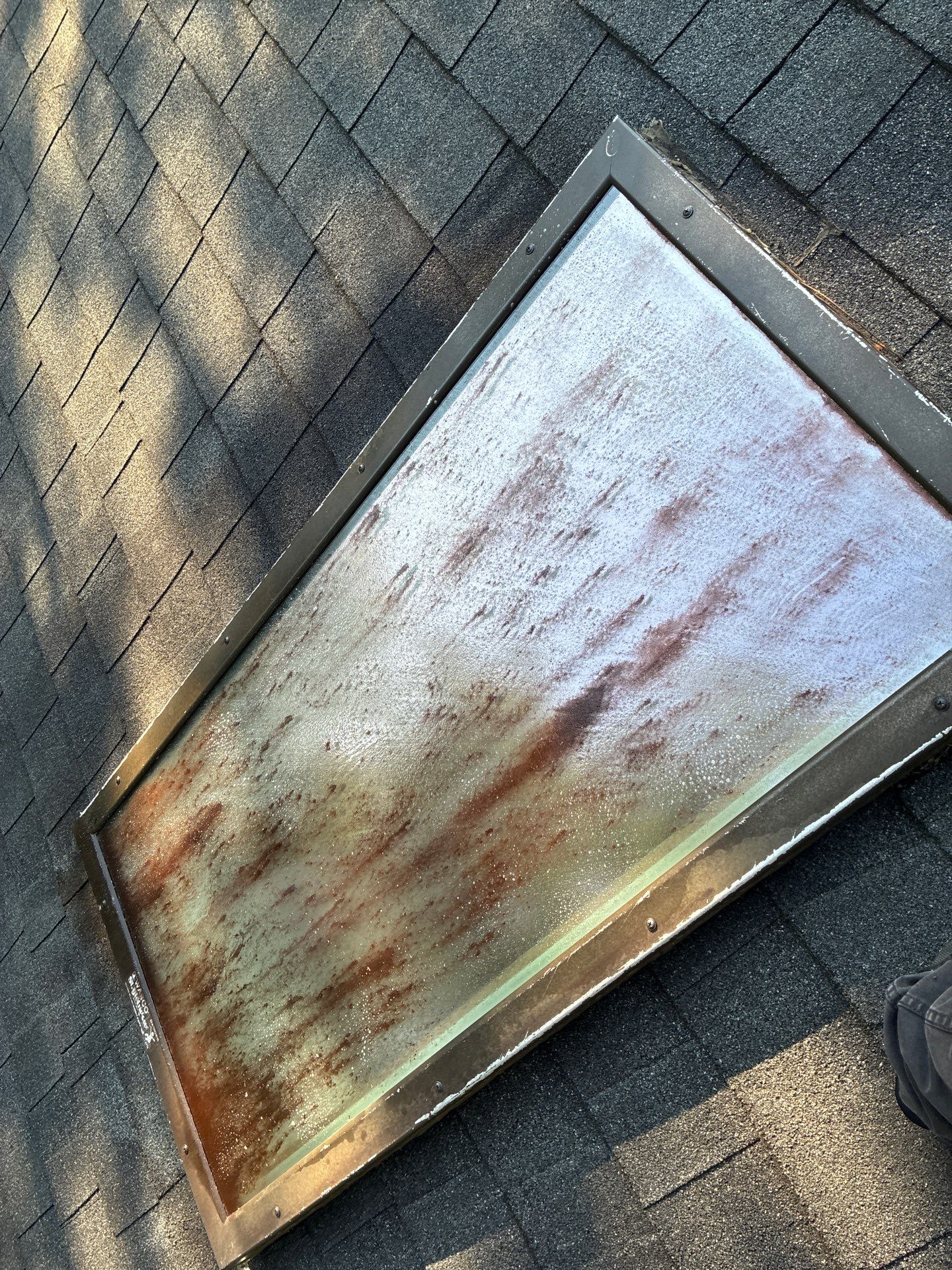
Here's the quick way to tell. Cloudiness on the outside surface that wipes away or improves with cleaning is dirt. Cloudiness trapped inside the glass, between two layers, that doesn't change no matter how clean the outside gets, is a seal problem.
- Haze that smears or lightens when wiped: dirt, a cleaning job
- Streaks from sap or bird droppings on the outer glass: a cleaning job
- Fog or moisture between the two panes: a failed seal, not dirt
- Water dripping in during a storm: a seal or flashing problem, not dirt
If you're not sure which one you've got, our guide on telling cleaning from repair walks through it step by step.
If the skylight sits on a low-slope roof you can reach safely, and the mess is light dust or pollen, mild soap and water will handle it. Where it gets serious is the outside pane on a steep pitch, or anything two stories up. That's not a stepladder job, that's a fall risk.
Looking for the service itself?
This guide covers the question. The Skylight Cleaning page covers what the visit includes and how to book it.
SEE SKYLIGHT CLEANINGTrusted by Homeowners
Licensed and insured. Real prices before we start. Before and after photos with every invoice.
Frequently Asked Questions
Why does my skylight get cloudy so fast?
Tree sap, pollen and hard-water spots build up quickly when a skylight is surrounded by mature trees. Sap bakes onto the glass in the sun and turns sticky, and rain leaves mineral deposits that dry into a chalky haze. If your gutters look clogged too, that's often a sign debris is collecting across your whole roof, not just on the skylight.
Can regular window cleaner remove sap film from a skylight?
Usually not. Once sap sits in the sun it hardens into a sticky film that regular window cleaner won't break down, and each new layer of pollen sticks to it. Light dust and pollen come off with mild soap and water. Baked-on sap and hard-water staining take more work.
Do clogged gutters make a skylight dirtier?
Yes, they can. When gutters are clogged, storm water spills over the edge and can splash grit and leaf stain back onto nearby skylights. Dirty gutters and dirty skylights tend to show up together on the same roof, so it's worth checking both.
Can cleaning fix fog between the panes?
No. Fog or moisture trapped between two panes means the seal has already failed. Cleaning only reaches the outside surface, so it can't remove condensation inside the glass. That's a repair conversation, not a cleaning one.
How often should a skylight be cleaned?
It depends on the trees around it. A skylight under heavy tree cover can haze up within a season. If you clean it every few months as part of regular upkeep, buildup rarely gets bad enough to need a crew.
Can I clean my own skylight?
Yes, if it's a ground-level or low-slope skylight you can reach safely with a long-handled squeegee, and the mess is just pollen or light dust. Where it gets risky is the outside pane on a steep pitch or anything two stories up. That's a fall risk, not a stepladder job.
See Clearly Again
Pollen, sap and hard-water haze come off fast. Book a cleaning and we'll tell you straight if it's something more.
BOOK NOW (opens in a new tab)Or call (404) 994-3494

Metro Atlanta's dedicated gutter specialists. Cleaning, repair, replacement, downspouts, drainage and soffit work, done right the first time with photo proof on every job.
Gutter Services
Drainage & Roofline
© 2026 Shelter Guard Gutter Cleaning and Repair. All Rights Reserved.