No clogged gutters. Cleaned in 24 hours or less.
Gutter Sticks
Home Guides Why Do My Gutters Clog Again?
Why Do My Gutters Clog Again Just Weeks After Cleaning? A Homeowner's Guide
Gutters reclog fast because of hidden causes like sagging sections, small debris that slips past a quick cleaning, or nearby trees dropping seed pods and pine needles year-round.
The Real Reason Gutters Reclog So Fast
Quick Summary:
Gutters reclog fast because of hidden causes like sagging sections, small debris that slips past a quick cleaning, or nearby trees dropping seed pods and pine needles year-round. A real fix means checking the whole system, not just scooping out leaves.
You just paid someone to clean your gutters. Two weeks later, water is pouring over the side again during a storm. Sound familiar? We hear this complaint constantly, and it almost never means the first cleaning was wasted money. It usually means something deeper got missed.
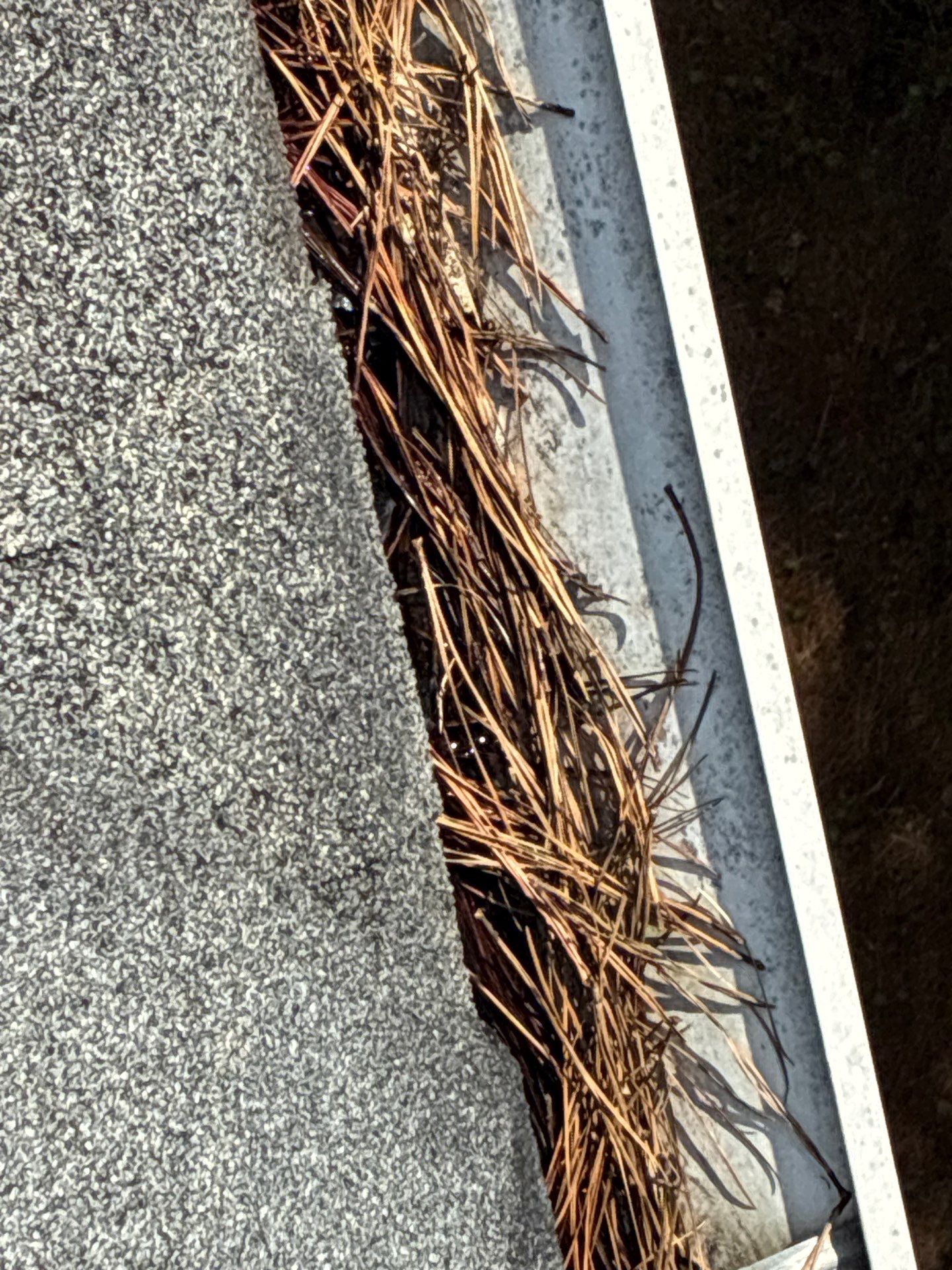
Most quick gutter cleanings only clear the big stuff. Leaves, sticks, obvious clumps. But gutters trap fine debris too, seed pods, pine needles, roof grit, and tiny twigs that pack down into a paste. This sludge builds along the bottom of the channel and clogs the downspout opening. A rushed job leaves that layer behind, and it grabs new debris almost immediately.
A lot of homes here sit close to heavy tree cover, oaks, pines, and sweetgums that drop material across three seasons, not one. That's different from a lot of suburbs where cleanup is a single fall job. If your property backs up to wooded lots or mature street trees, your gutters are working overtime compared to a house on an open lot.
Here's the part most homeowners never hear about.
- Sagging gutter sections create low spots where water pools and debris settles instead of flowing to the downspout
- Loose or missing gutter guards let leaves in but trap them worse than open channels
- Damaged downspout elbows get crushed or bent, choking flow even when the gutter itself looks clean
- Roof valleys dump extra water and grit into one small stretch of gutter, overloading it fast
- Improper slope from a past install means water never drains fully, so silt builds up between cleanings
We treat your gutters like the protective shield they are, because that's what they do. They move water away from your fascia, your foundation, and your soffit. And when that shield has a weak point, a sag, a bad slope, a crushed downspout, it doesn't matter how well you clean the leaves out. The system will clog again, faster each time, until the actual defect gets fixed.
One thing we always clarify: for a standard gutter cleaning, you don't have to be home. We take photos throughout the visit, before and after, so you can see exactly what we found and what we cleared, even if you're at work. That's not us being casual about it. It's how we keep the process honest and disciplined, no guessing on your end.
Estimates work differently. If we're talking about a repair, a reattachment, or a full gutter replacement, we want you there. That's when we walk the property together, look at the slope, the fascia condition, the downspout runs, and figure out what fits your house. Every home has a different tree line, roof pitch, and drainage path. A real solution has to match that, not a generic fix.
So if your gutters keep clogging weeks after a cleaning, the leaves aren't the real story.
Common Causes Behind Fast-Returning Clogs
Here's the truth most people don't hear: a clean gutter isn't a fixed gutter. It's a snapshot. The moment leaves start falling again, or wind pushes debris from a nearby tree, that snapshot changes. We see this mistake all the time, homeowners think one cleaning solves the problem for the whole year. It doesn't work that way, especially in neighborhoods with mature oaks and pines hanging over so many rooflines.
So what's causing the fast return? It's rarely random. There's almost always a specific reason, and once you know it, the fix makes a lot more sense.
- Overhanging tree limbs that keep dropping leaves, seed pods, or pine needles straight into the gutter line
- Undersized or clogged downspouts that back up even when the gutter channel itself is clear
- Loose or sagging gutter sections that create low spots where debris settles and water pools
- Roof valleys that funnel extra granules and shingle grit into one section of gutter faster than the rest
- Gutter guards installed wrong, or gaps at seams, that let small debris slip through anyway
That first one is the big one around here. A lot of homes here have tree cover close to rooflines, and it doesn't take long for a fresh batch of leaves or seed pods to undo a cleaning. We've walked up to homes three weeks after a service call and found the same downspout backed up again, not because the job was done wrong, but because the tree above it never stopped dropping material.
Downspouts get overlooked a lot. A gutter channel can look spotless while the downspout underneath is packed solid. Water backs up, spills over the edge, and it looks like the whole system failed. It didn't, just one choke point did.
Sagging sections are another sneaky cause. If a gutter has pulled away from the fascia even slightly, it creates a dip. Debris and standing water collect right there every single time, no matter how often you clean it. That's a structural issue, not a cleaning issue, and it usually needs gutter reattachment or repair to stop the cycle.
Picture this: a two-story colonial off a tree-lined street, gutters cleaned in early fall. Three weeks later the owner calls, convinced the job failed. We went back, took photos like we always do, and found a cracked seam letting granules and small twigs collect in one three-foot stretch. The rest of the system was clean. One bad seam was doing all the damage.
This is why we always document our visits with pictures. You won't need to be home for a standard gutter cleaning, we handle it and send you photos showing exactly what we found and cleared. But if the clogging pattern points to a bigger issue like a sag, a crack, or a downspout that's too small for the roof it's draining, that's when we recommend a gutter estimate. For that visit, we do need you there. Solutions like gutter repairs, reattachment, or guard installation aren't one-size-fits-all, and we want to talk through what fits your home before recommending anything.
Spotting the One Section Doing Most of the Work
Here's something most homeowners never think about. Your gutter system isn't one long tube doing equal work. One section is almost always doing most of the job, and that's usually where the next clog starts.
Think about a valley where two roof slopes meet. Water and debris from both slopes dump into that one spot. So does a section right under a big oak or pine limb. We see this constantly on homes near wooded lots, that one stretch of gutter under the tree line fills up fast while the rest stays clear for months.
So how do you find your problem section? Walk your property after a good rain.
- Look for water spilling over the gutter edge instead of draining through the downspout.
- Check for sagging or pulling away from the fascia in one specific spot.
- Note which downspouts are dry while others are running heavy.
- Look up at the roofline for overhanging branches feeding one section more than others.
- Check corners and inside miters, debris packs tighter where the gutter changes direction.
A lot of clients tell us they cleaned the whole system, and two weeks later the same corner is backed up again. That's not bad luck. That's a design or location issue repeating itself.
And this is exactly why a full-system cleaning sometimes isn't enough on its own. If one section keeps failing, it might need a different fix altogether, maybe a gutter guard just on that stretch, a downspout repair, or even a small gutter replacement if the pitch is off. We've walked properties where four out of five sections were fine, and one 15-foot run near a shade tree was the whole reason for the service call.
For a standard gutter cleaning, you're free to be away from home. We handle the whole job and always take pictures during the visit, so you can see exactly what we found, including that trouble section, without needing to climb a ladder yourself.
But if you're dealing with repeat clogging and want to talk through real solutions, like gutter guards, reattachment, or a partial gutter replacement, we do ask that you're present for the estimate. That's the only way we can look at your specific setup together and figure out what fixes the problem instead of just delaying it.
Most people assume every foot of gutter is equally at risk. It's not.
Once you know which section is carrying the load, everything else about maintaining your gutters gets easier to plan around.
Trusted by Homeowners
Licensed and insured. Real prices before we start. Before and after photos with every visit.
CALL (404) 994-3494Frequently Asked Questions
How often should gutters be cleaned?
Most homes need gutter cleaning two to three times a year, not once. Heavy oak, pine, and sweetgum cover is common here, and it drops debris across three seasons instead of just fall. If your property backs up to wooded lots or has mature trees overhead, you may need cleanings more often. A single fall cleaning usually isn't enough to keep up with local tree drop.
How can I tell if a clog is from debris or a structural problem?
If the same spot clogs every time, it's likely structural, not just debris. Sagging sections, cracked seams, or bad slope create low points where water pools and dirt collects no matter how clean the gutter is. A quick cleaning won't fix that. If you notice repeat clogging in one exact spot, it's worth requesting a gutter estimate so someone can check the slope and seams in person.
Do gutter guards stop reclogging completely?
No, gutter guards reduce clogging but don't stop it completely. Loose or poorly installed guards can trap fine debris worse than an open channel. Seed pods, pine needles, and roof grit can still slip through gaps at the seams. Guards work best when paired with regular cleanings and a system that's properly sloped and free of sagging sections.
Why do downspouts clog even when the gutter channel looks clean?
Downspouts clog because debris packs down inside the narrow tube, even when the open channel above looks spotless. This is one of the most missed problems in a quick cleaning. Water backs up and spills over the edge, making it look like the whole system failed when really just one choke point is blocked. Checking downspout flow is part of a real gutter inspection, not just a leaf scoop.
Does the amount of tree cover around my home matter?
Yes, tree cover makes a big difference in how often your gutters clog. Homes near mature oaks, pines, or wooded lots deal with seed pods and needles dropping year-round, not just in fall. A house on an open lot may go months between cleanings, while a tree-shaded property can reclog within weeks. Your tree line should shape your cleaning schedule, not a generic yearly plan.
When should I stop cleaning and get a repair instead?
You should consider a repair when the same section keeps clogging no matter how often it's cleaned. That pattern usually points to a sag, a bent downspout elbow, or a cracked seam, not leftover leaves. Cleaning can't fix a structural weak point. If this sounds like your gutters, the gutter services page walks through what a repair visit and estimate involve.
Ready to Get Started?
Book now. Shelter Guard Gutter Cleaning and Repair is ready to help with your gutter cleaning.
BOOK NOW (opens in a new tab)Or call (404) 994-3494

Metro Atlanta's dedicated gutter specialists. Cleaning, repair, replacement, downspouts, drainage and soffit work, done right the first time with photo proof on every job.
Gutter Services
Drainage & Roofline
© 2026 Shelter Guard Gutter Cleaning and Repair. All Rights Reserved.