No clogged gutters. Cleaned in 24 hours or less.
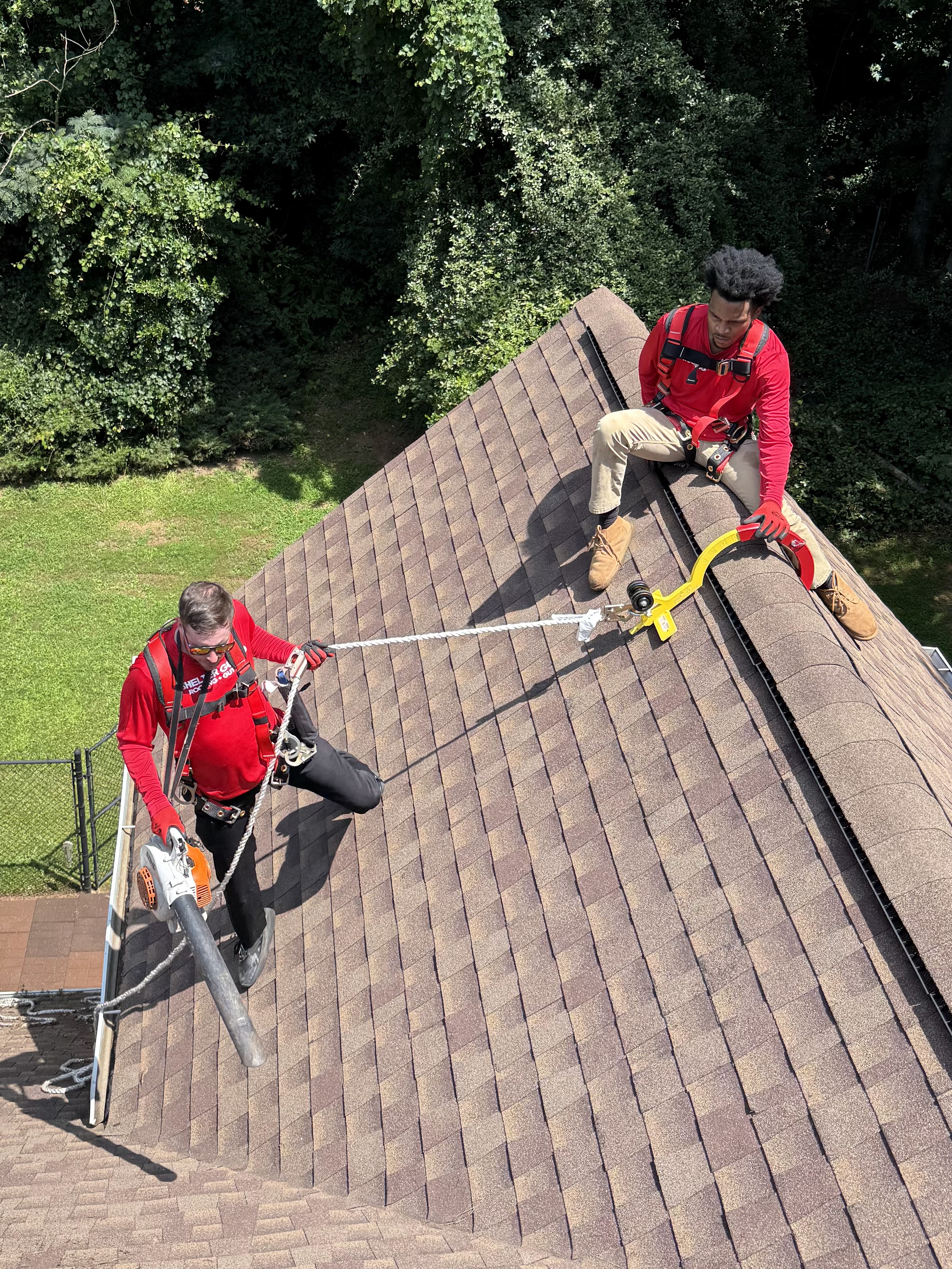
What Gutter Cleaning Includes
A real gutter cleaning covers the whole drainage system, not just the leaves you can see from the yard. That means clearing the troughs, flushing every downspout, checking hangers and fascia, and hauling debris away. You don't have to be home for it, and you'll get photos of everything we find.
Most people picture a guy on a ladder scooping out leaves. That's part of it. But scooping is only step one. A real gutter cleaning checks the whole path water takes off your roof. And it covers the spots you can't see from the driveway.
Your gutters are a shield. They move thousands of gallons of water away from your roof edge and foundation every year. If one piece fails, the whole system fails. So here's what we do on every visit.
- Clear the gutter troughs by hand. We pull out leaves, pine needles, shingle grit, and anything else sitting in there.
- Flush every downspout with water. If it backs up, we clear the clog on the spot.
- Check the hangers and seams. Loose hangers let gutters sag, and sagging gutters hold standing water.
- Look at the fascia and soffit. Overflowing water rots this wood slowly and quietly.
- Bag and haul the debris. Nothing gets dumped in your flower beds.
- Take before and after photos so you can see the work and any trouble spots.
Step two is where most DIY jobs fall short. The trough looks clean from above. But the downspout is packed solid underneath. Water can't get out, so it spills over the front edge right onto your foundation.
A lot of homes here sit under tall oaks, pines, and sweetgum trees. Pine needles mat together like a wet blanket. Sweetgum balls are worse, they roll straight into the downspout opening and lock up. We pull handfuls of them out every fall.
Last fall we cleaned a ranch home. From the ground the gutters looked fine. The downspout behind the garage was another story. It was packed with sweetgum balls and roof grit. Water had been spilling over the fascia for months. The wood was already going soft. We caught it before it turned into a full fascia replacement, but another season and it would have gotten much worse.
That's why photos matter.
Pictures are part of every visit we make. No exceptions. You'll see the clean gutters, the cleared downspouts, and anything that looks off. Loose hangers. A cracked seam. Soft wood. You get the proof without climbing a ladder yourself.
Do you need to be home? Not for gutter cleaning. We handle the whole job while you're at work or running errands. The photos show you exactly what we did and what we saw.
Estimates are different. If we spot damage and you want an estimate for a fix, we need you there. Every home and every problem is a little different. We'd rather walk the property with you and talk through options that fit your situation. Gutter reattachment might do the job. Or downspout repair. Or gutter guards to stop the clogs from coming back. That's a conversation, not a text message.
We see homeowners wait on this all the time. A clogged gutter seems like a small thing. It isn't. It's the first crack in the shield.
Why Hidden Clogs Cause the Real Damage
Most gutter damage starts where you can't see it. A gutter can look clean from the driveway and still be packed tight inside. That's the trap.
Leaves are only part of the problem. Over time they break down into wet sludge at the bottom of the trough. Add pine needles, shingle grit, and seed pods, and you've got something close to mud. It sits there quietly. And it holds water against your fascia boards for days after a storm.
We see this all the time, the gutter looks fine but the downspout is plugged solid.
Downspouts are the usual weak spot. Debris from the whole gutter run funnels down to one exit. It jams at the elbow where the pipe bends. Then every drop of rain backs up into the gutter. The water spills over wherever it can. Often right above your foundation or front steps.
So what does a hidden clog damage? Here's what we find most often on the homes we clean:
- Rotted fascia boards from water soaking into the wood behind the gutter
- Soffit damage that can open a path for squirrels, birds, and insects
- Gutters pulling away from the roofline under the weight of wet debris
- Foundation cracks and damp crawl spaces where water dumps in one spot
- Washed-out mulch and eroded flower beds near the downspouts
None of this happens overnight. That's what makes it so costly. By the time you spot a sagging gutter or a soft board, water has been working on it for months.
The weather here makes it worse. Our summer storms can dump a lot of rain in under an hour. Tall oaks and pines shed almost all year in older, tree-lined neighborhoods. But the real kicker is our red clay. It doesn't drain fast. So water that spills over a clogged gutter pools right next to your house and stays there.
Last fall we did a gutter cleaning on a ranch home. The homeowner thought everything was fine, nothing was spilling over. But the back downspout was packed with composted leaves from top to bottom. The fascia behind it was already soft to the touch. We caught it early. A few more months and it would've needed a fascia repair and maybe a soffit repair too.
Would you rather find a clog in a photo or in your crawl space?
That's why pictures are part of every visit we make. There's no need to be home for gutter cleaning. We'll photograph the before and the after. We'll also snap anything that worries us, like a jammed elbow or soft wood. You see exactly what we saw on your roof.
If we spot damage that needs fixing, we'll set up an estimate. For that visit, we do need you there. It's the best way to walk through solutions that fit your home and your situation.
Real gutter cleaning isn't just scooping leaves off the top. It means flushing every downspout. It means checking that water moves the full length of the system. That's the difference between a quick tidy-up and protecting your home.
Signs You Need Gutter Cleaning Now
Your gutters usually tell you when they're full. You just have to know what to look for. Most homeowners miss the early signs, they find out later when the repair bill shows up.
Around here, we've got a lot of big oaks and pines. A lot of older neighborhoods have trees that hang right over the roofline. Oak tassels drop in April. Pine needles fall almost all year. Then summer storms roll in and dump heavy rain in minutes. That's a tough mix for any gutter system.
So what should you watch for? These are the signs we see most often on our visits:
- Water spilling over the edge during rain, even a light one
- Small plants or seedlings sprouting from the gutter line
- Sagging sections or gutters pulling away from the fascia board
- Dark streaks or stains on the siding right below the gutters
- Puddles, soggy soil, or washed-out mulch near your foundation
- Downspouts that barely drip after a storm
- Wasps, birds, or mosquitoes hanging around your roofline
One of these signs is a warning. Two or more means it's time to act.
The tricky part? Some clogs don't look like clogs from the ground. A gutter can seem fine and still be packed solid underneath. Water finds another way out. It runs behind the gutter and soaks into the wood.
Last spring we visited a ranch home. The owner thought the gutters were fine. They weren't overflowing much. But the back run held about four inches of packed oak tassels and wet pine straw. Water had been sitting there for weeks. The fascia board behind it had already gone soft. A simple gutter cleaning a few months earlier would have stopped that damage cold.
We see this all the time. Homeowners wait for a big overflow before they call. By then the water has already done its quiet work.
Fieldwork tip: Grab an umbrella and walk around your house during the next hard rain. Watch each corner and each downspout. Water should flow out the bottom of the downspout in a steady stream. If it's spilling over the top edge or trickling from the seams, you've got a clog.
And don't ignore the bugs. Standing water in a clogged gutter is a perfect mosquito nursery. The wasp nests we've found tucked inside clogged corners are a job you'll want to leave to us.
Here's some good news. There's no need to be home for a gutter cleaning visit. We handle everything from the outside. We take pictures on every visit, before and after. You'll see exactly what we pulled out and what shape your gutters are in. If we spot a loose bracket or a soft fascia board, you'll see that too.
Estimates are different. If you need a gutter estimate for repairs or replacement, we'll ask you to be there. That way we can walk the property together. We'll talk through the options that fit your home and your budget.
Seeing any of these signs right now? Don't wait for the next storm to test your luck.
Trusted by Homeowners
Licensed and insured. Real prices before we start. Before and after photos with every visit.
CALL (404) 994-3494Frequently Asked Questions
What does a gutter cleaning include?
Gutter cleaning covers the whole drainage path, not just the leaves on top. We clear the troughs by hand, flush every downspout, and check hangers, seams, fascia, and soffit for damage. Debris gets bagged and hauled away, and you get before and after photos. It's more than scooping leaves. For the full breakdown of what each visit covers, see our gutter cleaning service page.
How do I know if my gutters need cleaning if they look fine from the ground?
A clean-looking gutter can still have a packed downspout underneath. Water backs up inside and spills over the front edge, usually near the foundation or front steps. Watch for soft fascia wood, mulch washed out near downspouts, or water pooling after storms. These signs show up long before you'd notice anything from your driveway.
Can I clean my gutters myself instead of calling a pro?
You can clear the visible troughs yourself, but most DIY jobs miss the downspouts. A trough can look spotless while the downspout underneath is packed solid with sweetgum balls or composted leaves. Ladder work also carries real fall risk. A professional flushes every downspout and photographs hidden trouble spots, so you catch problems before they turn into fascia or foundation damage.
Is it a myth that gutter guards mean you never have to clean gutters again?
Yes, that's a common misconception. Gutter guards reduce debris but don't stop it completely. Fine grit, seed pods, and pollen still slip through and build up over time. Homes with guards still need periodic checks on downspouts and hangers. Guards cut down on the work, but they don't erase it.
Why do heavy tree cover and clay soil make gutter clogs worse?
Heavy oak, pine, and sweetgum cover is common here, and these trees shed debris most of the year. Pine needles mat together, and sweetgum balls roll straight into downspout openings and lock them up. Our red clay soil also drains slowly, so water that overflows a clogged gutter pools right next to your foundation instead of soaking away.
Do I need to be home during a gutter cleaning visit?
No, you don't need to be home for a standard gutter cleaning. We clear the troughs, flush the downspouts, and photograph everything while you're at work or running errands. If we find damage and you want an estimate for repairs, that visit does require you there so we can walk the property together.
Ready to Get Started?
Book now. Shelter Guard Gutter Cleaning and Repair is ready to help with your gutter cleaning.
BOOK NOW (opens in a new tab)Or call (404) 994-3494

Metro Atlanta's dedicated gutter specialists. Cleaning, repair, replacement, downspouts, drainage and soffit work, done right the first time with photo proof on every job.
Gutter Services
Drainage & Roofline
© 2026 Shelter Guard Gutter Cleaning and Repair. All Rights Reserved.