No clogged gutters. Cleaned in 24 hours or less.
The Real Question: What One Bad Spot Tells You About the Whole Run
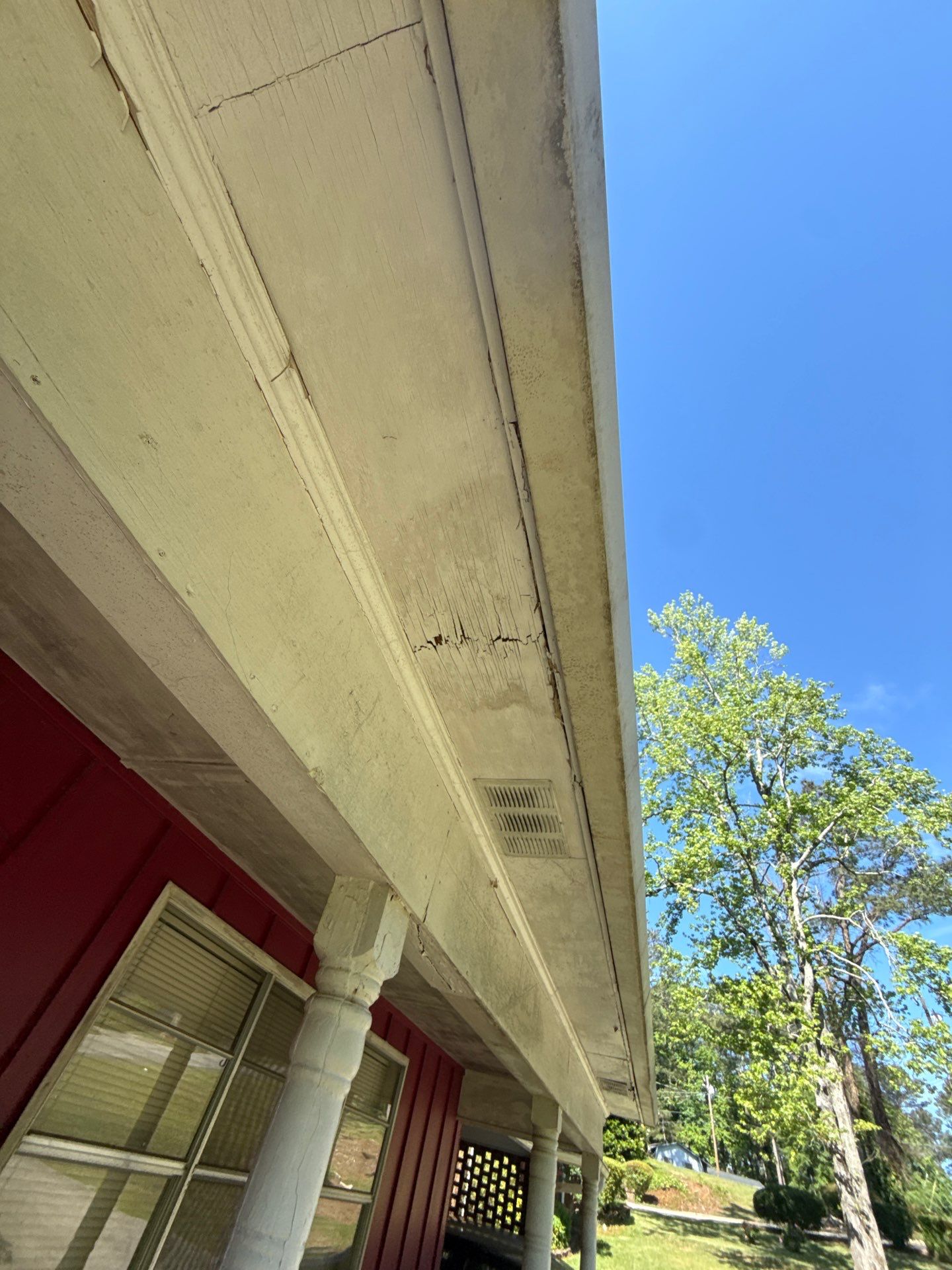
One damaged soffit panel almost never tells the full story. What matters is how far the damage travels along the run and whether the wood behind it is still solid. Isolated, dry, contained damage points to soffit repair. Damage that spreads across multiple bays usually points to replacement.
Most people call us after they spot one thing. A stained panel. A corner that droops. Maybe a bird going in and out of a gap near the garage.
And that's the right instinct. But a single bad spot is a symptom, not a diagnosis. Soffit runs continuously along the underside of your roof edge, so whatever caused that one panel to fail was usually working on its neighbors too.
We see this mistake all the time. Someone patches one panel, feels good about it, and calls us eight months later because the two panels beside it went soft. Water doesn't respect panel seams.
So the honest question isn't "is this panel bad?" It's "how far did it get?" Here's what we look for when we're standing under a roof edge:
- Damage confined to one or two bays, with solid wood on both sides. That's a repair.
- Staining or sagging that continues past three or four panels in the same direction. That's a run problem.
- Soft fascia behind the soffit. If the board holding everything up is punky, patching the soffit is decoration.
- Damage on more than one side of the house. Now you're looking at a drainage issue, not a soffit issue.
- Old damage that's fully dry versus damage that's still wet. Wet means the source is active.
That last one matters more than anything else on the list.
Dry rot that stopped years ago is a contained job. Active moisture means something upstream is still feeding it, usually a clogged gutter, a failed downspout joint, or water rolling off the roof edge behind the gutter. Fix the panel and leave the source, and you're just buying time you already paid for.
A homeowner had one soft panel above her back door. Looked like a twenty-minute fix. When we got up there, the gutter above it had been overflowing for two seasons and the fascia had gone soft for about eleven feet. The panel wasn't the problem, it was the last place to give up.
Our humidity here doesn't help. Summers here hold moisture against wood for weeks, and older homes in the area often have plywood or wood soffit that soaks it up instead of shedding it. That's why damage spreads sideways faster here than in drier climates.
Can you check this yourself? Partly. Walk the perimeter, look up, and note every spot that's stained, sagging, or open. If your marks cluster in one place, you're likely in repair territory. If they're scattered down a whole side, plan for more.
Signs of Soffit Damage and What They Usually Mean
Soffit damage almost never shows up overnight. It creeps. And by the time you notice it from the driveway, the board has usually been wet for a while. That's why the signs matter so much. Each one tells you something different about how deep the problem goes.
Here's what we see most often on homes in the area.
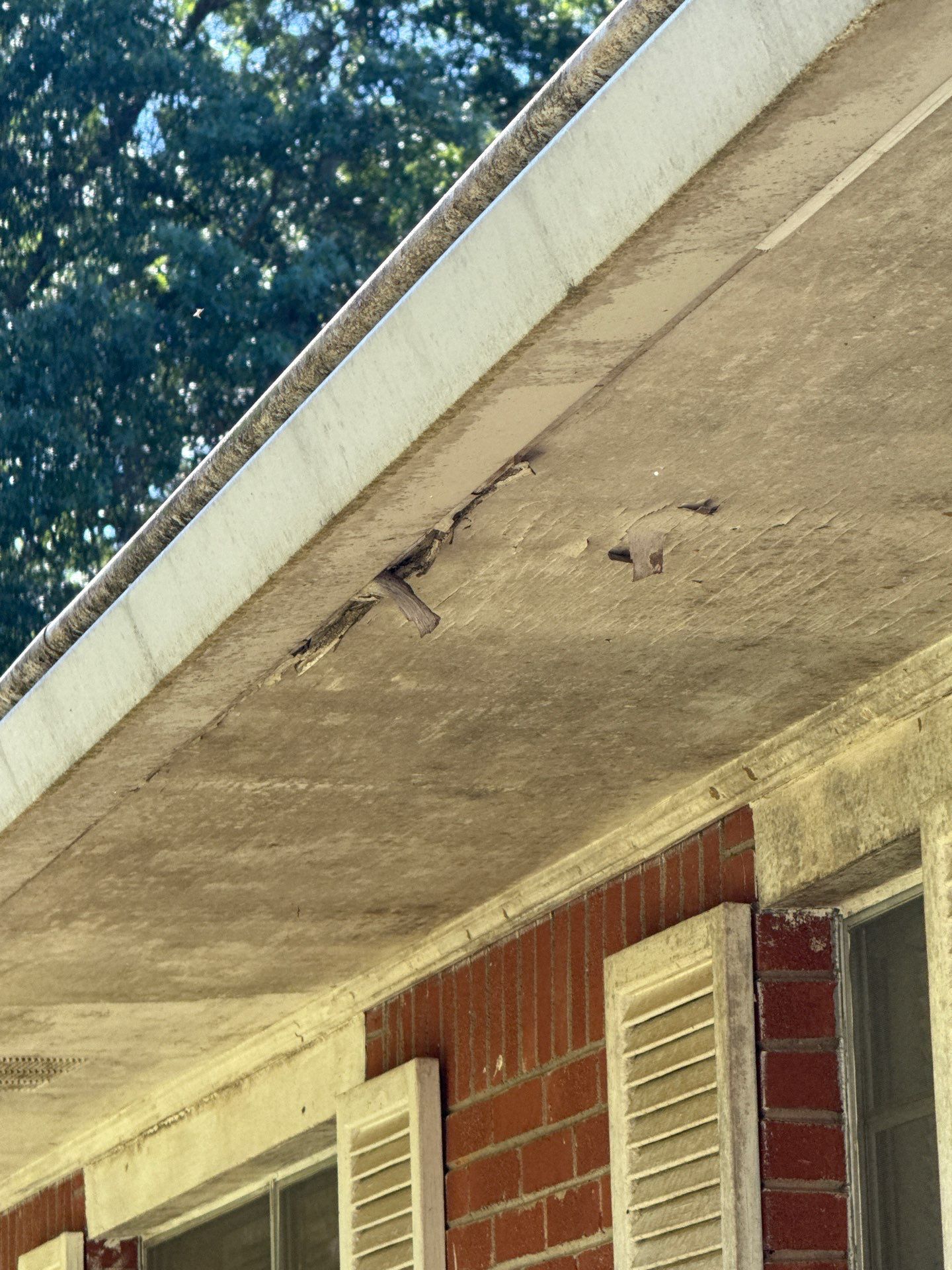
- Brown or yellow staining along the underside of the overhang. This is water tracking from above, usually an overflowing gutter or a bad roof edge.
- Soft or spongy board when you press it with a broom handle. Softness means the wood fibers are already breaking down.
- Visible sagging or a wavy line where the soffit should be flat. The board is losing its grip on the framing.
- Peeling or bubbling paint in one patch. Moisture is pushing out from behind the surface.
- Holes, chew marks, or torn vent screens. Squirrels and birds found a weak spot and used it.
- Black spotting or a musty smell near the eave. That's mold, and it means the wood stayed wet for weeks.
Now the important part. What does each sign mean for your wallet?
Staining on its own is usually good news. Odd thing to say, I know. But a stain means water touched the surface and dried. If the board is still hard and flat underneath, you're looking at a repair and a fix to whatever dumped the water there. Most of the time that's a clogged gutter or a downspout that came loose.
Softness is a different animal. Once wood goes spongy, that section is done. It won't dry back to solid. But the damage often stops within a few feet of the water source, so you're replacing a run, not a roofline.
Sagging is the one that makes us look harder. A soffit sags when its nailing surface fails, and that nailing surface is usually the fascia board or the rafter tails behind it. So sagging is rarely a soffit problem at all. It's a signal that something structural got wet first.
We had a call last spring. Homeowner saw one stained panel and figured it was cosmetic. When we got up there, the fascia behind it crumbled under a screwdriver, the gutter had been overflowing into that corner for two seasons. One panel of visible damage, eight feet of hidden rot.
That's the thing about our summers here. Heavy afternoon storms plus heavy tree cover means gutters clog fast and overflow often. Homes with mature oaks and pines get the worst of it.
Animal damage sits in its own category. A chewed vent screen or a hole at the corner doesn't mean the wood is rotten, it means there's an opening. Seal it wrong and you trap something in your attic. We check for activity before we close anything up.
One tip from the field: look at your soffit after a hard rain, not on a dry day. Fresh water marks show you exactly where the leak path runs. Dry boards hide it.
And if you spot two or more of these signs in the same stretch of roofline, stop guessing. That combination usually means the damage runs past what you can see from the ground.
Repair or Replace: A Scenario-Based Way to Decide
Most people want one clean rule. There isn't one, but there's something close. Match your house to a scenario and the answer usually shows up fast.
Here's the sequence we walk through on every inspection. It takes about ten minutes from a ladder.
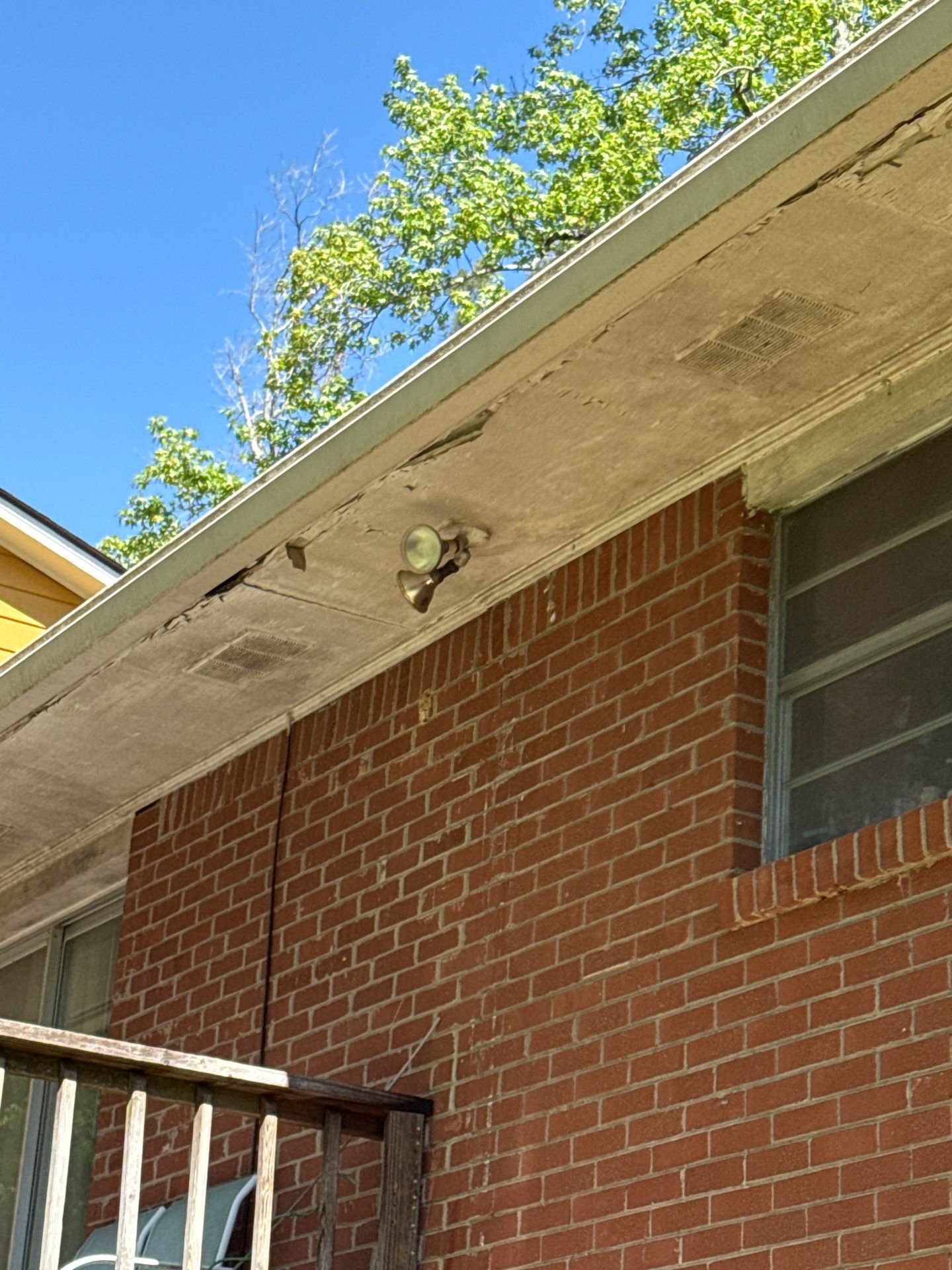
- Measure the damage. One or two panels bad? That's repair territory. Damage running past 25 percent of a single run points toward soffit replacement.
- Find the water source. Clogged gutters, a failed drip edge, a leaking roof valley. If the source is still active, fixing the soffit alone just buys you a year.
- Press the fascia board behind it. Soft fascia almost always means the soffit next to it is compromised too.
- Check the material. Aluminum and vinyl panels swap out easily. Wood soffit with rot spreading along the grain rarely stops where you think it does.
- Look at how many separate spots you've got. Three or four scattered patches on one side of the house usually cost more in labor than replacing that whole run.
That last one surprises people. They assume patching is always cheaper, it isn't when the patches multiply.
Now match yourself to a scenario below.
- One stained panel under a corner where the gutter overflowed. Clean the gutter, fix the overflow, repair the panel. Done.
- Squirrels chewed an opening near the roofline and the rest of the soffit looks solid. Repair, seal, and add a screen. We see this constantly on older homes with mature oaks nearby.
- Wood soffit sagging along a 20 foot run with paint peeling in sheets. Soffit replacement. Patching sagging wood is a losing fight.
- Vinyl panels warped in three spots after a storm, everything else tight. Repair the three, monitor the rest through one rainy season.
- You can see daylight from the attic through the soffit line. That's not a soffit problem alone. Get eyes on the fascia and roof edge before anyone quotes anything.
Georgia humidity changes the math a little. A soft spot here spreads faster than the same spot would in a dry climate. So the threshold for choosing soffit replacement drops when the damage is wood and the area stays shaded.
One homeowner called us about a single rotted panel. We got up there and found the gutter had been pulling away for two seasons. Water had been running behind the fascia the whole time. Three panels needed replacing, not one, and the real fix was gutter reattachment.
That's the part a photo from the ground can't tell you.
And it's why estimates work differently than gutter cleaning. For gutter cleaning you don't need to be home, we work, we photograph everything, you get the pictures. For a soffit estimate we need you there. We want to show you what we're seeing and talk through options that fit your house and your budget, not just hand you a number.
Looking for the service itself?
This guide covers the decision. The Soffit Replacement page covers what the visit includes and how to book it.
SEE SOFFIT REPLACEMENTTrusted by Homeowners
Licensed and insured. Real prices before we start. Before and after photos with every invoice.
Frequently Asked Questions
How do I know if soffit damage is a repair or a full replacement?
You know it's a repair if the damage stays within one or two bays and the wood on both sides is still solid. Replacement becomes the safer choice when staining or sagging runs past three or four panels, or when the fascia behind the soffit feels soft. The spread of damage tells you more than the damage itself. If you're unsure, walking the roofline and checking a full run is the best next step, which is exactly what our soffit repair and replacement guide walks you through.
Can I just patch one bad soffit panel myself?
You can patch a single panel if it's dry and the wood around it is firm, but that's often where people go wrong. A patched panel can look fine while the boards beside it are already soaking up water. Many homeowners call us months later because the panels next to their patch went soft. Checking the full run before you patch saves you from doing the same job twice.
What's the biggest mistake homeowners make with soffit damage?
The biggest mistake is treating one bad spot as the whole problem. Soffit runs continuously along your roofline, so whatever caused one panel to fail was usually working on its neighbors too. Fixing the visible panel without checking the source, often a clogged gutter, just delays the real repair. Wet damage means something upstream is still active, and that has to be found before any patch will hold.
How does the climate here affect soffit damage?
Our humid summers and heavy tree cover make soffit damage spread faster than in drier areas. Moisture sits against wood for weeks, and older homes with plywood or wood soffit soak it up instead of shedding it. Mature oaks and pines also clog gutters quickly during storms, which sends overflow straight into the soffit and fascia. This is why local damage tends to run sideways along a roof edge instead of staying in one spot.
Does staining on my soffit always mean I need replacement?
No, staining by itself is often good news. A stain usually means water touched the wood and dried, and if the board still feels hard and flat, you're likely looking at a repair. The real concern is when the wood is soft or spongy underneath. Soft wood won't dry out or firm back up, so that section needs to come out. Pressing the board with a broom handle is a quick way to tell the difference.
Why would my soffit sag if the panel looks fine?
Sagging almost always points to a problem behind the soffit, not the soffit itself. It happens when the fascia board or rafter tails holding it up have gotten wet and weakened. So a sagging soffit is really a signal that something structural failed first. That's why we always check the fascia before deciding whether a sagging section needs a patch or a full section replaced.
Still Not Sure What You're Looking At?
Send us a photo or book a visit. We'll tell you what it is before anyone quotes a price.
BOOK NOW (opens in a new tab)Or call (404) 994-3494

Metro Atlanta's dedicated gutter specialists. Cleaning, repair, replacement, downspouts, drainage and soffit work, done right the first time with photo proof on every job.
Gutter Services
Drainage & Roofline
© 2026 Shelter Guard Gutter Cleaning and Repair. All Rights Reserved.