No clogged gutters. Cleaned in 24 hours or less.
The Real Question Isn't What You Think
Quick Summary:
Is it better to repair gutters or replace them? Most people ask this backwards. The real question is whether your gutters can still protect your home's foundation, fascia, and soffit, not whether they look bad.
Here's what nobody tells you upfront. That question is the wrong first one to ask. The right first question is: what is this gutter system protecting? Your gutters aren't just channels for rainwater. They're the first line of defense for your roofline, your siding, and the soil around your foundation. Once you start thinking about them that way, repair versus replace gets a lot clearer.
We see this often. A homeowner notices a sagging section or a small leak and just wants that one spot fixed. Fair enough. But a single failure point often means the whole system is under stress. Clay soil in this area doesn't drain fast, so when gutters dump water in the wrong spot, that water sits near the foundation longer than it should. That's when small problems turn into big ones.
Think of your gutter system like a shield, not a decoration. A shield with one crack might still work for a while. But if the shield is old, brittle, and cracking in multiple places, patching one spot buys you a few months, not peace of mind.
- Age of the system: gutters over 20 years old are usually past the point where repair makes sense
- Pattern of failures: one leak is a repair, five leaks across the house is a warning sign
- What's behind the gutter: soft fascia or soffit boards mean water has already gotten past the surface
- How the system was installed: undersized or poorly sloped gutters will keep failing no matter how many patches you add
So instead of asking what's cheaper today, ask what protects the house longest. A repair on a sound system with one weak spot makes total sense. But repairing a system that's already fighting you at every seam just delays the real decision. It doesn't solve it.
We've walked plenty of properties, older bungalows and newer builds alike, where the owner wanted a quick patch. Half the time, once we get eyes on the actual condition, the real answer is different than what they expected.
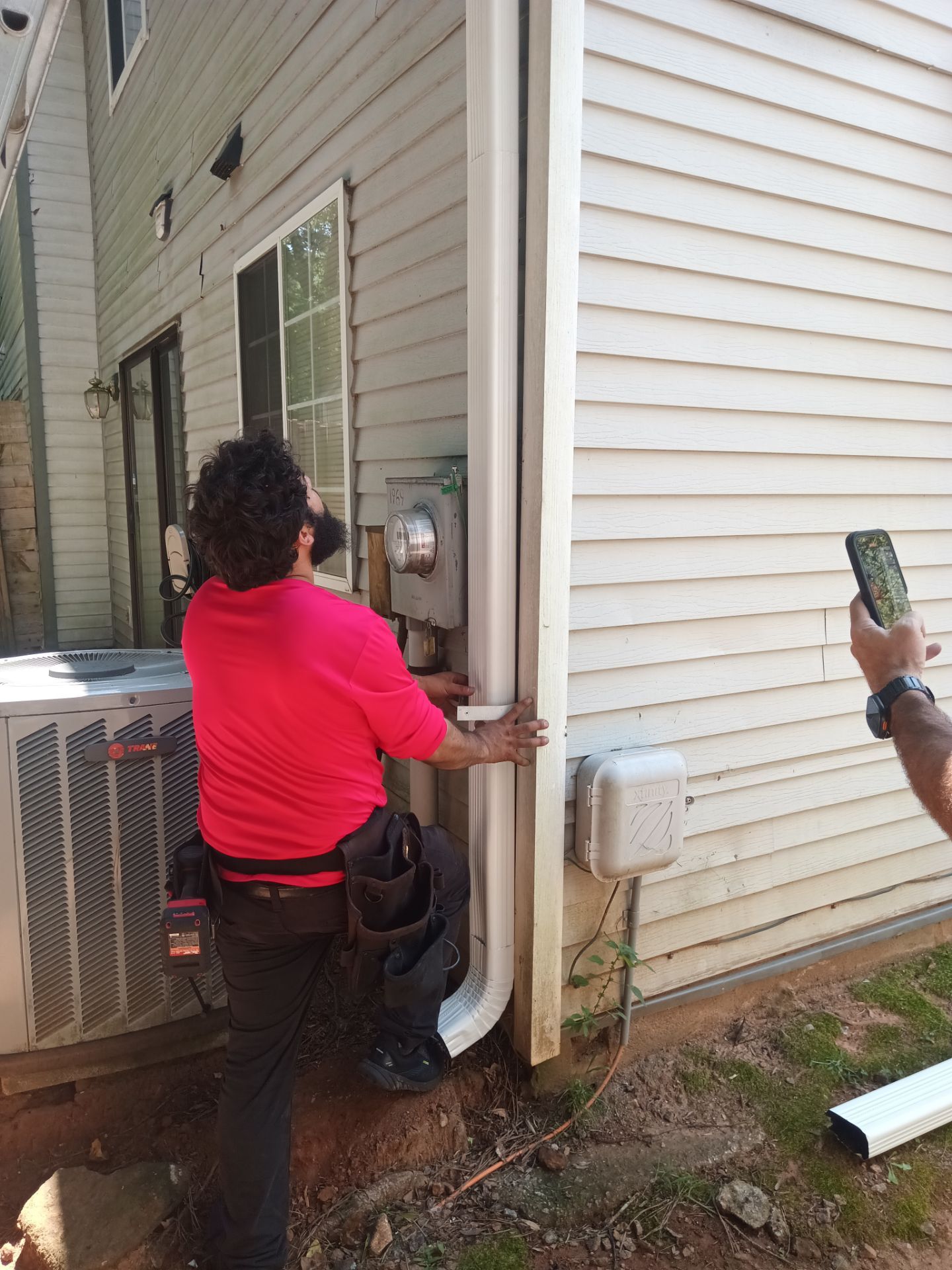
This is where firsthand inspection matters more than guessing. For a standard gutter cleaning visit, you don't need to be home. We take pictures throughout so you can see exactly what we found: clogs, wear spots, loose hangers, all of it. But for an estimate on repair or replacement, we do need you there. That's when we walk the property together and talk through what fits your home and your budget.
Signs Your Gutter Problem Is a Repair, Not a Replacement
Not every gutter problem means the whole system has to come down. We inspect a lot of homes where the homeowner already assumes the worst, and most of the time the fix is smaller than they think. Gutters take a beating from pollen season, storm debris, and old fasteners working loose over the years. That doesn't mean the metal itself has failed.
So how do you tell the difference? Start by looking at where the damage is. Isolated damage usually points to repair. Widespread damage across the whole run usually points to replacement.
- A single section sagging or pulling away from the fascia, while the rest of the run looks tight and level
- One or two spots with rust spots or small pinhole leaks, but the metal around them still feels solid
- Loose gutter reattachment where hangers or spikes have worked free from the wood, but the gutter trough itself isn't cracked
- Seams that have separated slightly and let water drip during heavy rain, but the joints haven't fully failed
- Isolated dents from a fallen branch or ladder mishap, with no rust or corrosion spreading from that point
Any of those on their own usually mean a repair job, not a full teardown. And that's good news for your wallet and your timeline.
Here's a real scenario we run into often. A homeowner in an older neighborhood calls us worried about a gutter that's been overflowing for a season. We get up there, take pictures, and find one bad hanger causing a low spot where water pools and spills over. That's a five-minute fix, not a full gutter replacement. But if we'd skipped the inspection and just assumed the worst, that homeowner might've paid for way more than they needed.
This is a common assumption: people think any visible damage means it's time to replace everything. It doesn't.
For a gutter cleaning visit, you don't need to be home. We take photos throughout so you can see exactly what we found and what condition your system is in. It's part of every visit, no exceptions. That way you're not guessing about what's going on up there. You've got proof.
If what we find during cleaning looks more serious, like split seams running the length of a section or fascia board rot behind the gutter, that's when we'll flag it for a closer look. At that point we do ask that you're present for the estimate. We want to walk the property with you, point out exactly what we're seeing, and talk through solutions that fit your home and your budget. Every house is a little different: older brick ranches, newer builds, homes with mature trees overhanging the roofline. The fix should match your situation, not a one-size answer.
Quick gut check: if the damage is in one spot and the rest of the gutter run looks solid, it's probably repairable. If you're seeing sagging, separation, or rust in multiple sections, that's usually a sign the whole system is aging out.
Signs You're Looking at a Full Gutter Replacement
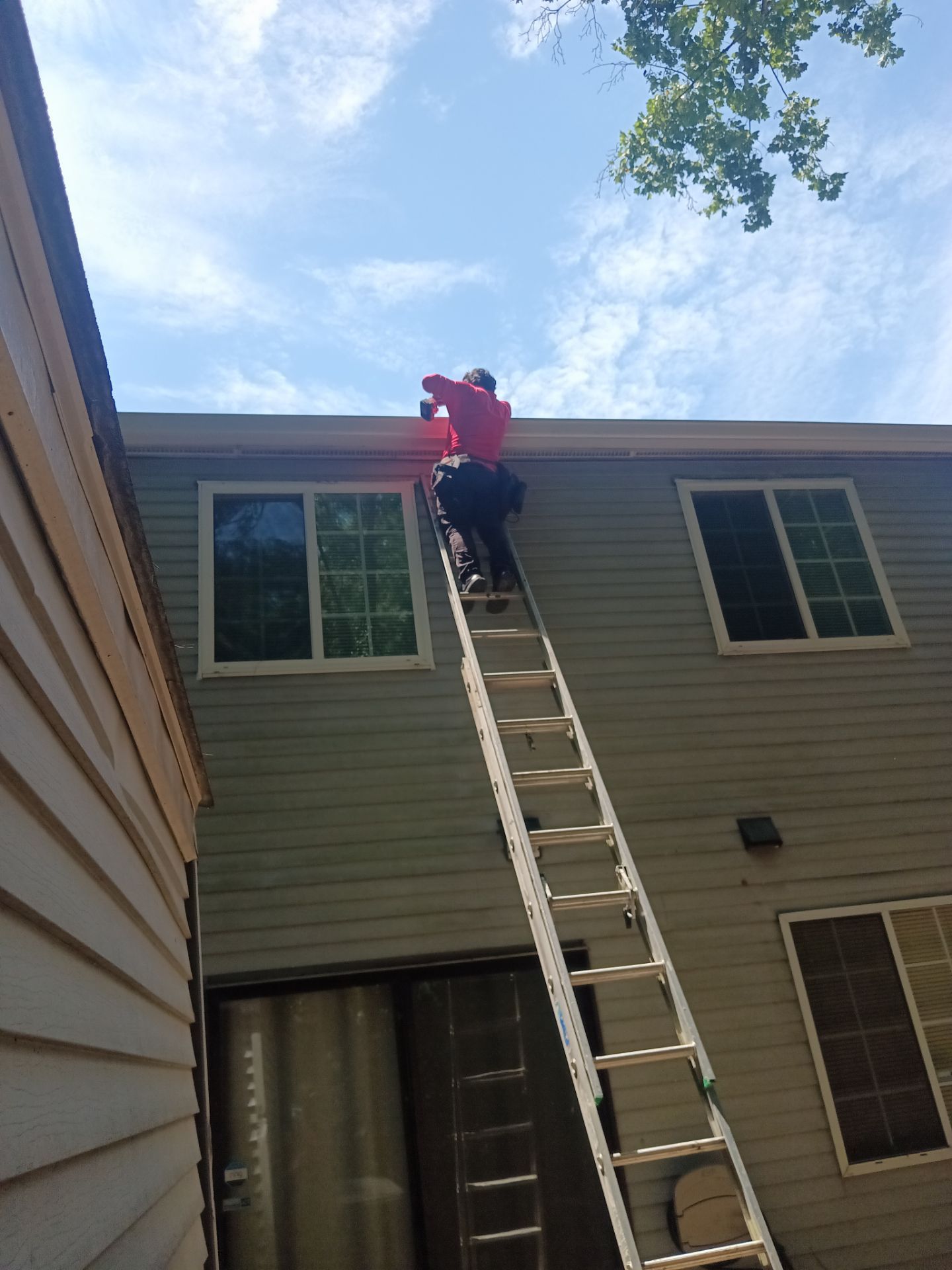
Some gutters just need a patch. Others are done. We've climbed enough ladders to know the difference fast, and most homeowners can spot the big warning signs too once they know what to look for.
Here's the thing. A single leak or one loose section doesn't mean you need a whole new system. But when the damage shows up in multiple places, that's your gutters telling you they're past patching.
- Rust spots or holes showing up in more than one section of the gutter run
- Sagging that keeps coming back even after you've had it reattached
- Cracks along the seams that spread every time it rains hard
- Paint peeling or bubbling on the fascia board behind the gutter, which usually means water's been getting behind it for a while
- Gutters pulling away from the roofline in multiple spots, not just one weak bracket
Here's a pattern we see often: someone pays for a small repair, then calls us back four months later with the same problem two feet down the line. That's not bad luck. That's a system that's already failing in more places than the eye can see. If your gutters are old, aluminum ones usually hold up 20 years or more, but once rust and cracking start spreading, patch jobs just buy you a little time.
Here's a real scenario. We went out to a home for a routine gutter cleaning. The homeowner just wanted the leaves out. But once we got up there and started clearing debris, we found three separate spots where the seams had split and the metal had thinned out from years of standing water. That's not something you catch from the ground.
That's exactly why we always take pictures during our visits, even for a simple gutter cleaning.
You don't need to be home for a gutter cleaning. We handle it, snap photos of anything concerning, and send them your way so you can see exactly what's going on without taking time off work. But if we spot damage like the kind above and it's time to talk replacement, we'll ask you to be there for the estimate. That's when we walk the property together, look at the full picture, and figure out what solution fits your home instead of guessing over the phone.
Downspouts matter here too. If yours are separating from the gutter run, denting badly, or leaking at every joint, that's often tied to the same aging system problem, not a standalone fix.
So how do you know for sure? You don't have to guess alone.
Looking for the service itself?
This guide covers the decision. The Gutter Replacement page covers what the visit includes and how to book it.
SEE GUTTER REPLACEMENTTrusted by Homeowners
Licensed and insured. Real prices before we start. Before and after photos with every invoice.
Frequently Asked Questions
How do I know if my gutters need a repair or a full replacement?
Look at where the damage shows up. If it's one sagging section or a single leak, that's usually a repair. If you see rust, sagging, or separation in multiple spots across the house, the whole system may be aging out. Also check what's behind the gutter. Soft fascia or soffit boards mean water has already gotten past the surface. An inspection can confirm which situation you're dealing with before you decide.
Can old gutters damage my home's foundation?
Yes, failing gutters can lead to foundation problems over time. The clay soil around here doesn't drain quickly, so water dumped in the wrong spot sits near your foundation longer than it should. This slow soaking can weaken soil support under your home. Gutters are your first line of defense against this, not just a way to keep rain off your head. Catching a problem early protects your foundation, fascia, and soffit before repairs get bigger.
Is it a mistake to patch every gutter problem I see?
Yes, patching everything you notice can waste time and money if the whole system is under stress. A lot of homeowners assume visible damage always means replacement, but that's not true either. The real mistake is guessing instead of getting eyes on the actual condition. One bad hanger might cause overflow that looks scary but takes minutes to fix. An inspection tells you which one you're facing.
Do older homes have different gutter needs than newer builds?
Yes, older bungalows often have different gutter demands than newer builds. Mature trees overhanging rooflines mean more debris, and older fastening methods can loosen over time. Newer homes may have undersized or poorly sloped gutters installed during construction, which keep failing no matter how many patches you add. Every home is different, so the right fix depends on your specific setup, not a generic answer.
What causes gutters to fail even when they look okay from the ground?
Gutters can look fine from the ground while hidden issues build underneath. Loose hangers, small pinhole leaks, or separated seams often aren't visible until you're up close. Pollen season and storm debris add stress over years, even when the metal itself hasn't failed. That's why photos during a cleaning visit matter. They show you the real condition of your system instead of leaving you to guess based on a quick look from the yard.
When should I stop repairing and just plan for replacement?
You should consider replacement once your gutters are over 20 years old or failing in multiple spots at once. One leak is a repair. Five leaks across the house is a warning sign the whole system is fighting you. If patches only buy a few months before another issue pops up, you're delaying the real decision instead of solving it. Walking through a gutter estimate with someone in person helps you see what fits your home and budget.
Still Not Sure What You're Looking At?
Send us a photo or book a visit. We'll tell you what it is before anyone quotes a price.
BOOK NOW (opens in a new tab)Or call (404) 994-3494

Metro Atlanta's dedicated gutter specialists. Cleaning, repair, replacement, downspouts, drainage and soffit work, done right the first time with photo proof on every job.
Gutter Services
Drainage & Roofline
© 2026 Shelter Guard Gutter Cleaning and Repair. All Rights Reserved.