No clogged gutters. Cleaned in 24 hours or less.
Home Guides Gutter Warning Signs
Gutter Warning Signs: What an On-Site Estimate Reveals That a Glance From the Ground Won't
Gutters usually fail from the back side first, where you can't see it from the driveway.
Why Gutters That Look Fine Can Still Need an Estimate
Gutters usually fail from the back side first, where you can't see it from the driveway. Rusted hangers, soft fascia, and separated seams hide behind the front lip of the trough. That's why an on-site look beats a glance from the ground every time.
Here's the part most homeowners miss. Gutters don't fail from the front. They fail from the back, where the trough meets the fascia board, and that seam faces your house. You can stand in your yard and see a straight, clean gutter line. Meanwhile the screws holding it are backing out a quarter inch at a time.
We see this every week. Nothing looks wrong, then one heavy storm pulls a twelve-foot section down.
Why does that happen? Because water doesn't need a hole to do damage. It just needs a slow leak and time. A hairline gap at a seam drips onto the fascia for two years. The wood stays damp, paint holds its shape, and the rot works from the inside out. By the time the paint bubbles, the board is already soft.
So the real warning signs are the quiet ones. These are the things we look for on an estimate visit, and almost none of them show up from the street:
- Nail or screw heads sitting slightly proud of the front lip, a sign the fascia behind them is losing its grip
- Dark staining or a thin mildew line on the fascia board just under the gutter
- Grit and shingle granules pooled in the trough, meaning your roof is shedding faster than it should
- A downspout that stays bone dry after rain while the gutter beside it holds standing water
- Mulch or soil scattered on the walkway under a corner, which means water is overshooting somewhere above
- Seams at inside corners that show a faint white or chalky residue from old sealant breaking down
Any one of those on its own isn't a crisis. Two or three together usually means the system is working against you, not for you.
A homeowner called us about a clogged downspout. Simple job, or so it seemed. Once we got a ladder up, the back of the gutter had pulled away about half an inch across two sections. Water had been running straight down the fascia and into the soffit. The clog wasn't the problem, it was a symptom. Nobody could've spotted that from the ground.
And that's the honest case for an estimate. Not because something's broken today. Because a trained eye catches the thing that breaks next winter.
One practical note on how this works. Gutter cleaning doesn't require you to be home at all, we handle it and send photos of every visit so you see exactly what we saw. Estimates are different. We need you there, on site, so we can walk the problem areas together and talk through solutions that fit your roofline, your budget, and your drainage situation. That conversation can't happen over a text thread.
Signs Outside the House That Point to a Gutter Problem
Walk your property once a season. That's it. Most gutter failures announce themselves outside long before you ever see water inside, and the clues aren't subtle once you know what you're looking at.
Start at the corners of your house. Downspouts are where trouble collects, they're also where trouble shows up first. If the ground below a downspout is carved out or muddy days after rain, water isn't traveling where it should.
Here's what we see most often on homes in the area when we pull up for an estimate:
- Gutters that sag, dip, or pull away from the fascia board
- Rust streaks, peeling paint, or dark staining down the siding
- Trenches, splash marks, or dead grass directly under a downspout
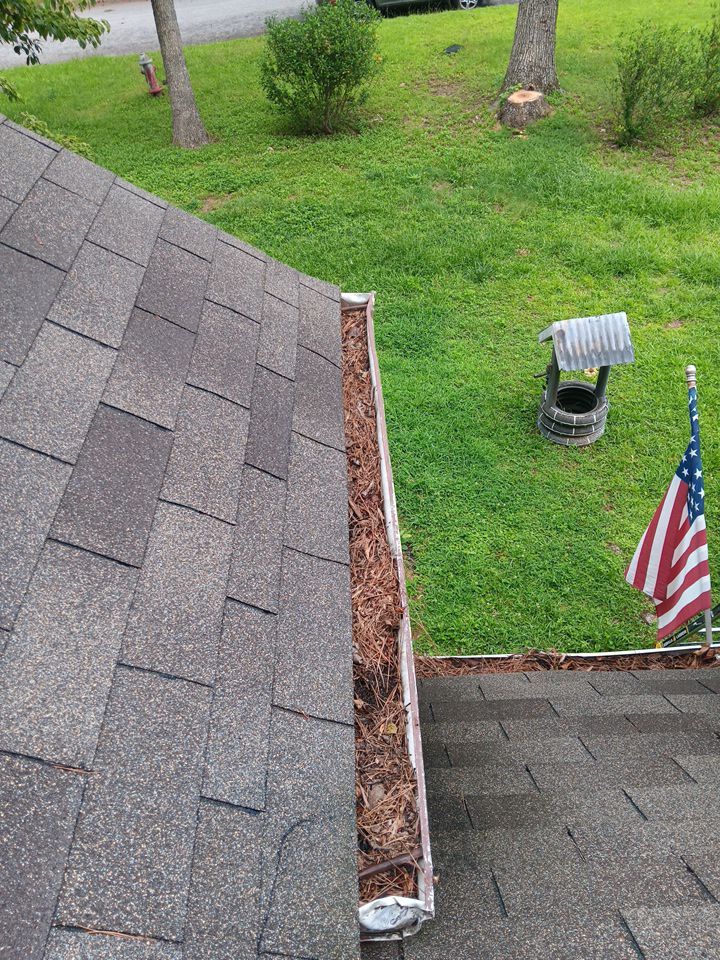
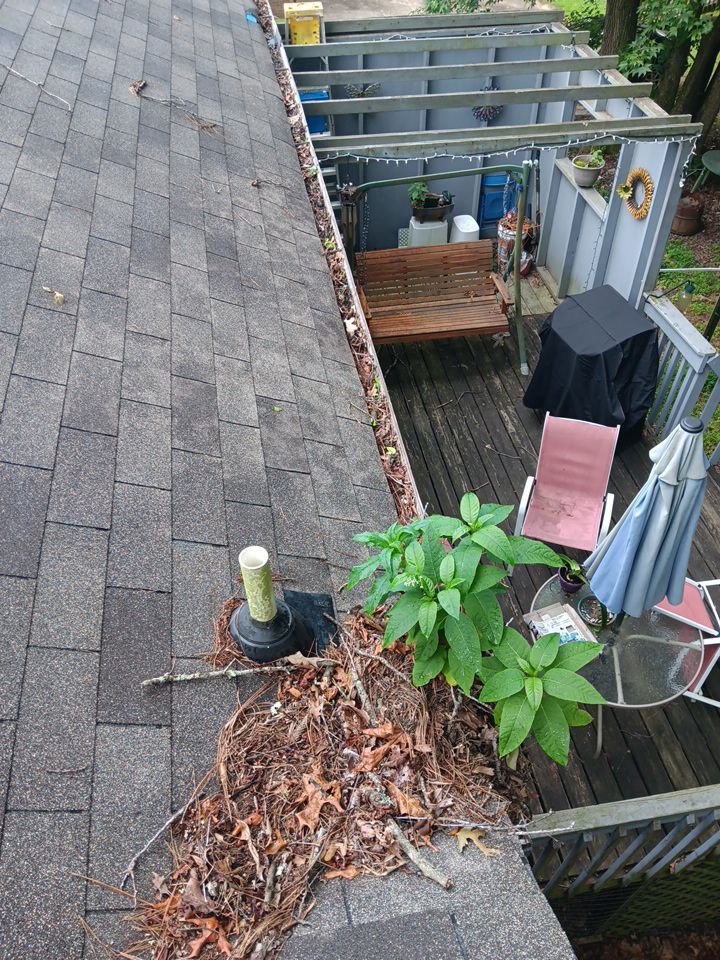
- Plants or small tree seedlings growing out of the gutter trough
- Visible gaps at seams and corners, or nails backing out of the fascia
- Water spilling over the front edge during a normal rain
That last one matters more than people think. A gutter overflowing in a light shower isn't overwhelmed, it's blocked. And blockage is the front end of a much longer problem.
Look at your fascia and soffit next. That's the wood trim running along the roof edge. Soft spots, dark patches, or wood that flakes when you press it means water has been sitting there a while. We see this mistake all the time: a homeowner cleans the gutter, feels good about it, and never checks what the water already did to the board holding the gutter up.
Foundation clues count too.
This area sits on heavy Georgia clay. Clay swells when it's wet and shrinks when it dries. Dump roof water against that soil for a few years and you get soil movement, cracked concrete, and settling. If your driveway has new hairline cracks near the house, or you notice small pools next to the foundation after storms, your gutters and downspouts are part of that story. Underground drainage exists for exactly this reason.
A homeowner called us last spring about a soggy flower bed. Just a wet flower bed, nothing dramatic. But the downspout above it had disconnected at the elbow two seasons earlier and nobody noticed. The fascia behind it was already soft.
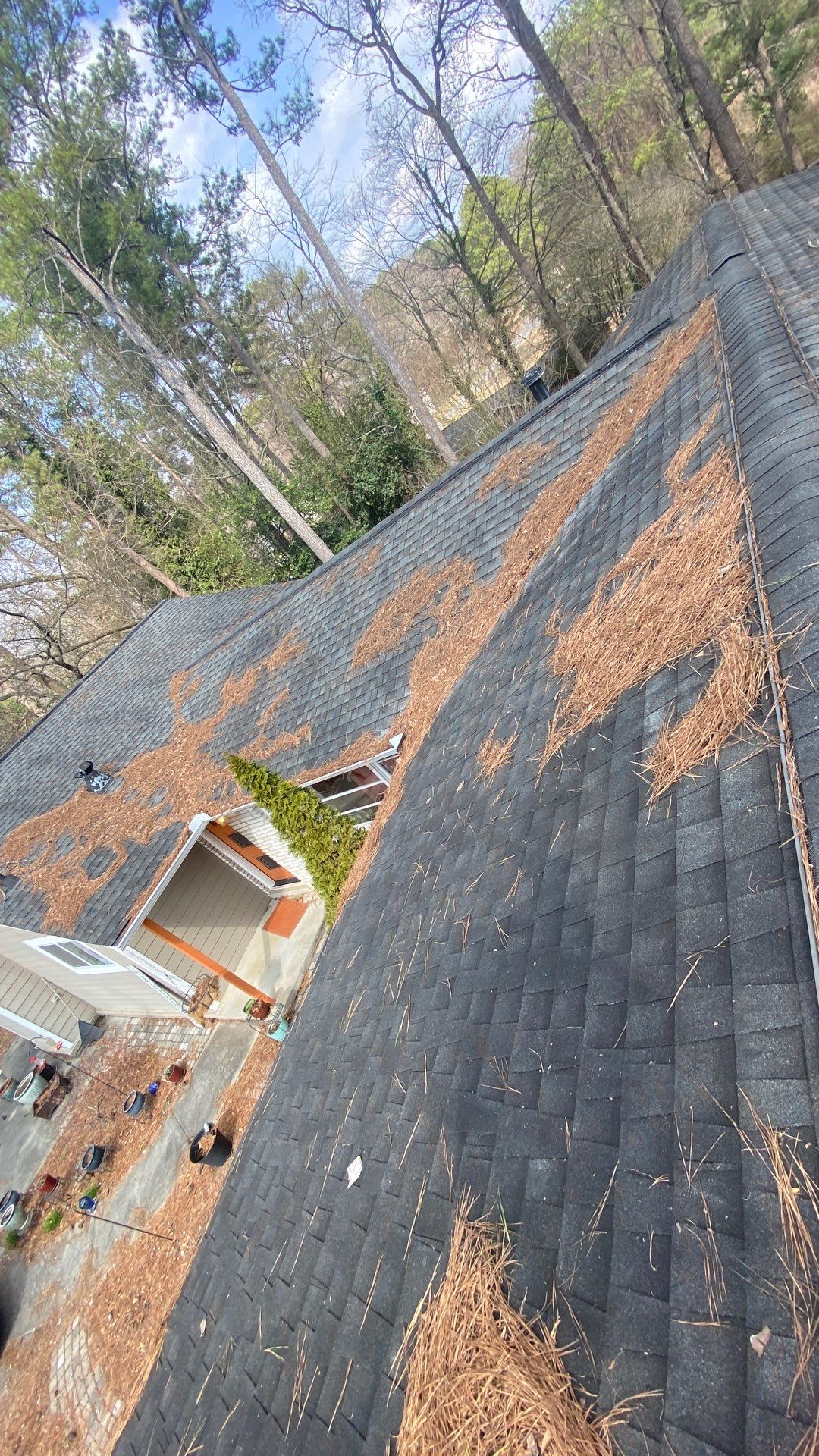
Tree cover is the other big factor here. Older neighborhoods here have mature oaks and pines sitting right over the roofline. Pine needles are the worst offenders, they mat together and hold water like a sponge. If you're pulling debris out twice a year and still seeing overflow, the gutter size or pitch may be the actual issue, not the leaves.
So when do you stop watching and start calling? When two or more of these signs show up together. One stained board might be old news. A sagging run plus a rusted seam plus a rutted flower bed is an active problem.
Signs Inside the House and Yard That Are Easy to Miss
Most gutter problems don't announce themselves at the roofline. They show up somewhere else first. A damp smell in the basement. A stubborn wet patch in the yard that never dries out. We see this all the time, homeowners call about a foundation crack and the real cause was a clogged downspout dumping water four feet from the wall.
Water is patient. It finds the weak spot and works on it for months before you notice.
So before you assume your gutters are fine because they look fine, walk your property and your lower level. Here's what to look for.
- Trenches or ruts in the soil under the roofline, where overflow has been carving the ground
- Standing water or spongy grass near the foundation two days after rain stopped
- Musty smell, chalky white residue, or damp streaks on basement and crawlspace walls
- Paint bubbling or peeling on exterior siding directly below a gutter run
- Mulch or pine straw pushed away from the bed edges after a storm
- Doors or windows on the lower level that suddenly stick or won't latch right
That last one surprises people. When soil around a foundation stays saturated it swells, and the frame shifts just enough to throw a door out of square. Small clue, big warning.
And check your crawlspace if you have one. A lot of older homes in the area sit on crawlspaces with vents near grade level, and overflow finds those vents fast. Standing water under a house invites rot in the joists, it also brings pests you really don't want.
One more spot worth your attention: the ceiling and wall corners on your top floor. Water backing up behind a gutter can push under the shingle edge and travel inside. A faint brown ring near an exterior wall corner usually means it's been happening a while.
A homeowner called us last spring about ruts in her flower beds. Nothing dramatic. Turned out one downspout had separated at the elbow and had been draining straight down the wall for two seasons. The fascia behind it was soft. Caught early enough that a soffit and fascia repair handled it, but another year and that's a bigger job.
Here's the thing about these indoor and yard signs. They tell you water is going somewhere it shouldn't, but they don't tell you why. Could be a clog. Could be pitch. Could be a downspout that needs to tie into underground drainage so the water leaves your property instead of pooling by the wall.
That's why an estimate is a conversation, not a drive-by. You need to be home for it. We walk the property with you, show you what we're seeing, and talk through the options that fit your house and your budget. Different homes need different fixes and we're not going to guess from the curb.
Gutter cleaning is different, you don't need to be there for that one. We handle it and send you photos of the before and after every single visit, so you can see exactly what came out and what condition everything's in.
Looking for the service itself?
This guide covers the decision. The Gutter Estimate page covers what the visit includes and how to book it.
SEE GUTTER ESTIMATETrusted by Homeowners
Licensed and insured. Real prices before we start. Before and after photos with every invoice.
Frequently Asked Questions
How do I know if my gutter problem is serious enough for a professional look?
You should call a professional once you spot two or more warning signs at the same time, like a sagging run near a rusted seam. One issue alone, such as a small stain, might not mean much. But signs stacking up together usually mean the system is failing behind the scenes. A trained eye can catch damage a homeowner would miss from the ground. If that sounds like your house, it may be time to schedule your on-site estimate.
Can I just clean my gutters instead of getting an estimate?
Cleaning helps, but it won't fix damage that's already happened. Many homeowners clear out leaves, feel confident, and never check the fascia board underneath for soft or rotted wood. A clog is often just a symptom of a bigger issue, like pulled hangers or separated seams. If your gutters overflow again soon after cleaning, that's a sign something structural needs a closer look, not just another cleanout.
Why does clay soil matter for gutter problems?
The ground here is heavy Georgia clay, which swells when wet and shrinks when dry. When gutters dump water near your foundation instead of away from it, that soil movement gets worse over time. This can lead to cracked driveways and small pooling spots near the house. If you're seeing new hairline cracks or standing water after storms, your gutter and downspout drainage is likely part of the cause.
Do mature trees in older neighborhoods cause more gutter issues?
Yes, mature oaks and pines common in older neighborhoods add extra strain on gutters. Pine needles especially mat together and hold water like a sponge, causing overflow even in gutters cleaned regularly. If you're clearing debris twice a year and still seeing water spill over, the pitch or size of your gutter system may be the real issue. That's something worth checking during an on-site visit.
What's a common mistake homeowners make when checking their gutters?
The biggest mistake is only checking gutters from the ground or driveway. Most damage starts on the back side, where the trough meets the fascia board, and that spot faces your house, not the street. Screws can be backing out slowly while the front looks straight and clean. Walking your property and looking closely at downspouts, siding, and fascia gives a much truer picture than a quick glance.
Is a dry downspout after rain a warning sign?
Yes, a bone-dry downspout while the gutter next to it holds standing water usually means something is blocked or disconnected. Water should move steadily through the system during rain. When it doesn't, that water is likely overflowing somewhere else, often onto the fascia or into the soil below. This is one of the quieter signs that's easy to miss unless you're specifically looking for it.
Still Not Sure What You're Looking At?
Send us a photo or book a visit. We'll tell you what it is before anyone quotes a price.
BOOK NOW (opens in a new tab)Or call (404) 994-3494

Metro Atlanta's dedicated gutter specialists. Cleaning, repair, replacement, downspouts, drainage and soffit work, done right the first time with photo proof on every job.
Gutter Services
Drainage & Roofline
© 2026 Shelter Guard Gutter Cleaning and Repair. All Rights Reserved.