No clogged gutters. Cleaned in 24 hours or less.
Home Guides Do You Install Gutter Sticks on All Types of Gutters?
Gutter Sticks
Do You Install Gutter Sticks on All Types of Gutters? A Homeowner's Guide
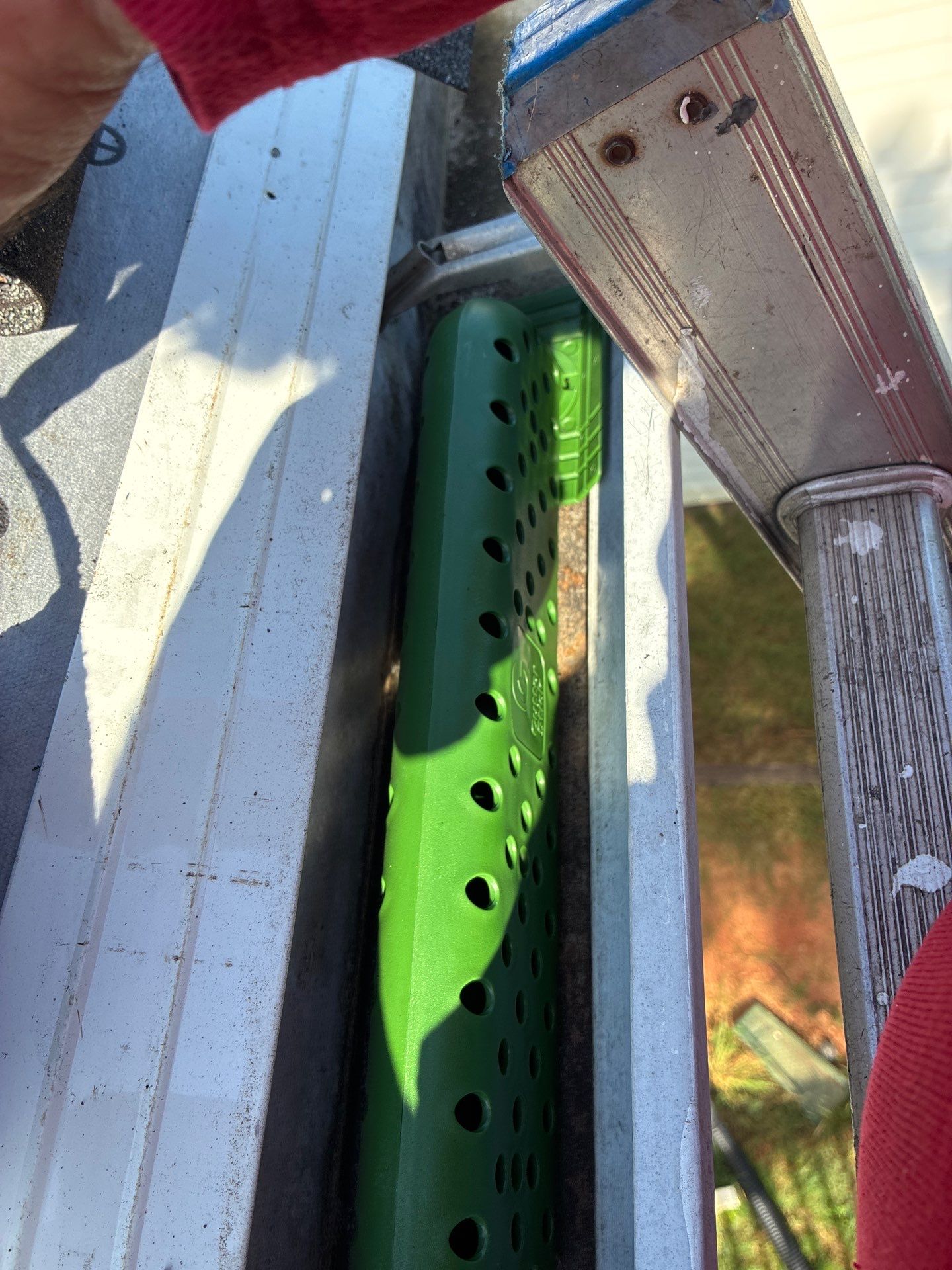
"Gutter sticks" is a common nickname for a type of gutter guard, usually a foam insert or a screen-and-bracket system that sits inside or over the gutter channel.
What People Mean by "Gutter Sticks" (And Why It Matters)
Quick Summary:
"Gutter sticks" is a common nickname for a type of gutter guard, usually a foam insert or a screen-and-bracket system that sits inside or over the gutter channel. People use the term loosely, so it can mean different products depending on who you ask. Knowing what you have (or want) helps you get the right fix instead of the wrong one.
Here's the thing about "gutter sticks": it's not one official product. Homeowners around here use it to describe a few different setups. Sometimes it means foam inserts that slide into the gutter and block leaves while letting water pass through. Other times folks mean a rigid guard that snaps onto the gutter's edge, almost like a stick laid across the top. And sometimes it's just a catch-all word for any gutter guard, period.
We hear this mix-up all the time on estimate calls. A customer says they want "sticks installed" and means three different things depending on the house. That's not a knock on anyone. Gutter terminology is messy, and companies name their products all sorts of ways. But it does matter, because the type of gutter you have changes what works.
Your gutter isn't just a rain channel. It's a shield protecting your fascia, foundation, and siding from water damage. Whatever guard or insert goes on top of it needs to match the gutter's shape and slope, or it fails at the one job it has.
- Foam inserts: soft foam wedges that sit inside the gutter trough and filter out debris
- Bottle-brush style guards: bristled tubes that sit in the channel and block leaves near the top
- Screen-over-gutter guards: flat mesh or perforated panels that snap or screw onto the gutter's outer edge
- Surface-tension hoods: curved covers that route water in while letting leaves fall off the front
Each style works differently depending on whether your gutters are K-style, half-round, or box gutters. A foam insert that fits fine in a standard K-style gutter can bunch up or sag in a half-round system, which a lot of older homes in established neighborhoods still have. That mismatch is one of the biggest reasons a "gutter stick" fails within a season.
So before you commit to any product, it helps to know your gutter type. Most people don't realize this until a guard starts pulling away or trapping water instead of shedding it.
We take photos during every visit, whether it's a routine gutter cleaning or a guard inspection. That way you can see exactly what type of gutter you have and what condition it's in, no guessing involved.
Types of Gutters and Which Guards Generally Fit Them
Do you install gutter sticks on all types of gutters? Not exactly. Gutter sticks work great on some setups and poorly on others. The shape and age of your gutter changes everything. We see this mistake all the time: someone buys a guard online, then finds out it doesn't fit their gutter at all.
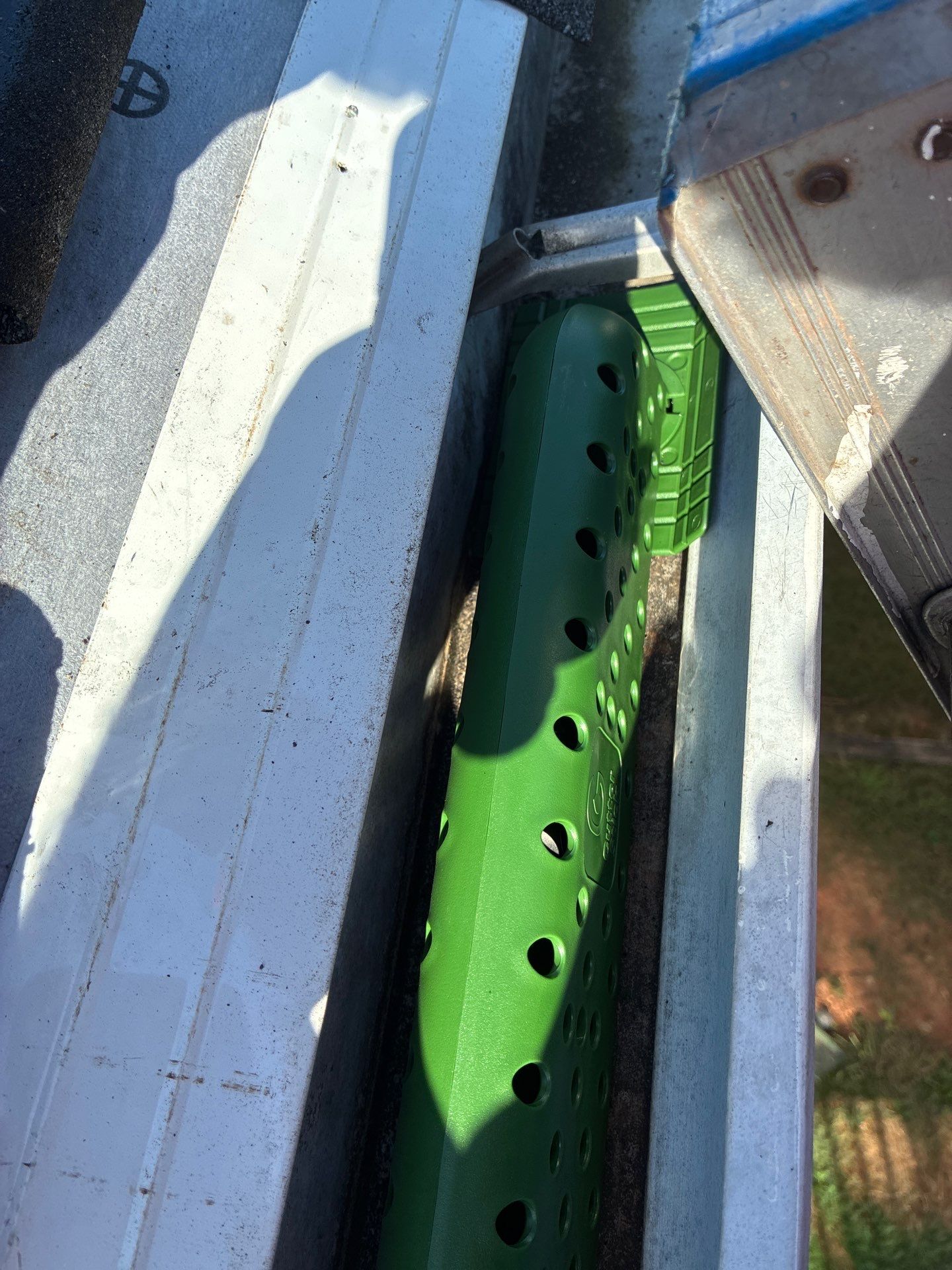
Most homes around here use K-style gutters. They've got a flat back and a decorative front edge that looks a bit like crown molding. K-style gutters are the easiest for gutter sticks. The flat top surface gives the guard a solid place to sit, and most standard sizes fit without much custom work.
Half-round gutters are a different story. You'll spot these on some of the older, character-filled homes in the area. They're shaped like a tube cut in half, so there's no flat lip for a standard guard to grip. That curved shape means most off-the-shelf gutter sticks just won't sit right.
- K-style gutters: flat back, decorative front, best fit for standard gutter sticks
- Half-round gutters: curved shape, often need custom-cut guards or a different approach
- Box gutters: built into the roofline, rare in residential homes but need special handling
- Older or bent gutters: warping or rust can keep a guard from sitting flush
- Mixed systems: additions or repairs sometimes create two gutter styles on one house
Box gutters aren't common on houses, but you'll find them on some commercial buildings and older structures. They're built right into the roof edge instead of hanging below the fascia. Fitting a standard gutter stick here just doesn't work the same way, and most homes we service don't have this style at all.
Here's something people don't think about until it's too late. A gutter that's been bent, sagging, or patched over the years might not hold a guard the way it should. Rust weakens the metal edge. Warping throws off the fit. So before you commit to any guard, the gutter itself needs a quick check.
We had a homeowner last year who bought guards for one side of the house, not realizing half of it had been replaced with a slightly different profile. It happens more than you'd think, especially on homes that have had partial repairs over the years.
So does gutter type really matter that much? It does.
K-style vs half-round comes down to shape and how the guard attaches. K-style gutters give you a flat resting spot, while half-round gutters need something shaped to match the curve. Guessing which one you have from the ground isn't reliable, since angles and paint can trick your eye.
This is exactly why every inspection includes photos of your gutter profile, its condition, and any problem spots, so you can see exactly what we're working with.
For a basic gutter cleaning, you don't even need to be home. We'll clear things out, snap photos of the before and after, and you'll have a full record waiting for you. But for an estimate, we do ask that you're present. That way we can walk the property together and talk through what solution fits your gutters, your roofline, and your budget.
Why Gutter Condition Matters as Much as Gutter Type
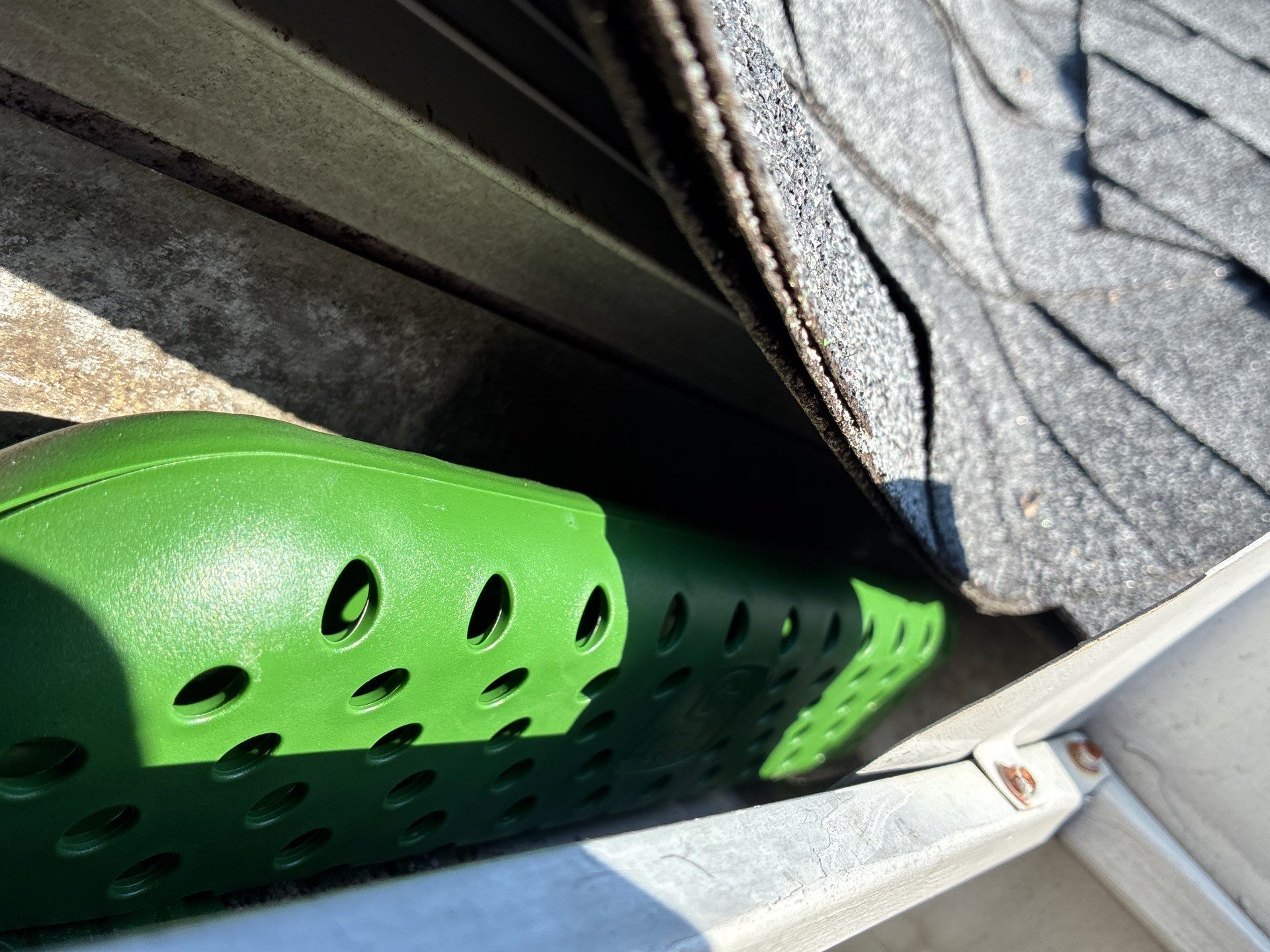
Here's something a lot of homeowners miss. The type of gutter matters, but the condition matters more. We've hung gutter sticks on aluminum, vinyl, and steel gutters without any problems. But if that gutter is already sagging, rusted, or pulling away from the fascia, adding anything to it is asking for trouble.
Think of it this way: a gutter guard system only works as well as the gutter underneath it. A weak gutter with a stick on it is still a weak gutter. We see this mistake all the time, someone wants to skip cleaning and jump straight to guards, without checking if the gutter itself can even handle the extra weight.
So what does a healthy gutter look like? A few things need to check out before we recommend gutter sticks.
- Gutters are firmly attached to the fascia board, not pulling loose or sagging in the middle
- No visible rust, cracking, or corrosion along the seams
- Proper slope toward the downspouts, so water doesn't pool
- Fascia and soffit behind the gutter are solid, not soft or rotted
- No standing water or debris buildup from poor drainage
If we spot soft fascia or a gutter that's already separating from the roofline, we'll flag it before anything else happens. That's the proactive part of our job: catching the next problem before it turns into a bigger repair bill. We'd rather tell you now than let you find out during the next storm when your gutter pulls off the house entirely.
We had a job last spring on a home where the gutters looked fine from the ground. Once we got up there, the back corner was rusted through and barely holding on. Installing gutter sticks on that section would have added weight to a system that was already failing. We repaired that section first, then moved forward with the rest of the plan.
That's why we document every visit with photos. You get to see exactly what we see, rust spots, loose brackets, soft wood, all of it. For a standard gutter cleaning, you don't even need to be home. We'll do the work and send you the photos afterward. But for an estimate, we do need you there. Gutter systems vary house to house, and we want to talk through what's going on with your setup and figure out the right fix together.
A gutter's job is to protect your home's structure. That's not an exaggeration.
Water damage from a failing gutter can hit your fascia, your foundation, even your landscaping. Gutter sticks are a smart addition, but only when the gutter behind them is solid enough to do its job. Get that part right first, and everything else falls into place.
Looking for the service itself?
This guide covers the decision. The Gutter Sticks page covers what the visit includes and how to book it.
SEE GUTTER STICKSTrusted by Homeowners
Licensed and insured. Real prices before we start. Before and after photos with every invoice.
Frequently Asked Questions
How do I know if I have K-style or half-round gutters?
Look at the front edge of your gutter from a ladder or upstairs window. K-style gutters have a flat back and a decorative front that looks like crown molding. Half-round gutters look like a tube cut in half, with a smooth curve and no flat lip. Many older homes in the area still have half-round systems. Since guessing from the ground isn't reliable, a photo inspection is the easiest way to confirm your gutter type before choosing any guard.
Can gutter sticks be installed on any type of gutter?
No, not every gutter type works well with standard gutter sticks. K-style gutters usually fit best because of their flat top surface. Half-round gutters and box gutters often need custom-cut guards or a different approach entirely. Older, bent, or rusted gutters can also keep a guard from sitting flush. Knowing your gutter type first helps you avoid buying a product that fails within a season.
What's the most common mistake homeowners make with gutter guards?
The biggest mistake is buying a guard before knowing the gutter type underneath it. Many homeowners assume all gutters are the same shape, then find out the product doesn't fit once it arrives. This is especially common on homes with mixed systems, where an addition or past repair created two different gutter profiles on one house. A quick inspection avoids this guesswork and saves you from a mismatched fix.
Do older homes need a different gutter guard approach?
Yes, older homes in established neighborhoods often have half-round gutters, and these need special handling. Standard gutter sticks are made to sit on a flat lip, which half-round gutters don't have. Rust and warping are also more common on older gutter systems, which can keep any guard from sitting properly. If your home has some age to it, it's worth checking gutter condition and shape before choosing a guard, not just style.
Does the condition of my gutter matter as much as its shape?
Yes, condition matters just as much as shape when it comes to fitting a guard. A gutter that's bent, sagging, or rusted may not hold a guard flush, even if the shape is normally a good match. This is why a proper inspection checks both the gutter profile and its overall condition. If you're weighing your options for gutter protection, understanding this difference helps you choose a fix that lasts.
Why do gutter guards sometimes fail after just one season?
Gutter guards usually fail early because they were matched to the wrong gutter type or installed on a gutter with existing damage. A foam insert made for K-style gutters can bunch up or sag inside a half-round system. Rust or warping on the gutter edge can also stop a guard from sitting correctly. Getting an inspection first, with photos of your actual gutter profile, is the best way to prevent an early failure.
Still Not Sure What You're Looking At?
Send us a photo or book a visit. We'll tell you what it is before anyone quotes a price.
BOOK NOW (opens in a new tab)Or call (404) 994-3494

Metro Atlanta's dedicated gutter specialists. Cleaning, repair, replacement, downspouts, drainage and soffit work, done right the first time with photo proof on every job.
Gutter Services
Drainage & Roofline
© 2026 Shelter Guard Gutter Cleaning and Repair. All Rights Reserved.