No clogged gutters. Cleaned in 24 hours or less.
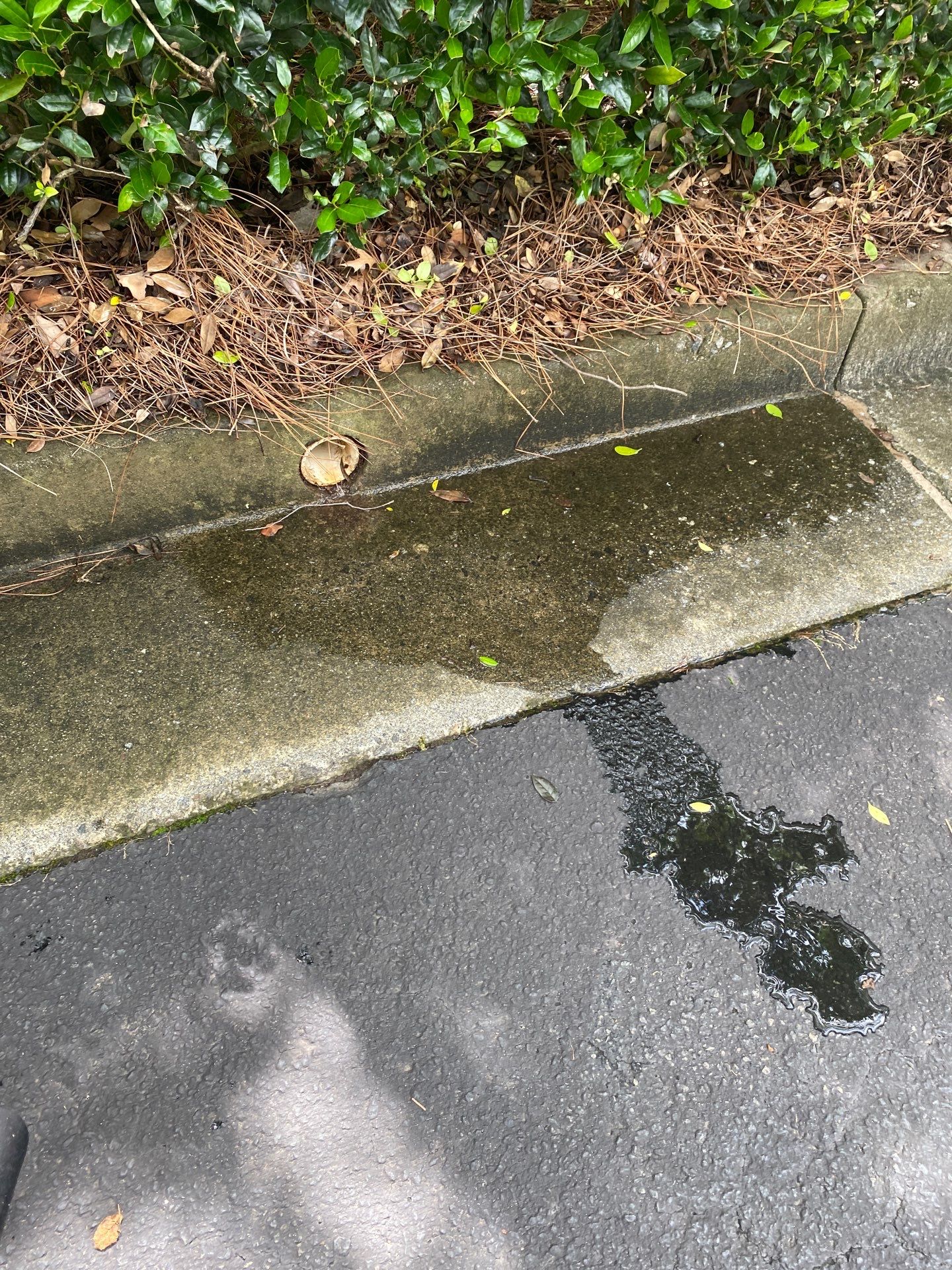
Home Guides Do I Really Need Underground Drainage, or Is It Just My Gutters?
Underground Drainage
Do I Really Need Underground Drainage, or Is It Just My Gutters? A Homeowner's Guide
Gutters catch water off the roof and move it to the downspout.
Gutters and Underground Drainage Solve Different Problems
Gutters catch water off the roof and move it to the downspout. Underground drainage takes that water and carries it away from the foundation. They handle two different stages of the same problem, so one can't cover for the other.
So do I really need underground drainage, or is it just my gutters? Here's the honest answer. Gutters only control water while it's up high. Once the water hits the ground, your gutters are done working. And that's where most foundation trouble starts.
Think of it like a relay race. The gutter runs the first leg. The downspout hands off the baton. If nobody's there to take it, the water just dumps at your wall and soaks in.
A single hard rain can push hundreds of gallons off an average roof. All of it funnels through two or three downspouts. That's a firehose pointed at one spot of soil.
- Gutters: catch roof runoff and keep it off your fascia, soffit, and siding
- Downspouts: move that water down and out past the roofline
- Underground drainage: carry the water 10 to 20 feet away and release it where it can't come back
- Grading and soil: the last line of defense, and usually the weakest one
Most people don't realize this until they see a wet basement wall. The gutters looked fine. They were fine. The water just had nowhere to go.
Around here, it's worse than it needs to be. Our clay-heavy soil doesn't drink water, it holds it. So that pooled runoff sits against your footing instead of soaking down and away. Then it expands, presses, and finds the smallest crack.
We see this mistake all the time on the older ranch homes around here. Flat lots, short splash blocks, mature trees. The gutters get cleaned twice a year and the homeowner assumes the job's done.
One example sticks with me. A homeowner had spotless gutters and a crawl space that smelled like a pond. No clogs anywhere. But both back downspouts emptied four inches from the block wall, and the yard sloped toward the house, nobody had ever checked the second half of the trip.
How do you tell which half of the system is failing? Look at where the damage shows up. Overflow at the gutter line, stained fascia, or water sheeting down siding usually means a gutter or downspout issue. Soggy soil, sunken mulch, mud splatter on the lower wall, or damp interior walls point to drainage.
But sometimes it's both. Clean gutters with bad discharge still flood your foundation. Good underground drainage with clogged gutters never gets the water in the first place. The shield only works when both halves hold.
That's why we look at the whole path, roof to release point, not just the trough.
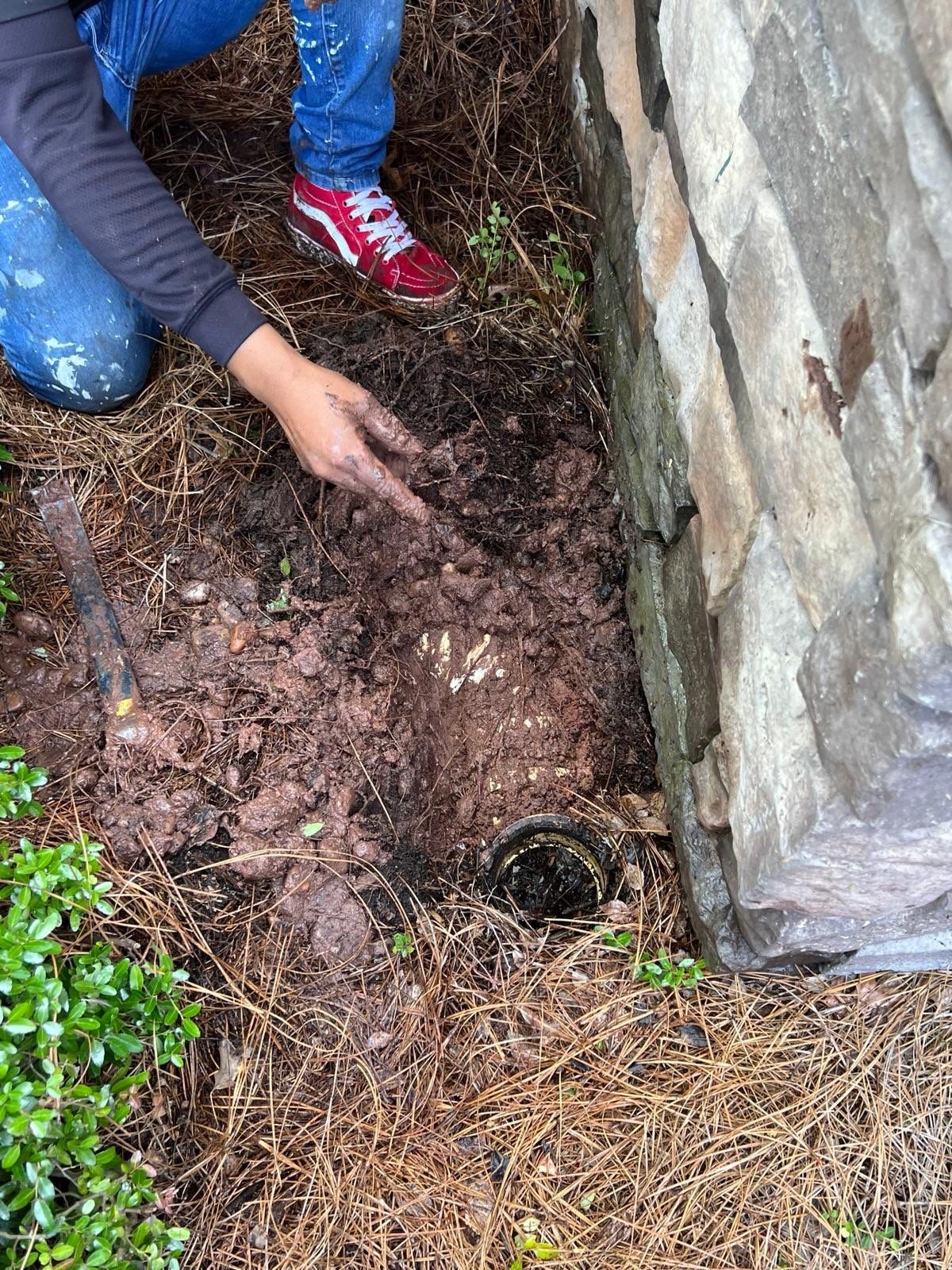
Signs Your Water Problem Is Coming From the Yard, Not the Roof
Here's the part most people skip. They assume every wet basement traces back to a clogged gutter. Sometimes it does. But if your gutters are clean and water still shows up where it shouldn't, the problem moved underground.
Homes around here sit on heavy red clay. Clay doesn't drink water, it holds it. So when a downspout dumps 40 gallons next to your slab during a summer storm, that water has nowhere to go but sideways and down. We see this all the time in older ranch homes.
Look for these signs. They point to a ground problem, not a roof problem.
- A soggy strip of lawn that stays wet three or four days after rain stops
- Mulch or pine straw washed out of the beds near a downspout
- A trench or gully carved into the soil where water exits the downspout
- Mud splatter on siding up to knee height, or a dark water line along the brick
- Water in the crawlspace or basement after a storm, with clean gutters overhead
- Standing water around the air conditioning pad or against a patio slab
Notice what's missing from that list. Overflow. When gutters are the culprit, you see water pouring over the front edge mid-storm. That's a roof-line symptom. Everything above happens at ground level, usually after the rain has already passed.
Want to test it yourself? Do this on the next decent rain.
- Step outside while it's actively raining and watch each gutter run for overflow.
- If nothing spills over the edge, your gutters are moving water fine.
- Follow each downspout to where it ends and look at the ground there.
- Check if water is pooling, spraying, or cutting a channel into the dirt.
- Wait two days after the rain stops, then walk the same path again.
- Anywhere still soft or squishy is a drainage failure, not a gutter failure.
That two-day wait matters more than anything else on the list.
One homeowner called us three years running for the same basement seep. Gutters were spotless every visit, we sent photos each time to prove it. The real issue was a downspout emptying six feet from the foundation on ground that sloped back toward the house. Buried drainage carried it 30 feet out to daylight, the seeping stopped. Three years of chasing the wrong fix, all because the gutters looked fine and everyone assumed that settled it.
Something else worth knowing. If your neighbor's yard drains onto yours, or you're downhill from a street, clean gutters won't touch that. That's surface water from off your property. Underground drainage handles it, gutter work doesn't.
Not sure which camp you're in? A walk-around estimate sorts it out in about 20 minutes. We need you there for that one so we can look at the slope together and talk through what fits your lot.
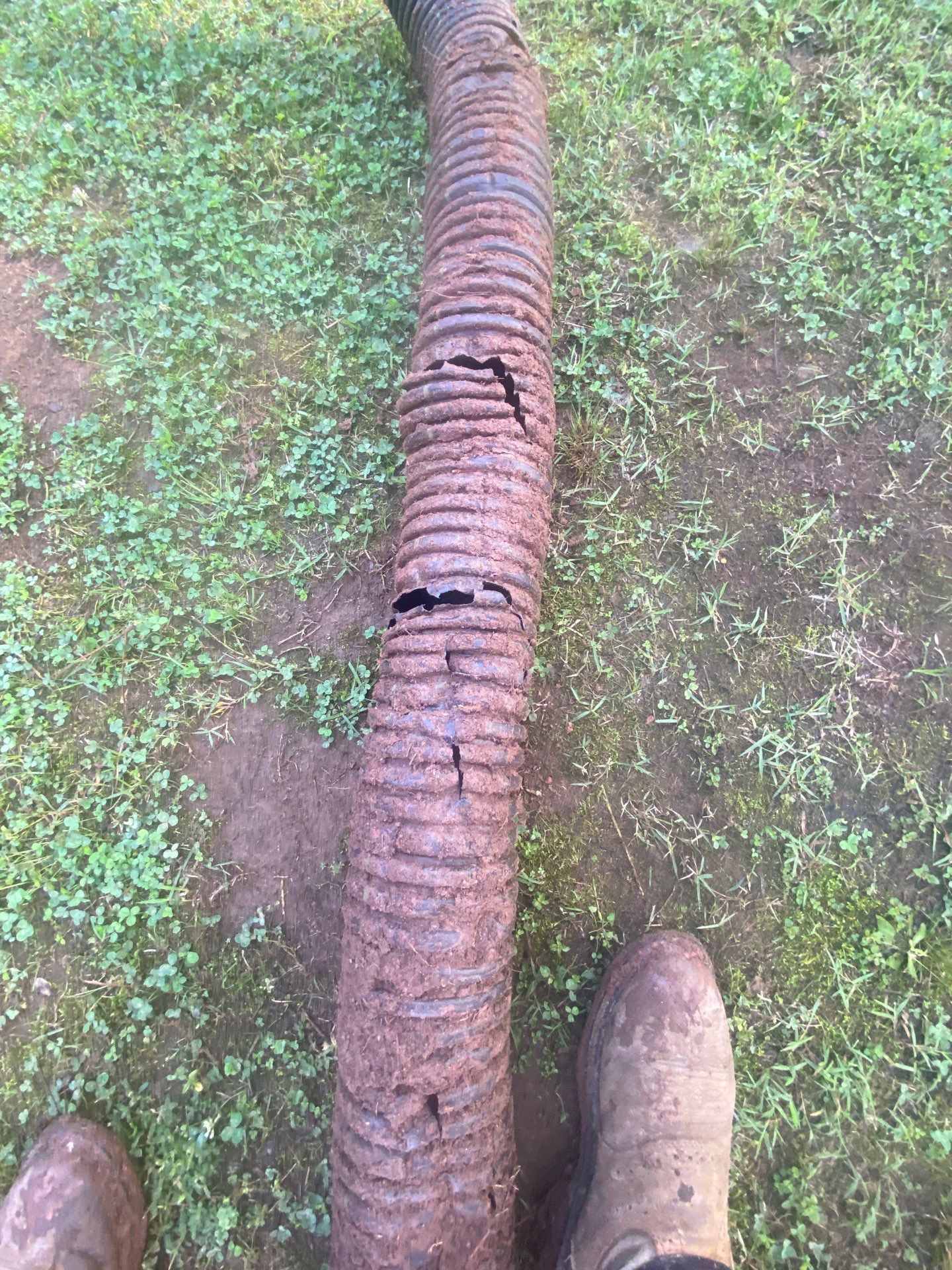
Signs Your Gutters Are the Problem
Before you dig up your yard, check the system you already have. Most of the water problems we find start above the ground, not below it. A clogged gutter doesn't hold water quietly. It tells you.
You just have to know what it's saying.
Here's the short version. If water is escaping before it reaches the ground, that's a gutter issue. If water reaches the ground fine and then sits there, that's a drainage issue. Simple test, and it saves people thousands.
These are the signs we look for first on every visit. Walk your house during a hard rain and you'll spot most of them in ten minutes.
- Water sheeting over the front lip of the gutter instead of moving toward the downspout
- Dark vertical streaks or mildew on the fascia board behind the gutter
- Small trees, maple seedlings, or grass growing out of the trough
- Gutters sagging or pulling away from the fascia, usually a sign of standing water weight
- A dry downspout during heavy rain while water pours off the roofline elsewhere
- Erosion trenches or splash marks directly under a gutter seam, not at a downspout
That last one matters more than people think. Erosion under a seam means the gutter is leaking. Erosion at the base of a downspout means the water is being delivered correctly and then abandoned. Two completely different repairs.
We had a homeowner convinced he needed underground drainage across his whole back yard. Standing water every storm. We got up on the roof and found both back downspouts packed solid with pine needles. The water never made it down the pipe, it was overflowing at the corner and pooling exactly where he thought he had a grading problem. Cleaning fixed it. No trenching, no pipe.
Does that happen every time? No. But it happens often enough that we always check the gutters first.
It's worse here than in most places. Mature oaks and pines drop debris nearly year round here, and that heavy spring pollen turns into a paste in the bottom of the trough. A gutter can look clean from the driveway and still be half blocked at the outlet. We see this mistake all the time.
One more thing worth knowing. For gutter cleaning we don't need you home at all. We work, we clear the system, and you get pictures of what we found before and after, every single visit. That photo record is usually what tells you whether your gutters were the real culprit.
Estimates are different. If we're looking at underground drainage or a downspout rerouting plan, we need you there so we can walk the property together and talk through options that fit your yard and your budget.
Looking for the service itself?
This guide covers the decision. The Underground Drainage page covers what the visit includes and how to book it.
SEE UNDERGROUND DRAINAGETrusted by Homeowners
Licensed and insured. Real prices before we start. Before and after photos with every invoice.
Frequently Asked Questions
How do I know if my problem is gutters or underground drainage?
Check where the water shows up. Overflow at the gutter line, stained fascia, or streaks down your siding usually means a gutter or downspout problem. Soggy soil, sunken mulch, or damp interior walls point to drainage issues underground. Watch your gutters during a storm, then walk the yard two days later. Anywhere still wet or squishy tells you the ground, not the roof, is failing. This two-step check saves you from fixing the wrong half.
Why does clay soil make drainage problems worse?
Heavy red clay holds water instead of soaking it in. So when a downspout dumps water near your foundation, it has nowhere to go but sideways and down into your footing. That standing water expands and presses against your walls until it finds a crack. This is why so many older ranch homes end up with wet crawl spaces even when their gutters look spotless. The soil, not the gutters, is doing the damage.
Can clean gutters still cause a flooded basement?
Yes, clean gutters can still lead to a flooded basement if the water has nowhere to go once it leaves the downspout. Gutters only manage water while it's up high. Once it hits the ground, that job is done. If the yard slopes back toward your house or the downspout ends too close to the wall, water pools right at your foundation. This is exactly why a full roof-to-release-point check matters more than gutter cleaning alone.
Does a downhill lot or a neighbor's yard affect my drainage?
Yes, if you sit downhill from a neighbor or a street, their runoff can flow straight onto your property. Clean gutters won't stop that kind of surface water because it never touches your roof system at all. This is common on sloped lots, especially after heavy summer storms. Underground drainage is built to catch and redirect that outside water before it reaches your foundation.
What's the difference between a gutter problem and a grading problem?
A gutter problem shows up as water spilling over the edge during a storm, while a grading problem shows up as pooling or soggy ground days after the rain stops. Grading is your yard's natural slope, and it's usually the weakest defense against water damage. If your yard tilts toward your house instead of away from it, water collects at your foundation no matter how well your gutters work. Fixing grading often requires pairing it with drainage.
How can I test my own drainage system without digging up my yard?
Watch your gutters during a storm, then check the ground near your downspouts two days after it stops raining. If nothing overflows but the soil stays soft or muddy, your drainage is the problem, not your gutters. This simple test tells you which half of the system needs attention before you spend time or money guessing. If you're still unsure, a walk-around look at your slope and downspout paths, like the one covered on our underground drainage services page, can confirm it in about 20 minutes.
Still Not Sure What You're Looking At?
Send us a photo or book a visit. We'll tell you what it is before anyone quotes a price.
BOOK NOW (opens in a new tab)Or call (404) 994-3494

Metro Atlanta's dedicated gutter specialists. Cleaning, repair, replacement, downspouts, drainage and soffit work, done right the first time with photo proof on every job.
Gutter Services
Drainage & Roofline
© 2026 Shelter Guard Gutter Cleaning and Repair. All Rights Reserved.