No clogged gutters. Cleaned in 24 hours or less.
Home Guides How Often Should a Commercial Property Get Its Gutters Cleaned?
Commercial Gutter Cleaning
How Often Should a Commercial Property Get Its Gutters Cleaned?
There's no single number that works for every building.
The Real Answer Isn't a Calendar Date
Quick Summary:
There's no single number that works for every building. A flat roof near tree cover might need cleaning four times a year, while a small office with clean sightlines could get by with two visits. The real schedule comes from the roof type, the trees around it, and how the gutters have performed in past storms.
Most people want a simple answer. Twice a year, done, move on. But commercial buildings don't work that way. A strip mall next to a wooded lot behaves nothing like a warehouse with a flat, open roof. We've walked properties that needed a tune-up every eight weeks during fall, and others that stayed clear for six months straight.
So what decides the schedule? It comes down to a handful of site conditions we check on every visit.
- Tree coverage: oaks and pines near the roofline drop debris almost year-round, not just in fall
- Roof pitch and size: large flat roofs move more water and collect more grit than steep, small ones
- Gutter size and style: undersized or older gutter runs clog faster than properly sized commercial systems
- Drainage history: a building with past overflow or ponding issues needs closer watching
- Local weather exposure: metro Atlanta's heavy spring pollen and summer storms add debris load fast
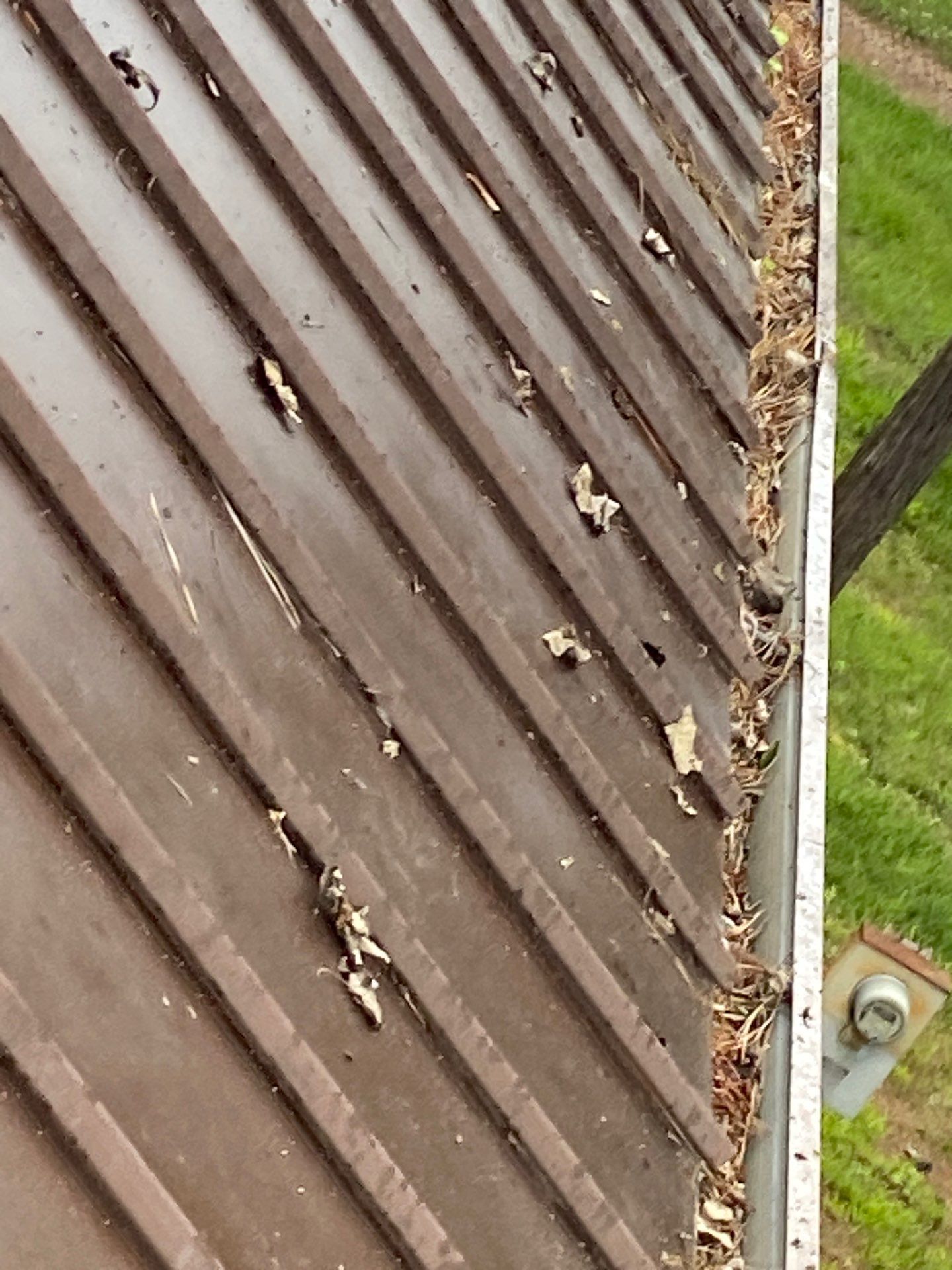
That pollen point matters more than people think. Every spring, a yellow-green film covers everything around here, and it doesn't just sit on cars. It packs into gutter seams and turns into paste once it rains. Owners often assume pollen washes away on its own. It doesn't. It builds a base layer that traps leaves and grit for months.
Here's a real scenario. A retail plaza near a heavily wooded buffer had gutters cleaned once a year, every spring. Sounded reasonable. But by August, the downspouts were backing up during afternoon thunderstorms, and water was pooling near the entrance. The fix wasn't a bigger gutter. It was a second cleaning in early summer, before storm season peaked.
That's the real answer. Frequency isn't a date on a calendar, it's a response to how your specific building collects debris.
One more thing worth knowing: someone from your team doesn't have to be on site for a cleaning visit. We take photos before and after so you can see exactly what came out of the gutters and how the system looks when we're done. It's part of every visit, no exceptions.
Estimates work differently. For those, we ask that someone from your team be there. That's when we walk the roofline together, talk through what your building needs, and figure out a schedule that fits your situation instead of guessing at one.
Factors That Change Your Cleaning Schedule
No two properties are the same. We've cleaned strip malls that need attention four times a year, and single-story office buildings nearby that go strong on just two visits. The general rule gets you close. But your roofline, your trees, and your building type push that number up or down.
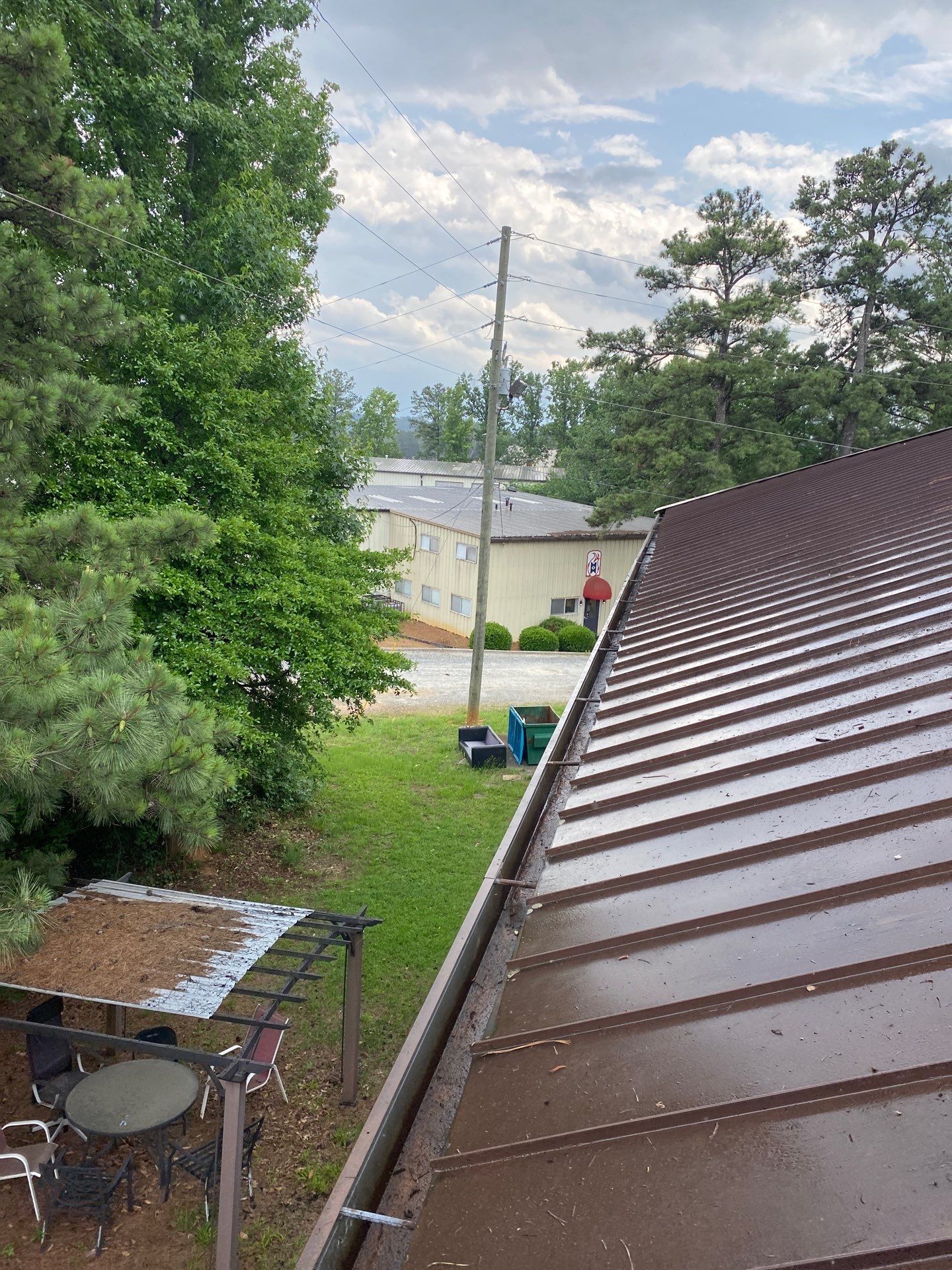
Tree cover is the biggest factor. A property near mature oaks or pines drops way more debris than one surrounded by open parking lots. And if your building sits close to green space or backs up to wooded areas, expect to clean more often than the standard twice-a-year guide.
- Roof size and gutter length, bigger roofs collect more debris per storm, so they fill faster
- Tree density nearby, oaks, pines, and sweetgums all drop heavy loads at different times of year
- Roof pitch and gutter design, flat commercial roofs often drain into internal systems that clog quietly
- Building height, taller buildings make DIY checks risky, so skipped inspections are common
- Foot traffic and nearby construction, dust and debris from active job sites nearby can clog gutters fast
Roof pitch matters more than people think. Flat or low-slope commercial roofs, common on warehouses and retail buildings, often route water through internal drains and scuppers. Those systems hide problems. You won't see standing water from the ground, so blockages sit there for weeks before anyone notices a leak inside.
Property managers often assume no visible overflow means no problem. It doesn't work that way with commercial systems, since internal drains can clog out of sight.
Building height changes the equation too. A single-story retail strip is easy to check from a ladder. A three or four-story office building isn't something your maintenance crew should climb without the right gear. That gap in access often means longer stretches between cleanings, and longer stretches mean bigger clogs when someone finally looks.
Here's a real scenario. We worked on a property with a low-slope roof and heavy oak coverage on three sides. The owner had been cleaning twice a year, same as a routine inspection cycle. But debris was packing the internal drains every few months, and standing water had already started creeping under the roof membrane by the time we found it. That property needed quarterly service, not twice-a-year service. One-size-fits-all schedules don't hold up against real conditions on the ground.
So how do you know what your building needs? Start by walking the roofline and checking for granule buildup, standing water, or sagging sections. Look at what's overhead, are there trees dropping leaves or needles most of the year?
For a gutter cleaning visit, nobody needs to be there in person. We take pictures the whole time, so you'll see exactly what we found and what we cleared, no guesswork on your end.
Estimates work differently. We ask that you're present for those, since every property has its own quirks, and we want to walk through solutions that fit your building instead of a generic plan.
Match Your Building Type to a Realistic Schedule
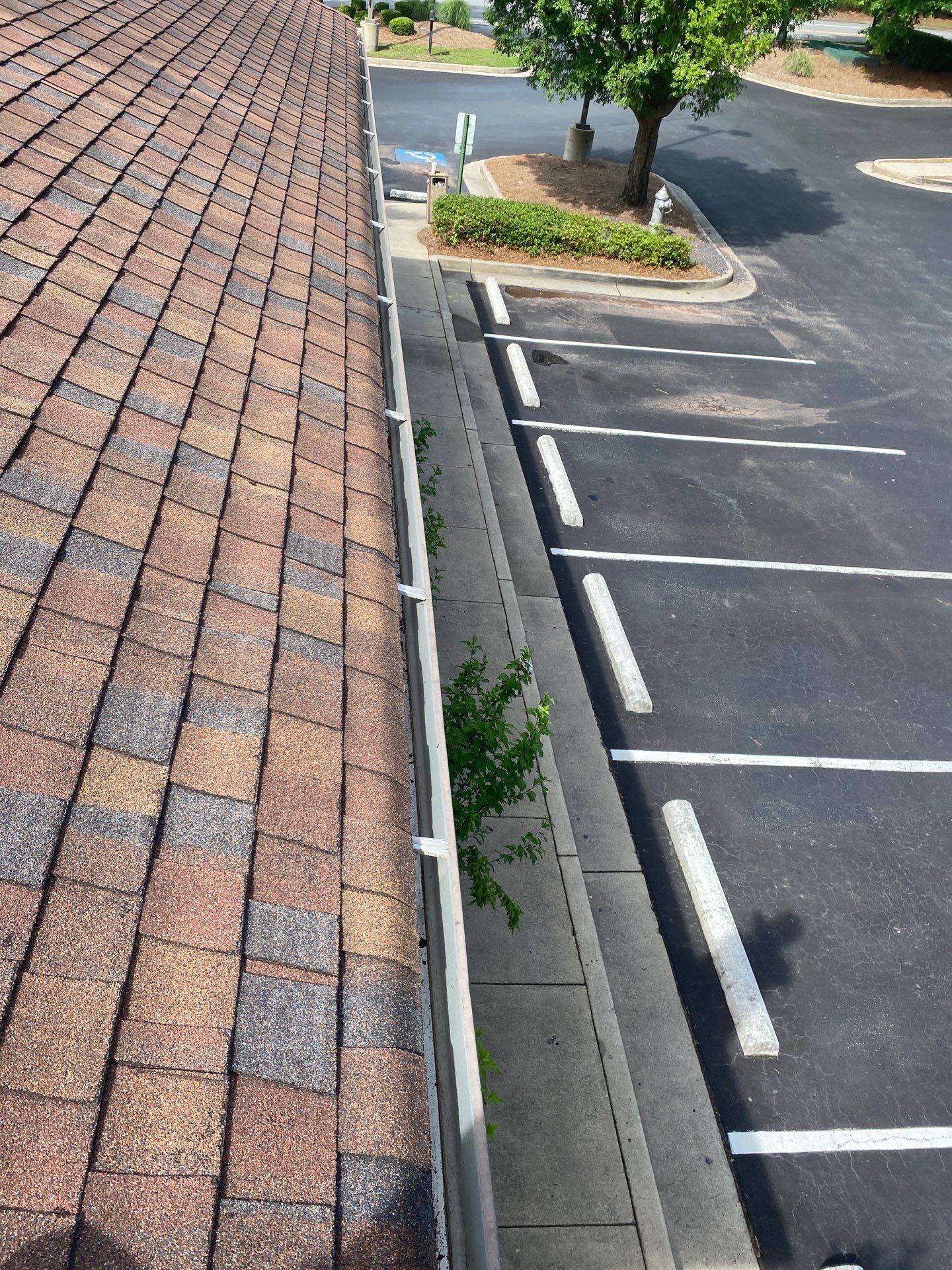
Not every commercial building needs the same schedule. A strip mall near busy corridors deals with different debris than a warehouse tucked back off the road. So the real question isn't just how often, it's how often for your roof, your trees, your drainage setup.
Let's break it down by property type, because that's what drives the answer.
- Office buildings with flat or low-slope roofs: twice a year usually works, spring and fall, unless there are large trees nearby
- Retail centers and strip malls: check quarterly if there are trees in the parking lot islands, otherwise twice a year is fine
- Warehouses and industrial buildings: often need less frequent cleaning, but longer gutter runs mean clogs hide easily, so a fall inspection is a must
- Multi-tenant buildings with mixed roof lines: these collect debris in valleys and transitions, so we recommend checking three to four times a year
- Properties near heavy tree cover: plan on quarterly cleanings, leaves and pine straw build up fast in Georgia
Here's a scenario we run into a lot. A property manager overseeing a small office park assumes their building doesn't need attention because it's flat-roofed. But flat roofs often have internal or scupper drains that clog just as easily as regular gutters, sometimes worse. We've shown up to jobs where a single clogged scupper caused water to pool on the roof for weeks before anyone noticed.
And that's the thing about commercial buildings, the damage doesn't always show up where you'd expect.
Most people don't realize this until it's too late, but the schedule should really be based on three things: tree coverage, roof design, and how much foot traffic or vehicle traffic runs below the gutter line. A building with tall oaks overhead near a loading dock is a different story than a small retail strip with a clear sky above it.
For your standard gutter cleaning visits, no one has to stand around and watch. We take pictures throughout every visit, before and after, so you always know exactly what we found and what we cleared. That's part of how we work, not an add-on.
If you're not sure which category your building falls into, or you manage a property with a mix of roof types, that's exactly the kind of situation worth a second look. We can walk the property with you and build a schedule that fits, not a generic one pulled from a chart.
Looking for the service itself?
This guide covers the decision. The Commercial Gutter Cleaning page covers what the visit includes and how to book it.
SEE COMMERCIAL GUTTER CLEANINGTrusted by Homeowners
Licensed and insured. Real prices before we start. Before and after photos with every invoice.
Frequently Asked Questions
How do I know if my building needs gutter cleaning more than twice a year?
You'll know by looking at what's overhead and checking your drainage history. If your property sits near oaks, pines, or wooded areas, twice a year usually isn't enough. Buildings with flat roofs, internal drains, or past overflow issues also need closer attention. Walk your roofline and look for standing water, sagging sections, or granule buildup. These signs point to a schedule built around your specific building, not a generic calendar date.
Can I clean my own gutters, or does a commercial building need a professional?
Single-story buildings with easy roof access are sometimes manageable in-house, but taller commercial buildings are a different story. Multi-story properties make ladder checks risky, and flat roofs with internal drains hide clogs that are hard to spot from the ground. A professional walk-through catches problems before they turn into leaks or ponding. If your building is more than one story or has a low-slope roof, it's worth having someone experienced handle the inspection and cleaning.
What's the biggest misconception property owners have about gutter cleaning schedules?
The biggest misconception is that no visible overflow means no problem. Flat commercial roofs often drain into internal systems and scuppers, so blockages can sit for weeks without any sign from the ground. By the time water shows up inside the building, the clog has usually been there a while. Checking your roofline regularly, instead of waiting for visible signs, catches these issues before they cause real damage.
Does pollen season really affect gutter cleaning frequency?
Yes, and it affects it more than most owners expect. Every spring, a thick layer of pollen coats roofs and gutters across the area. It doesn't wash away in the rain like people assume. Instead, it packs into gutter seams and hardens into a paste that traps leaves and grit for months. Buildings near green space often need an extra cleaning in early summer just to clear this buildup before storm season hits.
Why did a building on a twice-a-year schedule still end up with water damage?
This usually happens when the schedule doesn't match the site conditions. We saw this with a property that had heavy oak coverage and a low-slope roof, cleaned only twice a year. Debris packed the internal drains every few months, and standing water crept under the roof membrane before anyone noticed. That building needed quarterly service instead. If your schedule feels routine but you're still seeing issues, it's a sign your frequency needs adjusting, not your gutter size.
Do I need to be on-site every time my gutters are cleaned?
No, you don't need to be there for a routine cleaning visit. Photos are taken before and after so you can see exactly what came out of the gutters and how the system looks afterward. Estimates work differently, since those require walking the roofline together to figure out the right schedule for your building. If you're ready to get a plan built around your property's actual conditions, that's the next step worth taking.
Still Not Sure What You're Looking At?
Send us a photo or book a visit. We'll tell you what it is before anyone quotes a price.
BOOK NOW (opens in a new tab)Or call (404) 994-3494

Metro Atlanta's dedicated gutter specialists. Cleaning, repair, replacement, downspouts, drainage and soffit work, done right the first time with photo proof on every job.
Gutter Services
Drainage & Roofline
© 2026 Shelter Guard Gutter Cleaning and Repair. All Rights Reserved.